The Healing Power of Thanksgiving
November 26, 2008 by Dr. Nicole Sundene
Filed under Diet Tips, Fruits and Veggies, Healthy Recipes, Kitchen Sink, Preventative Medicine, Recipes, Superfoods, Weight Loss, Whole Foods Diet, Whole Foods Makeover

Contrary to popular belief Thanksgiving Dinner is actually quite healthy.
When we remove all the notorious “white foods,” such as white refined flours, sugars, and other carbohydrates devoid of nutrients we are actually left with a very colorful whole food fare.
Of course you should never try a new recipe while entertaining, but I have given each popular dish a “whole foods makeover” so that you can try a healthier option next time. There should be a next time-in just a few weeks. We should try to eat a turkey dinner more than once a year! Baking a whole turkey is a fantastic healthy and frugal way to optimize your grocery budget, and turkey is the hottest trend this winter. Plus it just makes the house smell good. I freeze carcasses until I have enough to make into a great turkey wild rice soup.
Here are the top eight superfoods found in our traditional American Thanksgiving spread.
1. Turkey
Renowned for its high tryptophan content, turkey has the potential to lift our mood and/or make us sleepy. It really depends on how we choose to pair up the amino acids in turkey. When turkey is consumed in conjunction with refined carbohydrates found in mashed potatoes or dinner rolls, the tryptophan converts to serotonin, and in low light conditions the excess serotonin converts in to melatonin, the nighttime hormone that makes us feel sleepy. Serotonin gives you that good “Turkey Buzz” and Melatonin is what sends you straight to the couch for a nice nap. If you are depressed you should work turkey, cottage cheese, and salmon in to your weekly rotation so you can benefit from my other favorite high tryptophan foods, or you can also just try some 5-HTP.
When we eat turkey in the absence of carbohydrates the amino acids that increase energizing catecholamines are able to cross the blood brain barrier and the result is an energized good mood. If you aren’t a breakfast person try a bit of salmon, cottage cheese, or turkey to start your day, support your adrenal glands, and keep you energized until lunch.
Turkey Makeover: Hold the butter, skip the stuffing and go straight for olive oil and lemon as your poultry flavorings of choice. If you bake your turkey at 320F you will be well below the smoking point of olive oil.
Stuffing the cavity of the turkey with whole lemon halves will also give the turkey a “salty flavor” so you can use the least amount of organic sea salt necessary. Stuff some garlic cloves and thyme under the skin of the turkey, and in the cavity along with the lemons.
Medical geeks like me can get crafty and inject herbal seasonings mixed with your basting solution of olive oil and lemon straight in to the meat with syringes (yes you can buy meat syringes at the store too.) Then just baste and bake as usual. Salt and pepper your turkey mainly on your dinner plate, not in the oven. Salt always loses flavor as it cooks and the best flavor comes from that final sprinkling. Salting your meat while cooking also dries it out, so really it is not just healthy but smart.
To benefit from the tryptophan in turkey don’t over do it with your carbs….that is unless you are heading straight to bed! To boost your mood opt to pair your turkey with the “slow carbs” found in fruits and veggies. Skip the dinner roll and the mound of mashed potatoes.
If you are adventurous, you can also go outside for a little walk after you eat your turkey to stay energized. The full spectrum light will prevent the melatonin formation that makes us all so sleepy.
The moral of the turkey story is that tryptophan converts to serotonin which makes us happy, and in the presence of excess dietary sugar and darkness serotonin converts to melatonin, and melatonin makes us drowsy. That is why all of us in Seattle are so darn tired all the time and left with no choice but to hang out at Starbucks or stare at a light box.
Got that? Fabulous. Moving on.
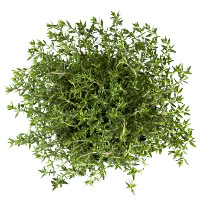
2. Thyme
Did you ever wonder where that traditional flavor of Thanksgiving came from? You may not know if you haven’t ever prepared the meal. That certain flavor comes from the herb thyme that we traditionally use to flavor our stuffing. Thyme is a fantastic healing herb as it is antibacterial, antiviral, and antifungal just like most of it’s relatives in the “laminacea” or mint family.
Thyme is used in making “Listerine” mouthwash, or at least it traditionally was. The aromatic oils in thyme are also fantastic for indigestion, no wonder this is the key point herbal medicine of our great American overeating day!
Stuffing Makeover: Just lose the stuffing! Stuffing although delicious is one of the biggest calorie mongers on the menu. If this is your favorite thing you will need to cut back somewhere else on your plate. The trend of white bread went out with eating McInflammation. The new America is a whole foods America.
Whatever you do, please don’t bake your stuffing inside the turkey, this makes it that much more fattening, and sets people up for food poisoning if not adequately cooked through. You HAVE to check the temperature of your stuffing AND your turkey.
Instead try a stuffing in your crockpot of brown rice or quinoa, thyme, raw nuts and seeds, dried fruit, garlic, and your favorite stuffing spices instead of the traditional white food fest. At least experiment with healthy stuffing alternatives for your non-holiday feasts. I will allow everyone to eat stuffing one day a year on my whole foods diet. If you can “just say no to stuffing” then you get bonus points and will immediately benefit by feeling good about yourself and not overstuffed from stuffing.
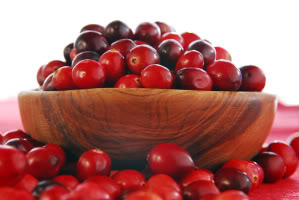
3. Cranberries
Delicious and healthy antioxidant rich fruit that fight aging, inflammation, and bladder infections.
Why are berries all the latest rage? In my Mangosteen Scam tirade I discussed that all deeply pigmented fruit skins are high in antioxidants. From a botanical standpoint the plant smartly creates these antioxidant polyphenols known as “proanthocyanins” to protect the skin of the fruit from the sun. The fruit cannot use sunlight to produce energy in the manner that the leaves of the plant do, so the antioxidants are “nature’s sunscreen”. Without their protective antioxidants, berries would shrivel and burn under the sun’s harsh rays.
The ingenious antioxidant protection devised by the plant also kindly protects us from the free radical damage that results from the reactive oxygen species we are constantly exposed to in our polluted stressful environment. The skin, eyes, and blood vessels are especially protected by the proanthocyanins in berries.
Most people know that cranberry juice is good for bladder infections. E. coli, the bacteria that causes most bladder infections is unable to adhere to the lining of the bladder thanks to cranberry.
What most people don’t know though is that there is not a therapeutic cranberry juice out there that really tastes that good! If you are drinking a “delicious” glass of cranberry juice every day then you are probably not doing much to prevent a bladder infection. You should read the label because you are probably drinking a delicious glass of high fructose corn syrup(HFCS) and food coloring.
When shopping for cranberry juice, be sure to read the label and purchase only 100% pure cranberry juice. The HFCS juice trend faded out in the nineties. And a cranberry juice loaded with grape juice, apple juice or heaven forbid high fructose corn syrup is simply not going to be effective for preventing disease or bladder infections. To make cranberry juice more palatable, mix with 50% pure blueberry juice. Blueberries are also fantastic antioxidants that prevent bladder infections and aging.
Cranberry Sauce Makeover: Try experimenting with healthier natural sweeteners like agave, brown rice syrup, and stevia for homemade cranberry sauce. Adding a bunch of refined sugars and other refined pollutants to cranberries defeats their protective healing purpose.

4. Yams
Because of the beautiful orange and yellow pigments, yams, sweet potatoes, and even that delicious pumpkin pie are all a rich source of beta carotene and other important carotenoids that prevent cancer and support a healthy immune system.
Yellow and orange foods are particularly protective to the lungs, reproductive system, and eyes.
No, carrots probably don’t improve your vision, but the carotenoids in them have been shown to be protective and preventative for both cataracts and macular degeneration. So they may not perfect your vision, but they will prevent its degeneration. Certain antioxidants have affiliations for certain tissues in our systems. Be sure to eat something yellow and orange every day, and I’m not talking about circus peanuts! Eating by the rainbow is the diet for the new millennium. If you are struggling with this new trend you may need to grab my favorite Whole Foods Multi that just happens to be “Buy One Get One Free” right now.
Yam Makeover: Lose the marshmallows! Marshmallows are completely out of style. Less is more now. “More is more” went out five years ago, and for some of us a few months ago when the stock market crashed. Try your traditional whipped yam recipe without the marshmallows. Garnish with pecans instead, or just let them stand alone as the amazing super food they are. Try healthier sweeteners in your candied yam recipe like brown rice syrup, agave, or stevia and flavor with cinnamon, nutmeg, allspice, or pumpkin pie spice.
Baked yams as pictured are delicious and simple! Try roasting yams in the oven at 350F 30-40 minutes until fork tender. You can also steam yams till tender, drizzle with olive oil and give a sprinkle of sea salt for a regular dinner side dish. The peel of vegetables is where all the nutrients and fiber lies. Buy yams organic if you are going to eat the peel since they are a root vegetable. All root vegetables are naturally riddled with pesticides as they absorb and concentrate them from the soil. But, since yams and sweet potatoes are dirt cheap, they are worth the extra splurge. Everyone that is “cool now” is eating yams and sweet potatoes, so hopefully that includes you.
For a healthy wheat free “sweet potato pie” scoop out freshly baked sweet potato just like what is pictured here, sprinkle with pumpkin pie spice, drizzle with honey, and top with shredded coconut! Without the pie crust you have earned the calories to add a small dollop of your favorite organic vanilla ice cream. It sounds weird, but it is truly delicious. Who has the time to bake an entire pie anyways when you can just toss a couple sweet potatoes in the oven? Isn’t healthy easy? That is why it is so stylish.
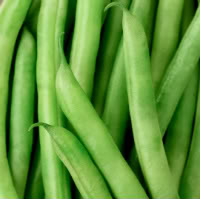
5. Green Beans
Green beans are loaded with fiber, beta carotene, B-vitamins, calcium, and potassium. Eating any beans are a fantastic diabetic trick for lowering the glycemic load of a meal. Beans truly are the “magical fruit” for a reason. Now eating too many beans may not make you too popular, but at least they will make you more attractive and youthful and trim your waist line.
Green Bean Makeover: Lightly steam your green beans, they are done when they turn bright green, don’t boil them in to a nutrient devoid lifeless brown mess. We just don’t boil vegetables anymore. If you boil them you should drink the water too as that is where all the vitamins go. It is just wrong on so many levels, and the kind of thing that only belongs in the “worse dressed” section of the tabloids. Canned green beans went out with acid washed jeans. Always opt for fresh or frozen before grabbing for cans.
I don’t mean to sound bossy, but you have to lose the white canned cream of mushroom soup garbage, and dress your beans with olive oil or your favorite olive oil based salad dressing. If you have to defy me and use a cream based soup then grab an organic one, as most cheap soups are the worst of the worst processed food fests.
Now add carmelized REAL onions, not those fake canned crunchies that were SO 1981. It is important that you keep up with the latest trends. Almond slivers should be RAW to maximally benefit from the cancer fighting phenolic acids and healthy fats, and of course that also is the stylish thing that everyone else is doing. Especially celebrities. This is how celebrities eat on their “designer diets” so if you want to send me a thank you check you are welcome to make a donation.
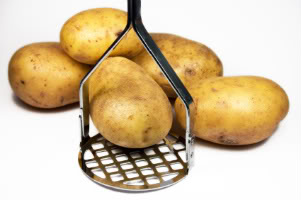
6. Mashed Potatoes
If you keep the peel on the potatoes before you mash them, then I will give you permission to eat them.
Potatoes get a bad wrap because we don’t eat the peel. Buy organic potatoes and mash them WHOLE. The peel of the potato contains fiber, vitamin C, thiamin, and potassium.
Some people with arthritis don’t tolerate potatoes well, if you have arthritis, potatoes and foods in the solonacea family like eggplant, peppers, onions, and so forth just may not be the right choice for you.
Mashed Potato Makeover: There are a few great makeover tricks you can implement to freshen up a rather dead ugly lifeless food like mashed potatoes. Definitely stand by ready and loaded with your garlic press and press about a clove per large potato. Garlic supports the immune and cardiovascular systems. Garlic also prevents and kills parasites.
I always add cottage cheese to my mashed potatoes to give them that creamy consistency, this protein bump also decreases the glycemic load for dieters, and diabetics. Cottage is also rich in mood boosting tryptophan. Remember we have to eat protein, and fiber with EVERY meal to prevent diabetes, blood sugar crashes from hypoglycemia, and obesity. Plus all the cool kids are doing it.
Try olive oil instead of butter, try adding some steamed arugula or spinach in at the end to create a gourmet effect, and if you HAVE to have that buttery flavor from organic butter (please don’t EVER use margarine if you learn anything from my nags. Please just go throw out your tub of margarine in the garbage where it belongs, and never buy it again, or any other hydrogenated oil product that serves no other biochemical purpose in life but to rapidly age you, clog your arteries, and make you unnecessarily fat. We want to be the least amount of fat right? Your body can’t use margarine so it converts it to fat storage…) just add some low fat buttermilk in lieu of regular milk if you must do dairy and NEED that butter flavor. Sprinkle with sea salt and organic pepper. Enjoy!
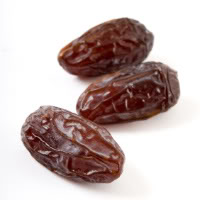
7. Minced Meat Pie
Are you terrified of minced meat pie? Well most of us are, until we discover that modern “minced meat” is just a fruit sauce made of dates and other dried fruits and not some leftover cafeteria meat concoction.
Well the beauty of this is that dates, figs, prunes, apples, and most dried fruits score high on the ORAC, meaning they have extremely high free radical fighting potential. Antioxidants=Anti-aging. Memorize that. Aging isn’t just about vanity and outer appearance. Your organs and blood vessels are aging on the inside as we sit here. If it doesn’t look good on the outside it doesn’t look good on the inside either. True beauty is an inside out job. Eat more antioxidants to prevent disease and you will be rewarded with a continuously youthful glow.
Let me be the first to announce that Minced Meat Pies are now the HOTTEST trend for fall. Don’t worry they only show up on the whole foods runway once every 50 years.
Minced Meat Makeover: Opt for a whole grain crust and use organic butter rather than margarine (heaven forbid.) If you really want to impress those avoiding gluten with your gourmet skills, you can add a dollop of your favorite organic minced meat filling to half a sliced date and top with a splash of real whipped cream. Dates are also delicious stuffed with various nut butters, and chocolates as I just recently learned from RN, Rod Newbound.

8. Red Wine
“Yes! Dr. Nicole says I can have a glass of red wine!” Just remember that is only ONE to two glasses of red wine-max. That is one drink per day not per hour-and no you can’t save them all up for the end of the week. It just doesn’t work that way. The benefits of the cancer fighting, anti-aging polyphenols in red wine known as resveratol go down as you burden your liver with alcohol. As with everything, moderation is key. Even too much water will kill cause hyponatremia and kill you.
Red Wine Makeover: Remember that one glass is better for you than the entire bottle. Opt for an organic alternative like our Kitchen Table 2008 Favorite, Badger Mountain. Remember to never drive while you are drinking. The most stylish people always have a driver…er…cab driver. Even one glass of alcohol impairs your judgment enough to put an end to your happy holiday-or worse yet-someone else’s.
Please always be considerate to the safety of others when imbibing during the holiday season.
Hope you all have a Happy AND Healthy Thanksgiving! Have fun wowing all your friends and family with this questionably boring kitchen table talk of the Thanksgiving superfoods and how to give them makeovers. Let me know if you manage to pull it off and keep them interested! Feel free to share any of your healthy Thanksgiving recipe tips in the comments section.
Thanks much for sharing my whole foods tips with your friends and family.
~Dr. Nicole Sundene
Naturopathic Physician
References: Medical Nutrition from Marz by Dr. Russell Marz, Medical Herbalism by Hoffman
Related Reading:
The Healing Power of Cauliflower
The Healing Power of Music
The Healing Power of Positivity
The Healing Power of Mexican Food
The Healing Power of Stinging Nettles
 Dr. Nicole Sundene, NMD is a licensed Naturopathic Medical Doctor at Fountain Hills Naturopathic Medicine 16719 E Palisades Blvd, Suite 205, Fountain Hills, AZ 85268.
She believes we should utilize natural medicines to treat the root cause of disease rather than just treating symptoms, as symptoms are a message of imbalance sent from the body and will persist until they are properly addressed.
For appointments please visit http://FHnaturopathic.com for more information about Naturopathic Medicine services.
©KitchenTableMedicine.com, LLC ™
10 Self Coaching Fundamentals
November 24, 2008 by Dr. Nicole Sundene
Filed under Discipline, Guest Posts, Kitchen Sink, Life Coaching, Lifestyle Tips, Motivation, Zen Thinking
 By Tim Brownson
Author of Don’t Ask Stupid Questions - There Are No Stupid Questions
I was talking to somebody the other day about fluff. I’m not referring to the stuff that finds its way into your belly button, but book fluff or filler. I could easily distill several of the seminal self-development books into a few paragraphs if I was so inclined.
The thing is though, nobody spends $20 on one piece of mass produced paper no matter what words of wisdom are printed on it. So writers have to bulk their books out to deliver perceived value and get people to hand over their hard earned cash.
I’ve decided to unbulk the coaching process and invent a new word into the bargain. Here are ten tips that if you follow will guarantee an improvement in the quality of your life, or I’ll give you your money back.

#1 Align With Your Values
Unless you know what your core values are you will struggle with blocks in your life. All your decisions are based around your values and what you consider imperative to your life.
For example, if you have a number one value of integrity and work for a business that rips off its customers (even if you are not involved in the actual process) then you will feel uncomfortable either consciously or unconsciously.
There are also away from values, things that you move away from at all costs and again you should know what these are as they can frequently be the reason why you just can’t follow through with somethings no matter how hard you try.
#2 Happiness is Internal
Yeh, yeh, yeh, I know, it’s a cliché. I don’t care though because it’s true. Chase money, possessions, titles as much as you want, but realize that they wont bring you happiness. You already have that if you can be bothered to dig around and look for it. Being in complete alignment with your values will help you find happiness.
#3 Beliefs Aren’t Real
Your belief system is something that you’ve built up over your life. It comes from your parents, your friends, your colleagues and many other sources. It is evolving and changing all the time.
You probably believe in the tooth fairy, but somebody told me only last week, she really doesn’t exist. Disappointing though that is, especially as I have been stock piling my new puppies teeth for a big payday, we just have to accept reality and change the belief.
What false beliefs about your abilities are you holding onto that are holding you back? When you know they are, undermine them, look for counter examples and replace them with more empowering beliefs. After all, if you think you can, you probably can.
#4 The Map Is Not The Territory
This is a presupposition of NLP and critical to understanding and making changes. Just because you view something one way doesn’t make it so. Everybody has his or her own map and theirs is just as accurate as yours. Adopting that one belief will remove conflict from your life.
#5 Use Perceptual Positions
If in moments of introspection you can take a step back and view your life or any given situation from a watchers point of view you will often see things that you can’t see from your angle. It can also be useful to take the 2nd person position, which involves seeing you through the eyes of the person you are talking to or involved with. Most people resist this especially when coming under attack, be different.
#6 Write it Down
Whether it is goals or simply ideas you have on trying to improve your life put them on paper. The sheer act of writing something down sends a message to the unconscious mind that you are serious about what you are doing that it need to get to work on bridging the gap between where you are now and where you want to go.
#7 Every Action has a Positive Intention
This is another NLP presupposition. Even when you do what sometimes seem like ridiculous things there is always a positive intent behind it. It may take some digging to get to it but it is there.
Taking smoking as an example. It can seem self-destructive and often smokers that want to quit will refuse to see the benefits, but they are there. By accepting that your actions are not there to harm you (even self-harm fits into this category) you are infinitely more likely to be able to make changes
#8 Model
If you are unsure how to do something copy somebody that is proficient. This is how children learn to speak and it is how we get good at something quickly. Too many people are frightened of asking for help because they think it makes them look weak. In my not so humble opinion, not asking for help makes you look stupid.
#9 Make Mistakes
Mistakes are feedback, they are nature’s way of telling us we need to adjust to take stock and reconsider. They do not mean we are failure as a person just that we failed at a task. Relish mistakes, hug them, caress them and thank them for dropping by because they are helping you to learn.
#10 Be Kind To Yourself
This is so important to get a handle on. There really is no need EVER to beat yourself up, be kind to yourself like you would a loved one. We all make mistakes, even the super successful make mistakes, try and learn from them and move on. Too many people seem to be great at beating themselves up and terrible at praising themselves. Give yourself some credit from time to time, you deserve it!
Tim Brownson is a UK qualified Life Coach, NLP Master Practitioner and certified Hypnotherapist and author of Don’t Ask Stupid Questions - There Are No Stupid Questions.
He coaches both face-to-face in Orlando and over the telephone with clients all over the United States, Canada and ‘back home’ in the UK.
Subscribe to Tim’s free life coaching blog, and stop by his bookstore for more life coaching motivation.
Related Reading:
What is a Life Coach?
How to Quit Smoking
How to Transform Fear
Dr. Nicole Sundene, NMD is a licensed Naturopathic Medical Doctor at Fountain Hills Naturopathic Medicine 16719 E Palisades Blvd, Suite 205, Fountain Hills, AZ 85268.She believes we should utilize natural medicines to treat the root cause of disease rather than just treating symptoms, as symptoms are a message of imbalance sent from the body and will persist until they are properly addressed.
For appointments please visit http://FHnaturopathic.com for more information about Naturopathic Medicine services.
©KitchenTableMedicine.com, LLC ™
Why We Should Like Bugs and Worms
November 21, 2008 by Dr. Nicole Sundene
Filed under Diet Tips, Environmental Medicine, Fruits and Veggies, Gardening, Guest Posts, Kitchen Sink, Organic, Whole Foods Diet
 Do you like bugs and worms?
Well if you do, you can feel vindicated by today’s topic, and if you don’t you may change your mind after reading today’s guest post. This is also a great teaching topic to share with your children. Won’t you sound so smart next time you are outside with your kids looking at bugs in the garden? Teach them about the microscopic bugs at work in our soil, and the important agricultural role they play.
Remember, even the Hobo Spider deserves his place in the environment, and we just need to respectfully avoid encounters without going on spider killing rampages.
Please enjoy part II in the series of “Organic vs. Commercially Farmed Food” by Stephen Cox.
Within any healthy soil are billions upon billions of microorganisms. Some microorganisms live in a symbiotic relationship with plants. For example a certain type of microorganism actually puts out a protective net around the plants roots in the soil and the net is covered with a type of glue.
When, along comes a microscopic parasitic worm, it gets caught in the net. Other microorganisms, which also live symbiotically with the plant punch a hole in the invader’s body, liquefy its organs, which are the most nutrient dense part, and feed that to the plant.
With commercially farmed produce the fields in which the foods you eat are grown, have been repeatedly sprayed with chemical toxins that kill the microorganisms in the soil. It’s not dissimilar to chemical warfare because pesticides, fungicides, herbicides and other chemicals resemble neurotoxins. And the food you’re eating is growing in an environment where tons of this toxic waste is being dumped. It would be naive to believe that it is not somehow finding its way into our food, our water and our general environment.
With little to no microorganism in the soil to support plant life commercial farmers turn to chemical fertilizers. Have you ever wondered why it is we hear on the news that someone used fertilizer to blow something up? That is because the chemical fertilizer the food we’re eating and using very closely resembles gunpowder.
After World War II ended the governments of the day were left with all these munitions factories. So they spent millions of dollars (at the time it was a colossal amount of money) to convince farmers that if they weren’t using this stuff they were stupid. This was not a decision made with the best interests of health and wellbeing in mind. We’re talking straight economics.
Organic Solution
I grow some of my own veggies – carrot, spinach, broad bean, broccoli (incidentally a cup of broccoli contains 205% of the necessary daily intake of vitamin C and just 43 calories), rocket, onions, lettuce and herbs. All in a very small patch of land just 1 meter wide by 2 meters long. No pesticides. No chemical fertilizer.
Growing your own vegetables is a great way to boost your health and wellbeing. You’ll be giving the environment a helping hand at the same time. The vegetables you grow for yourself will not need to be harvested by large machinery and then shipped thousands of miles to a location where they may be kept in cold storage for weeks, even months. All those activities produce greenhouse gasses and contribute to global warming.
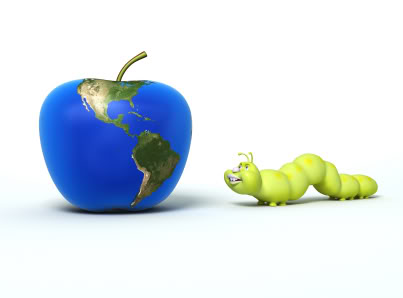
Growing your own food has other benefits.
It really grounds us and connects us as human animals with nature and our world.
Sometime we get disconnected and forget that we are part of something bigger. Disconnection can be a powerful source for unhappiness and depression.
The process of energy exchange as you plant, tend, water and harvest your own plants is something that really needs to be experienced.
It is a process of caring and love as opposed to rampant destruction for meaningless profit. You’ll gain joy just from watching the plants burst with life and growth in the sunshine after each rain.
Plants can take our stress much like they take our carbon dioxide. I find they help me to let go each afternoon when I spend a few moments giving them attention. It is in every sense a very holistic activity. If you have children I couldn’t imagine a better project you could enjoy with your children. Children are constantly learning and they can learn a lot from tending a garden.
Organic Conclusion
Life feeds on life. There is a constant cycling of energy transference. First the microorganisms support plant life. Plants are consumed by herbivores and omnivores. Carnivores and omnivores in turn consume the herbivores. All produce waste (even plants drop leaves), which is food for the microorganisms, and all die which also feeds the microorganisms. And so, on it goes.
The disruption of the energy transference cycle at its very root, by killing microorganisms through commercial farming practice, means the life that feeds on the life before it cannot possible be naturally healthy. Human and animals that eat sick plans will not themselves be well. Nor humans that eat sick animals.
Do you still want to kill all those bugs and worms in your garden?
Read Part I of this series “Organic vs Commercially Farmed Food”

For more great articles by Stephen Cox you can visit BalancedExistence.com. Stephen is a graduate student in Australia. Read more articles by our featured writer, Stephen Cox.
Related Reading:
On organic farming and global warming
Organic farms produce same yields as conventional farms
Can organic farming feed the world?
The Top Eleven Easiest Foods to Grow
How to Get Your Kids to Eat More Vegetables
How to Make a Green Bean Teepee
Dr. Nicole Sundene, NMD is a licensed Naturopathic Medical Doctor at Fountain Hills Naturopathic Medicine 16719 E Palisades Blvd, Suite 205, Fountain Hills, AZ 85268.She believes we should utilize natural medicines to treat the root cause of disease rather than just treating symptoms, as symptoms are a message of imbalance sent from the body and will persist until they are properly addressed.
For appointments please visit http://FHnaturopathic.com for more information about Naturopathic Medicine services.
©KitchenTableMedicine.com, LLC ™
Chocolate Chips Better than Viagra?
November 19, 2008 by Dr. Nicole Sundene
Filed under Anti-Aging, Antioxidants, Blood Pressure, Cholesterol, Diabetes, Diet Tips, Erectile Dysfunction, Fruits and Veggies, High Blood Pressure, Men's Health, Preventative Medicine, Whole Foods Diet
Are chocolate chips better than Viagra? According to Journal of Nutrition’s latest September and October issues, chocolate has some pretty exciting therapeutic potential.
If you want to avoid being on “the little blue pill” you should consider taking a daily dose of the little brown pill.
That’s right—50-200 chocolate chips a day may prevent the cardiovascular damage that is a leading cause of erectile dysfunction. 1
According to recent studies, the flavonoids in dark chocolate naturally enhanced natural nitric oxide levels. The drug Viagra works mechanistically as a phosphodiesterase inhibtor to enhance nitric oxide. Our bodies also synthesize nitric oxide, and nitric oxide works on our blood vessels to dilate them and increase blood flow. With psychogenic etiologies ruled out, erectile dysfunction is typically an issue of blood flow. Increasing blood flow is how Viagra manufacturers have made a fortune.
In September of 2008, Journal of Nutrition published an Italian university study investigating the therapeutic potential of chocolate and found that, “Flavanols from chocolate appear to increase nitric oxide bioavailability, protect vascular endothelium, and decrease cardiovascular disease (CVD) risk factors….our findings suggest flavanol-rich, low-energy cocoa food products may have a positive impact on [cardiovascular disease] risk factors.”
Now as a women’s health physician, I typically avoid topics such as erectile dysfunction like the plague, so I am going to drop my men’s health commentary today and then run for dear life… 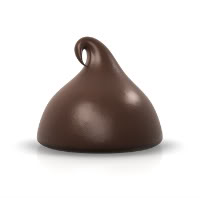 Working as a family practice medical assistant for eight years throughout medical school taught me an important early lesson about men’s health. Most men simply DON’T care about cholesterol, blood pressure, atherosclerosis, diabetes, blood sugar, antioxidants or inflammation.
The second you start to nag about this stuff their eyes just glaze over. You can nag and nag and nag about cholesterol and blood sugar lab values, and still no changes will be implemented.
Eventually I realized the secret to men’s health while working as a urology assistant, the only way to get men to care about their health is to hit them below the belt with the facts that matter. Women are typically all about vanity and men are all about virility. These are the motivators I rely on to market and sell my preventive medicine concepts.
Doctors know that all of the aforementioned health issues contribute to erectile dysfunction. But, what most men don’t know is that without a properly functioning cardiovascular system, things below the belt aren’t going to function either.
It’s all about blood flow and elasticity. We would never leave our garden hoses to freeze out in the cold of winter, we instead take the time to properly care for them to insure they don’t harden and become permanently dysfunctional. Although garden hoses cannot auto-repair, our arteries do by making scar tissue, and the similar type of destruction from high blood pressure, cholesterol, inflammation, and diabetes is repaired by the body by throwing down scar tissue and inflammation.
The more scar tissue and inflammation in your arteries the less elastic they are, and thus the narrower their diameter. Blood pressure just continues to escalate and the damage to your arteries continues in a vicious cycle. Viagra and similar medications such as Levitra and Cialis all work to enhance blood flow.
They are designed to promote the elasticity of those frozen old er…stiff garden hoses. Viagra is a phosphodiasterase inhibitor which increases levels of nitric oxide. Nitric oxide causes our blood vessels to EXPAND. Eventually arteries become damaged and hardened to the point where they will no longer respond to nitric oxide. Keep in mind though that a “garden hose” left out in extreme harsh “winter conditions” will inevitably lose it’s elasticity, and the hose will have to be replaced. How many “winters” have you left your body out in the cold, not caring about diabetes, blood pressure, cholesterol, and inflammation? This is why many men with erectile dysfunction don’t find benefit from Viagra. Blood vessel expansion is the premise of which Viagra has made millions.
I am going to instead give away my natural medicine tips for free, and if the Toll House Chocolate Chip Company wants to send me a billion dollar thank you check, they are more than welcome. What is more important to me is that TODAY you feel inspired and motivated to prevent problems that will inevitably occur down the road TOMORROW.
“An ounce of prevention is worth a pound of cure”—right?
If you don’t have erectile dysfunction now wouldn’t you like to prevent it from happening? Medicine’s used to treat ED are expensive, have multiple side effects and drug interactions, and are not as well tolerated as the commercials on television make them out to be.
When I worked as a Urology assistant the main complaint was always headaches and that “it just didn’t work”. Well after a while when disease has advanced too far, no medication will be able to work. Think back to the garden hose example. You want your arteries to be elastic and healthy, not hardened from the “harsh winter conditions” of sub-optimally controlled high blood pressure, diabetes, and cholesterol.

So why chocolate chips?
Well chocolate chips are fantastic prevention because they are DARK chocolate and the darker the chocolate the more nitric oxide enhancing flavonoids.
A study was done on Italian men and found that Italian men that ate an ounce of dark chocolate had healthier lab markers.
Keep in mind that 50 chocolate chips or roughly an ounce of dark chocolate is the minimum amount needed to prevent disease according to that study.
I weighed them out and found that 48 chocoalte chips= 1oz. But you have my permission to throw in two extra chips for preventive measure!
Another study cited previously, showed therapeutic benefit with 100 grams of dark chocolate which is about 200 chocolate chips! Is this not the best news ever for chocolate lovers?
Remember though that chocolate as a medicine is not free of calories, cocoa butter, or refined sugar. Pure cocoa products are a great alternative as an ounce of chocolate chips have 140 calories. While 200 chocolate chips pack a whopping 500 calories!
But, for those of you that are already eating too much sugar and saturated fat, chocolate chips are a fantastic way to transition to a healthier dessert diet. I know most of you are probably eating fattening desserts anyways (I mean we do have to enjoy life a little bit right?) so dark chocolate chips are a healthier alternative and I like that they conveniently come in little bits that can be savored throughout the day.
But, chocolate chips are not the only foods that contain disease fighting flavonoids. So here is the bait and switch. Most fruits and vegetables are also rich in flavonoids.
Berries are chock full of proanthocyanins, citrus is a fantastic source of hesperidin and rutin, and onions are an excellent source of quercetin. Fruits and vegetables are likely going to prevent the need of Viagra too!
Yes-really this is just a giant strategically planned nag on my part to inspire the consumption of more whole foods, especially those rich in flavonoids. And yes it really was too easy to grab your attention with chocolate chips and Viagra and then turn this in to a fruit and veggie nag. But, my point with this “gotcha” is that preventing disease is where it is at when it comes to ED. Winter is coming, and it is time to think about your preventative plan for your “garden hose.”
A healthy dose of fresh fruits, raw or lightly steamed veggies, raw nuts and seeds, and chocolate will work synergistically to prevent the cardiovascular damage that causes disease.
I think any man suffering with ED reading this article would absolutely agree that an ounce of prevention is worth a pound of cure.
For diabetics that want to gain the flavanol benefits of chocolate chips, simply enjoy them with a small handful of raw almonds to decrease the glycemic load and increase phenolic compounds (anti-oxidant/anti-inflammatory/anti-cancer). Almonds are also high in fiber, and fiber consumption also is protective to the cardiovascular system. So add about ten raw almonds to your 50 chocolate chips or make a healthy trail mix with your other favorite raw nuts and seeds.
I don’t want to leave women out of this nag, so chocolate chips are good news for women too as Dr. Christiane Northrup in her latest book “The Secret Pleasures of Menopause” also emphasizes the importance of naturally enhancing nitric oxide levels through diet and lifestyle to improve sexual function. Grab the book through Amazon, if you care to learn more about ways to naturally enhance nitric oxide.
Those in need of losing weight should also benefit from this simple chocolate chip tip as eating a few chocolate bits throughout the day should help you feel satisfied for sweets and prevent those binges brought on by extreme deprivation and yo-yo dieting that sets the stage for binge eating.
Stick with me, subscribe to my feed, and I will teach you how to be healthy & enjoy life.
Dr. Nicole Sundene
Want more tips for preventing and treating erectile dysfunction through diet and lifestyle?
Try: Exercise, The Low Glycemic Index Diet, The Anti-Inflammatory Diet, Kegels for Men, Cholesterol Lowering Diet, Hypertension, Low Sodium Diet, Antioxidants, Anti-Inflammatory Diet and subscribe to my feed as we discuss the therapeutic potential of other healing foods and natural supplements for cardiovascular health and erectile dysfunction.
References
1. Grassi D, Desideri G, Necozione S, et al. “Chocolate and Blood Pressure” J Nutr. 2008 Sep;138(9):1671-6.
2. Romina di Giuseppe, Augusto Di Castelnuovo, et al. “Italian Men that eat Dark Chocolate are Healthier” J. Nutr. 138:1939-1945, October 2008
Dr. Nicole Sundene, NMD is a licensed Naturopathic Medical Doctor at Fountain Hills Naturopathic Medicine 16719 E Palisades Blvd, Suite 205, Fountain Hills, AZ 85268.She believes we should utilize natural medicines to treat the root cause of disease rather than just treating symptoms, as symptoms are a message of imbalance sent from the body and will persist until they are properly addressed.
For appointments please visit http://FHnaturopathic.com for more information about Naturopathic Medicine services.
©KitchenTableMedicine.com, LLC ™
Living With Diabetes: An Interview with Joe
November 17, 2008 by Dr. Nicole Sundene
Filed under Diabetes, Guest Posts, Kitchen Sink, Preventative Medicine
 I hope all my readers today have a chance to read this interview.
If you have diabetes you could use the empathy, and if you are currently free of chronic disease you may want to read and feel motivated to take better care of your body NOW to prevent disease.
Do you ever wonder what it is like to live with diabetes? Ever wonder how your friends or family members are secretly doing day to day with this difficult disease?
Today I will be interviewing Joe, otherwise known as “Crotchety” to all the readers of his widely read, popular and hilarious humor blog, “Crotchety Old Man Yells at Cars” about living with diabetes.
You can only imagine my terror when I first saw that some website “Crotchety Old Man Yells at Cars” was linking to Kitchen Table Medicine. I thought for sure we were under some sort of blog terrorism attack, until I realized that he just was reading my blog, and had added it to his list of favorite sites. Phew! Disaster everted. For professional reasons today I will of course refer to Crotchety as “Joe” throughout the rest of the interview. *wink*
I invited Joe to lead the discussion of what it is like to live with diabetes because he always tells it exactly how it is, and I don’t want diabetes to be sugar coated-no pun intended. I appreciate his incessant honesty and that is why he is so darn funny over there. If you need a daily dose of Rated G or-er? PGish humor to keep you laughing each morning you can subscribe to his blog.
He also has a site called “Diabetes Destroys” and has posted some very graphic pictures (don’t look at those if you are eating right now) of his latest skin infection from diabetes. You may just want to bookmark the page and take a look before you decide to have another ice cream sundae today, especially if diabetes runs in your family. These days Type II diabetes is epidemic though, and runs in nearly everyone’s family. Please welcome to the kitchen table my dear friend Joe!
Hi Joe, How did you feel when you were diagnosed with type II diabetes?
Joe: I’ve been diagnosed for over 20 years, probably closer to 30. Kind of silly that I don’t remember, but thinking about it, that probably points to what I felt about the disease.
I had failed badly in taking responsibility for my health. I was told that it was unlikely that I would ever make it to 30, and rather than scaring me, it made me not care at all.
So, diabetes was just one more thing I would be taking pills for. Big deal.
What was your diet and lifestyle like before diabetes?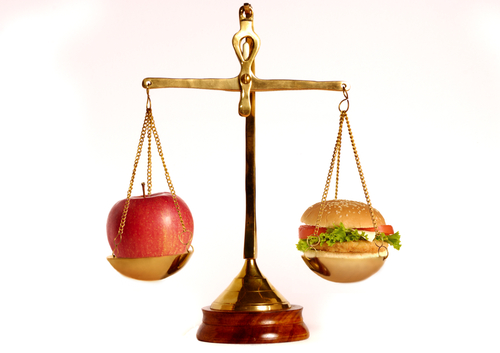
Joe: More or less, I treated my body like an amusement park. I did what I wanted, partied pretty heavily at times (lots of beer and alcohol…ok, lots was an understatement.)
I drank more in less time than any one of my friends. Most days, more than any 2 of them. I often went out with 2 of my friends, and the first round was 2 beers, and 6 screwdrivers. They each had one beer, I had all 6 screwdrivers.
We never had less than 2 such rounds, usually 3 if we stayed a second hour. I ate lots of fast food, nearly every day. Never exercised, just drank heavily and ate a lot of junk. Weight became a major issue, but I didn’t care because I was going to die by 30. I was pretty pissed when I didn’t.
What is your diet and lifestyle like now?
Joe: I still don’t exercise enough because I’m pretty lazy. But I do eat a fairly healthy diet. I’m far from perfect. My metabolism is unbelievably slow, as I eat very little most days, yet can’t seem to lose weight. I don’t eat a lot of substitutes as I firmly believe they are junk.
Most are either empty calories or poison.
For instance, I don’t rely on diet sodas or drinks with sugar substitutes. I drink mostly water or green tea sweetened with either a few ounces of juice or plain. I may have one regular soda per week, maximum. And not a big Gulp or anything like that. Either one Snapple Peach Tea or one 12 oz. Jones Cream Soda. I’d love to be perfect, but that isn’t going to happen.
Most of my food choices are whole grain, and I do limit amounts. Back in the day, the Mrs. and I would get, at most, two meals from a pound of spaghetti. And, to be honest, the second meal was a bit skimpy. Today, one pound lasts us 3 or 4 meals, sometimes more.
Most meals are heavy on vegetables, and very light on carbs like potatoes and breads.
I also don’t have a lot of animal protein. Maybe 3 times a week, and nearly dairy free.
I should exercise more, but at least I feel guilty about that, so that’s a good sign, I guess.
What were/are your biggest challenges with a diabetic diet and lifestyle?
Joe: The biggest challenge is thinking about what I’m eating.
I’d love to start out my day with a breakfast of bagels and cream cheese and a quart of chocolate milk. And then gulp down a large Coke with a couple double cheeseburgers and fries, and maybe an apple pie. And then have a pizza for dinner with extra pepperoni.
But if I were to eat that way, it would make me feel sick for days. I always consider what I’m eating and what comes next. If I don’t make a good choice for breakfast, I have to be careful to not follow it up with a bad lunch and dinner or else my sugar will skyrocket and take days to get back to normal. And I’ll feel terrible the whole time. I try to make good choices all the time, but life happens. I don’t know if that makes sense, but it’s working for me. I don’t give myself free reign, but by the same token, I realize that I don’t live in a vacuum.
As far as lifestyle, well, it has pretty much put a serious crimp in mine. At least 4 times I have been hospitalized for a couple months at a time. It’s tough to have a job remain open when I take off for 4 months to sit in a hospital and rehab. That and I have some serious ambulation problems now. It stinks when they start to cut off parts.
What has living with diabetes taught you?
Joe: It’s taught me that there is no magic pill. I have to take responsibility for myself. While some medicines do help control sugar, and some people need insulin, the majority of help comes from within.
If you had a friend that just learned they were diagnosed with diabetes today what would you tell them?
Diabetes is an insidious disease. It moves slowly and destroys you in ways that aren’t visible. No pill, no food, no exercise will ever take over for learning to care properly for yourself. Every illness that I have had over the last 20+ years can be traced, in some degree, to diabetes. It can not be cured, but it can be managed.
I often ask someone which glass will break first, one with a crack or one that is perfect? They always say the perfect one. But I contend the cracked one will last longer because one takes better care of it.
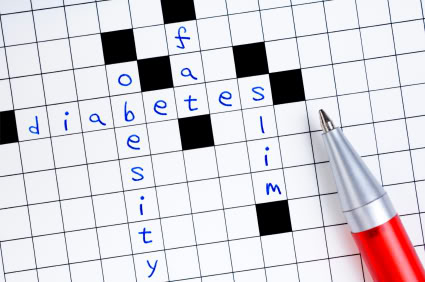
What are five simple things every person reading this article can do to prevent type II diabetes?
Joe: It is pretty simple.
1. Get proper rest
2. Get proper nutrition and maintain a healthy weight (diabetics are always hungry, it seems, and empty calories just make it worse)
3. Get sufficient exercise
4. Laugh (You do know I write a humor blog, right?)
5. Take responsibility for your life
Thanks for a great interview Joe, I am sure everyone has really appreciated your honesty around this tough disease. Stop by “Crotchety Old Man Yells at Cars” or subscribe for a daily dose of candid humor, and “Diabetes” Destroys” for more support and information around living with diabetes. If you have any questions for Joe or would like to share your own story with diabetes please do so in the comments section of this article.
Read more: Diabetes Category
FREE Diabetes Diet: Low Glycemic Index
Dr. Nicole Sundene, NMD is a licensed Naturopathic Medical Doctor at Fountain Hills Naturopathic Medicine 16719 E Palisades Blvd, Suite 205, Fountain Hills, AZ 85268.She believes we should utilize natural medicines to treat the root cause of disease rather than just treating symptoms, as symptoms are a message of imbalance sent from the body and will persist until they are properly addressed.
For appointments please visit http://FHnaturopathic.com for more information about Naturopathic Medicine services.
©KitchenTableMedicine.com, LLC ™
How to Filter the Water for Your Entire Home
November 17, 2008 by Dr. Nicole Sundene
Filed under Anti-Aging, Asthma, Detox, Environmental Medicine, Kitchen Sink, Lifestyle Tips, Skin Care, Water
“The Importance of Home Water Filters”
By Dr. Nicole Sundene
Have you ever wished you could filter more than just the water you drink?
I mean there are shower water filters out there too but that still doesn’t decrease the amount of pollutants and chlorine your children, pets, and clothing are exposed to. Chlorine free is especially important for anyone with asthma, skin problems, multiple chemical sensitivity or “perfume allergy,” and those with newborn babies and young children.
We are bathing in chlorine, cooking with chlorine, washing our already dry hands in chlorine, and constantly inhaling the chlorine fumes in our homes that derive from our shower water, kitchen, and laundry rooms. The things we do to get clean are ironically making us “dirty” on the inside. Chlorine not only gives the liver an extra workout, but it also ages our cells making for a shorter over-all lifespan and youthful appearance.
A while ago an environmental medicine professor at my school highly recommended just filtering the water straight from the main source. I mean it sounds a bit expensive and extreme, but when you think about all the other stuff we spend our money on in the name of health and beauty, we should seriously consider purifying the water we drink and the steamy fumes from our showers, laundry rooms, and kitchens. Actually what could be simpler?
Even if your municipal water is free of every other possible contaminant, it is still full of chlorine, and chlorine ages us. Reducing chlorine is an important part of my anti-aging program.
I was checking our new kitchen table partner AquaSauna the other day and was excited to see that they carry entire home water filters!
Of course you can just filter your kitchen sink tap water (which I always recommend filling up your own recycled glass bottles instead of drinking bottled water). And of course you can filter your shower water which you should do because one shower equals the total chlorine of drinking eight glasses of municipal tap water. But the best thing most home owners, parents, and pet lovers can do is just filter it straight at the source. Is that not a dream come true? Clean chlorine free water throughout your entire house? How liberating! Especially since one system is supposed to last for 3 years or 300, 000 gallons-I think it also saves the headache of having to keep up with all the replacing all the various water filters in your home.
I had heard initially that these ingenious systems run around $3000 dollars to have this set up but according to Aquasauna’s page it really is only $799 plus the price of installation (okay I know many plumbers charge more than heart surgeons especially on a holiday, but I doubt this is anywhere near a full day project for a plumber.)
These home water filters are also on sale right now, so you will receive a 20% discount as noted on the Whole House Water Filter page.
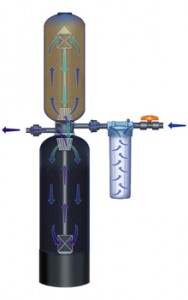
Our list of trusted list of resources on the kitchen table home page has been updated with Aquasauna’s links for your shopping convenience.
Of course our partnership with Aquasauna donates a small percentage of sales to kitchen table, so it may seem rather shameless to talk about the stuff over there that I really like, but if you have been looking for a great home water filter for a while, I would recommend checking out Aquasana.
I find their prices to be really reasonable, and the quality and customer service to be exceptional. As a naturopathic physician, people are always asking me for product recommendations. so I will start with this as my first official recommendation -after about a year of writing at the kitchen table and trying to avoid making specific recommendations.
We research and choose our partnerships here at the kitchen table for quality, safety, efficacy, and environmentalism. We always hold that which we recommend to the highest of standards, and our goal is to make healthy living affordable for everyone.
With a 90 day no hassle return policy you really don’t have to worry if you will like what you purchase over at Aquasauna.
If you ever have a problem with a product I recommend here at the kitchen table I would like to know right away. I strive to research the best and most affordable options for whole food and chemical free living, and we like to thank our sponsors by occasionally recommending our favorite stuff they keep in stock and reward our readers with useful sales, education and resources.
Of course you are welcome to shop anywhere you like, but if you do choose to purchase something through one of our well researched recommendations we simply thank you for helping keep kitchen table a constantly updated free natural medicine publication.
Dr. Nicole Sundene
Editor-in-chief of Kitchen Table Medicine
Read more: Anti-Aging Tips, Anti-Aging Program
Dr. Nicole Sundene, NMD is a licensed Naturopathic Medical Doctor at Fountain Hills Naturopathic Medicine 16719 E Palisades Blvd, Suite 205, Fountain Hills, AZ 85268.She believes we should utilize natural medicines to treat the root cause of disease rather than just treating symptoms, as symptoms are a message of imbalance sent from the body and will persist until they are properly addressed.
For appointments please visit http://FHnaturopathic.com for more information about Naturopathic Medicine services.
©KitchenTableMedicine.com, LLC ™
The Healing Power of Cauliflower
November 14, 2008 by Dr. Nicole Sundene
Filed under Cancer, Diet Tips, Estrogen, Kitchen Sink, Recipes, Whole Foods Diet
Cauliflower is an especially healing autumn food because it is low in calories, high in fiber, and rich in a very special cancer fighting compound called indole-3-carbinol.
This magical component of cauliflower prevents cancer by detoxing the system of the harmful forms of estrogen that result in reproductive cancers and complaints in women.
Researchers are now thinking men can likely use indole-3-carbinol to prevent forms of reproductive cancer, hair loss, and erectile dysfunction that result from these elevated levels of toxic estrogen. The high antioxidant spices added to your favorite cauliflower recipe combined with the olive oil further prevent cancer and reduce inflammation. This side dish will pair well with your favorite chicken, safe seafood, or grassfed beef recipe.
Dr. Nicole Sundene, NMD is a licensed Naturopathic Medical Doctor at Fountain Hills Naturopathic Medicine 16719 E Palisades Blvd, Suite 205, Fountain Hills, AZ 85268.She believes we should utilize natural medicines to treat the root cause of disease rather than just treating symptoms, as symptoms are a message of imbalance sent from the body and will persist until they are properly addressed.
For appointments please visit http://FHnaturopathic.com for more information about Naturopathic Medicine services.
©KitchenTableMedicine.com, LLC ™
Are You a Sugar Zombie?
November 12, 2008 by Dr. Nicole Sundene
Filed under Diabetes, Diet Tips, Dr. Scott Olson, Drug Abuse, Hypoglycemia, Kitchen Sink, Preventative Medicine, Sugar
 By
By Author of Sugarettes .
.
If you were a normal zombie, you would rise up out of your grave and stumble off in search of your craving: flesh. Sugar zombies, however, typically rise from their couch and go off in search of their craving: sugar. Sugar zombies yearning for sugar can sometimes only be satisfied with a pure sugary treat, but remember, certain foods act like sugar in the body (such are grains, chips, crackers, French fries and others…) and these “foods that act like sugar” are sometimes what the sugar zombie are searching for.
A funny thing about sugar zombies is that they can sometimes eat sugar even when they are not hungry and have just eaten. Do you remember going to a restaurant and having a full meal, and yet you still ordered desert? True sign of sugar zombieness.
Most people, when asked, will admit to some kind of sugar addiction and zombie-like behavior, but they often don’t realize just how strong that addiction can be, nor do they realize how much sugar can do to destroy their health.
What Science is Discovering about Zombies
Science is beginning to take sugar addiction serious. They have investigated how animals (mostly rats) act when they become addicted to sugar. Let’s take a peek inside the laboratory and see what they found out:
- Rats who were allowed to eat as much sugar as they like, eat a ton of it. If fact, they will often eat more sugar than any other type of food. Sometimes, they become so addicted to sugar that they become rat sugar zombies and sugar is all they will eat.(1)
- What happens when you addict rats to sugar and then take it away? Typically, they shake, tremble, become anxious and their teeth can even chatter.(2) They can also become much more aggressive. If this sounds like the symptoms of a junkie (or a zombie), you are exactly right. These typical withdrawal symptoms, show up in all sorts of other addictions, including smokers, drinkers, and drug addicts.
- Scientists took the next step, they addicted rats to sugar, took it away and then they brought it back. Guess what happened? The rats binged on the sugar and ate much more than they previously did. If this sounds a bit like the last time you went on a diet and gained more weight than you lost, then you are a true sugar zombie. Binging when the addiction is removed and then brought back is a clear sign of addiction.(3)
- When rats are under stress, they eat more sugar.(4) Once again, I’m guessing that this sounds a bit familiar to you? Do you eat more sugar when you are stressed?
- Scientists have discovered that the brains of rats change when they become addicted to sugar and the changes in their brains are very similar to those of other addicts, including smokers, alcoholics and drug addicts.(5)
- To test if a substance is really addictive, scientists will give animals the addicting substance (alcohol, drugs, nicotine…) and then give them a drug called an opioid antagonist. What the opioid antagonist does is block the brain from sensing the pleasurable aspects of the addicting substance. When opioid antagonists are given to sugar addicted zombie rats, they experience withdrawal exactly like rats addicted to morphine, alcohol or cigarettes.(6)
But are Zombies Hurt By Sugar?
Here is the real question you want to get to: You are a confirmed sugar zombie, but what is wrong with that? Well, it turns out, a lot! Sugar harms your body in three ways: it increases your weight, it leads to problems with insulin and blood sugar control, and it has a toxic effect on our blood vessels.
Let’s take a look:
- Weight Gain: According to the scientific and medical communities sugar is really not associated with weight gain. These health professionals will tell you that sugar contributes to weight gain because it contains calories. This is true. But sugar also contributes to weight gain just because it is sugar. It works this way: Your body has certain basic energy needs and sugar (mostly glucose) is the fuel that runs your body. Once you have enough sugar-fuel for all your energy needs, your body tends to store all the extra sugar as fat (and sugar zombies eat meals that often create a large amount of extra sugar in the blood that will get turned into fat).(7)
- Insulin Resistance: Sugar contributes to insulin resistance whenever blood sugar levels in the blood spike too high too often. When blood sugar levels in the body rise, insulin in the body also rises. Consistently high amounts of insulin in the body will eventually lead to cells down-regulating (or removing) insulin receptors; this eventually leads to a condition called insulin resistance (were the cells of the body are resistant to insulin) and diabetes. Insulin resistance does not develop when blood sugar levels are kept low.(8)
- Toxic Effects: Surprisingly, sugar is actually toxic blood vessels in the exact same way cigarette smoke is toxic to the lungs. Sugar causes harm to the protein structure of the blood vessel walls, eventually leading to destruction. This destruction can be seen dramatically in diabetics who have kidney disease, eye disease, heart disease, tingling in hands and feet, and even blindness and loss of limbs – all due to the destruction of blood vessels. (9) This same destruction happens in sugar zombies who don’t have diabetes, only at a slower pace.
How to Break the Zombie Spell
Getting over sugar cravings is not easy, especially when you are a sugar zombie, but then getting over any addiction can be hard. Know that the efforts you make are well worth it as the destruction that sugar creates is enormous.
Try these tips to stop your zombie sugar cravings:
- Eat more often: while this seems backwards, eating more often is much better for your blood sugar, your metabolism, and your sugar cravings.
- Eat fruit: It is easy to overdo this, but focus on fruits that are low on the glycemic index and try to eat them after a meal where they affect blood sugar less.
- Brush your teeth: This is a trick many people use to stop cravings and it will help your zombie smile.
- Exercise: A simple walk is often enough to stop cravings as it gets you up and moving and away from your temptations.
Take these tips and walk away from your zombie life. Simply being aware that you are a sugar zombie will make a huge change in your life. Take your sugar craving seriously – as you would any other addiction: know that the road will be tough at times, but that you can do it. Your reward, on the other side of your addiction, is better sleep, more energy, less sugar zombie-like behavior and a healthier life.
Recommended Reading: Sugarettes
Dr. Scott Olson is a Naturopathic doctor, expert in alternative medicine, author, and medical researcher. Spurred on by his patients’ struggles with sugar addiction, he was determined to discover how addictive and harmful sugar can be and ways to overcome that addiction.
The result of that study is his book Sugarettes, which details the addictive qualities of sugar and the harm that sugar does to our bodies.
Dr. Scott also maintains a blog which highlights the latest in health and healthy living. Subscribe or stop by to check out his latest research on sugar addiction.
References:
1.Spangler R, Wittkowski KM, Goddard NL, et al: Opiate-like effects of sugar on gene expression in reward areas of the rat brain. Brain Res Mol Brain Res. 2004 May 19;124(2):134-42.
2.Colantuoni C, Rada P, McCarthy J, et al: Evidence that intermittent, excessive sugar intake causes endogenous opioid dependence. Obes Res. 2002 Jun;10(6):478-88.
3.Pelchat ML. Of human bondage: food craving, obsession, compulsion, and addiction. Physiol Behav. 2002 Jul;76(3):347-52.
4.Gosnell BA. Sucrose intake predicts rate of acquisition of cocaine self-administration. Psychopharmacology (Berl). 2000 Apr;149(3):286-92.
5.Avena NM, Rada P, Hoebel BG: Evidence for sugar addiction: behavioral and neurochemical effects of intermittent, excessive sugar intake. Neurosci Biobehav Rev. 2008;32(1):20-39. Epub 2007 May 18.
6.Avena NM, Long KA, Hoebel BG: Sugar-dependent rats show enhanced responding for sugar after abstinence: evidence of a sugar deprivation effect. Physiol Behav. 2005 Mar 16;84(3):359-62.
7.Livesey G: Low-glycaemic diets and health: implications for obesity. Proc Nutr Soc. 2005 Feb;64(1):105-13.
8.Henriksen HB, Kolset SO: Sugar intake and public health. Tidsskr Nor Laegeforen. 2007 Sep 6;127(17):2259-62.
9.Friedman EA: Advanced glycosylated end products and hyperglycemia in the pathogenesis of diabetic complications. Diabetes Care. 1999 Mar;22 Suppl 2:B65-71.
Dr. Nicole Sundene, NMD is a licensed Naturopathic Medical Doctor at Fountain Hills Naturopathic Medicine 16719 E Palisades Blvd, Suite 205, Fountain Hills, AZ 85268.She believes we should utilize natural medicines to treat the root cause of disease rather than just treating symptoms, as symptoms are a message of imbalance sent from the body and will persist until they are properly addressed.
For appointments please visit http://FHnaturopathic.com for more information about Naturopathic Medicine services.
©KitchenTableMedicine.com, LLC ™
How are you Voting for your Health?
November 11, 2008 by Dr. Nicole Sundene
Filed under American Sickcare System, Discipline, Environmental Medicine, Kitchen Sink, Life Coaching, Lifestyle Tips, Motivation, Preventative Medicine
 Call me old fashioned but I refuse to vote by absentee ballot. I just love Election Day, and to me there is something really special about driving to the same elementary school year after year and filling out my ballot alongside everyone else in my community. There is that certain spirit in the air. That friendly neighborhood free cookie and coffee hour that can’t quite be replicated anywhere else. “Does my vote really make a difference?” I always wonder to myself as I look around the crowded room.
It certainly does to me.
Election time is about much more than voting for the lesser of two evils, it is about taking the time to educate ourselves about the issues.
As I carefully went through my voter’s ballot one last time, I realized, “wow voting is just like making healthy decisions!” Voting can be simple, and voting can be tough. There is that clear section in your voter’s pamphlet that you quickly breeze through, and then there are those decisions that you still aren’t certain about after never ending research and reading. What does this issue even mean? Do I need to hire an attorney to translate this legal gibberish? You may be left even at the last minute to deliberate over what is right and what is wrong.
Whether my vote is actually counted or not, I am left that much more educated as I submit my passionately researched opinions on how this world should be -in to the giant garbage can er…ballot counter.
We are truly blessed in our country to at least be given choices, even if they aren’t the best choices, they nevertheless are still choices. The freedom of choice is what makes America the amazing country that it is. Your choice may not always make the difference in America, but it does make a difference in you.
One thing that always ticks me off year after election year though is the blanket statement “everyone should vote.”
Do you really think everyone should vote? Sometimes I think that people should be forced to take a basic test on the issues and pass it before they can vote. Now I am not saying this to offend people that can’t read. Really, you shouldn’t have to even know how to read in order to vote, illiterate people can and should still be allowed to vote—as long as they are educated on what they are voting about!
What happens when we don’t educate ourselves on the issues and just go blindly vote? Does the thought of hundreds of thousands of uneducated voters making decisions about our government terrify anyone else?
One uneducated vote is actually enough to throw off an entire election.
In this year’s presidential election the “vote was rocked” by all the previously apathetic people that never really cared enough to go out and vote. That is what made the difference. That is what got the underdog in to office. That is what has created a great deal of hope that, “change is coming”, “that race is not an issue”, “that the average person can be president” (well George W. already demonstrated that) and that MLKJ’s dream that “people are not judged by the color of their skin, but the content of their character,” has alas come true. At least the majority of the American population is now looking at character and not color. We are progressing!
The votes of the previously apathetic are what has made American history. In all reality that is more amazing than the first African American being elected to office. Apathy is a far bigger problem than prejudice these days. Of course there are still and will always still be ignorance around race, but we have an entire Generation of “X”ers that don’t care about anything except video games and Sex in the City. Young people everywhere are starting to take pride in their country, starting to see that “this is MY country too.” People in Seattle have been dancing in the streets, making eye contact, and some strangers have even been caught making polite small talk despite the start of the nine month rainy season.
Regardless of your party preferences, I think we can all agree that the choice to vote is a right that many Americans take for granted. You shouldn’t just go blindly vote, it is important to educate yourself on the issues at hand, the pros, the cons, and then to support things moving in a positive direction.
Every day, everywhere you go, you are given a choice. You are given an opportunity to vote for your health. Sometimes the choices aren’t that great like “do you want fries with that?” or “diet coke or regular coke” or “pumpkin pie vs mince meat pie” and “sugar or something made from sugar?” But nevertheless they are choices that we should still attempt to think about.
Is Barack Obama right? Is change really coming? Only you can decide.
It’s the synergy of these little daily choices that build us up; or stack up as obstacles in our path.
In naturopathic medicine one of our main nature cure healing principles is to “remove the obstacles to cure”. The body wants to heal. The body wants to repair. It is the intrinsic nature of the body to constantly heal and repair, but the body also requires the right tools, the foundation has to be properly set, and obstacles must be removed from the path of “The Healing Power of Nature” or “The Vis Medicatrix Naturae” or “The Vis” as most naturopaths fondly refer to it. “The Vis is strong in this one,” you can go around joking to all your healthy friends if you want to be nerdy like me.
Obstacles to healing typically come from our unhealthy diet and lifestyle choices. All the white refined food garbage we eat, stagnation, negative thinking, unhealthy relationships, drugs, alcohol, smoking, etc, etc…nag, nag, nag…these are all the roadblocks to healing.
Sometimes the right choices are crystal clear. Everyone knows drugs are bad. Everyone knows smoking kills. Everyone knows 1-2 glasses of wine a day not the whole bottle, right? But when it comes to our diet things can be a bit trickier. We usually are left picking between what appears to be the lesser of two evils. So what would you vote for:
High Fructose Corn Syrup or Aspartame?
Wow!!! Did I really just vote for High Fructose Corn Syrup? Well, I was left no choice when it went head to head with aspartame. *sigh*
Which is the lesser of the two evils? High fructose corn syrup as noted in Dr. Scott Olson’s amazing book about sugar addiction, “Sugarettes” is linked to obesity, diabetes, aging to our arteries, and hypoglycemia. Whereas aspartame, is guilty of causing a “cephalic response” which leads to obesity and weight gain. In the cephalic response the brain is tricked by the sweet taste of aspartame and then tells the pancreas to secrete insulin, despite normal levels of glucose. This insulin dump causes low blood sugar or “hypoglycemia” which makes you hungry, and ultimately leads to being overweight.
Is aspartame not the biggest joke in health “care”? The man made garbage you are drinking to lose weight is making you fat? Yikes the issues can be deceiving, and just like in politics, the government refuses to acknowledge this conundrum, while both the FDA and American Diabetic Association also refuse to acknowledge that sugar causes diabetes (type II) and weight gain. (Source: OlsonND)
Yet another reason that politics mirror health care—you don’t always agree with the government!
Do you trust the government? Do you believe every single bit they tell you? Whether you do or you don’t the correct answer is “you shouldn’t always.” The government has to keep prison and school caffeteria programs funded so the average American best not base their “optimal daily allowance” off what the government says. I think the RDA should be called the MDA for “Minimal Daily Allowance”. The government also only cares about the collective and not the individual. There is no “NDA” (Nicole’s Daily Allowance).
So—now that you have been educated on aspartame vs high fructose corn syrup, do you still want to vote for aspartame? My guess is “no” if you are trying to use aspartame as a weight loss aid.
“Well Dr. Nicole, sugar makes people fat too, and high fructose corn syrup is converted by the liver to fat-all biochemists know that fructose is typically converted in the liver to fat,” you may argue.
Which I would then deliberate back that aspartame has MORE consumer related complaints than any other man made substance we consume. Frankly I don’t even have all day to rattle off the ever-growing list of skin rashes, autoimmune disease, fibromyalgia, arthritis, cancer, mood disorders, so forth and so on that consumers are reporting to the FDA. Thus I am left to make an ugly vote for high fructose corn syrup.
Rarely in health just like in politics, are we ever given a win-win situation to deliberate over like “soup or salad?” You can’t fail on that choice, unless the soup is a rich fatty cream base with chunks of sausage, or the salad is a lifeless sad case of iceberg lettuce and Thousand Island dressing.
My point with this rambling about voting for our health is that every single day, every place you go you are given the power of choice. Exercise that power with extreme privilege. Educate yourself on the issues. Read one new health tip every single day. Create a new whole foods recipe each day. Our day to day choices do in fact have influence not just on us but on our environment and those around us.
We live in a country where we have the constitutional right to choices, and many of us are not exercising these rights when it comes to our health. It may initially be overwhelming to think about all the diet choices we have to make, but in the end it all boils down to the same thing whether you are voting for a candidate or voting for your health—education. Educate yourself on the issues and then make your decisions based off your values, based off what works for YOU.
The more you educate yourself on the things you choose to put in your body the healthier you will inevitably become. We truly “are what we eat,” and the tritest expression in nutrition should be the motivator behind all your health decisions. What are your values? Who do you really really really want to be? Fat or thin? Healthy or unhealthy? Organic or Polluted? Positive or negative? Fit or fat? Selfish or contributory? Environmental or Apathetic? Believer or Non-believer? Who do you want to be?
You are invited to decide that today.
If you want to prevent disease, if you want to be healthy, if you want to teach your children by example; if you want to be that positive person and most importantly if you want to inspire the people around you by the choices you make—the bigger “votes” although initially tough—become that much simpler.
Hmmm…that gym membership is suddenly worth it, that home cooked meal at the kitchen table is suddenly worth the extra effort rather than just another night of drive through dining. Reading your child a book before bed suddenly becomes a million times more special than drinking a fat glass of wine in front of the television. Maybe that extra 20 cents for that organic apple really isn’t that bad after all when we decided to vote with our consumer dollars against pesticides being allowed to poison our environment and our children, and our children’s environment. Your consumer dollars are always voting too.
It all boils down to living by your values.
What is it that you really value? Life coach and author, Tim Brownson is constantly nagging me…er…um…I mean… he is always INSPIRING me to consider my values, and some of the healthy or environmental things I have previously been in a naturopathic rebellion against have more easily slid into place.
Anyone that has been chronically ill—that has been so sick that they have seen death’s door and made it back again knows the value of their health. If you have visited death’s door you do not take your health for granted. You realize you were given a second chance, you were given life. You choose life and you choose everything that supports the existence of your life. Unfortunately those of us that have not been forced to pay that visit to death’s door, have no clue what the true value is in our health. We may never fully understand until it is too late.
As a result, our health is always a value that will get cast aside with apathy. And apathy is the biggest war we have to wage for this century.
Whether you are traveling, visiting a friend, dining out, or eating at your kitchen table-you are always given choices. Get political, vote for the lesser of the two evils. Use your money as your ballots. That is exactly what keeps us always moving in a healthier direction. That is how we save the environment and ourselves. That is how we prevent disease. One day at a time, one choice at a time.
One healthy vote at a time.
Ha- you thought Election Day was over now did you? Sorry I can’t let you off the hook that easy, voting season has just begun. Now get out there and make your votes count!
“Progress not perfection.”
Thanks for stopping by my kitchen table.
~Dr. Nicole Sundene
Related Reading: 45 Years to American Health Care
Dr. Nicole Sundene, NMD is a licensed Naturopathic Medical Doctor at Fountain Hills Naturopathic Medicine 16719 E Palisades Blvd, Suite 205, Fountain Hills, AZ 85268.She believes we should utilize natural medicines to treat the root cause of disease rather than just treating symptoms, as symptoms are a message of imbalance sent from the body and will persist until they are properly addressed.
For appointments please visit http://FHnaturopathic.com for more information about Naturopathic Medicine services.
©KitchenTableMedicine.com, LLC ™
6 Steps to Calorie Counting in Your Kitchen
November 11, 2008 by Dr. Nicole Sundene
Filed under Bonnie Pfiester, Diet Tips, Kitchen Sink, Weight Loss

By Bonnie Pfiester, Fitness Trainer
One of the greatest treasures I received after my grandmother died was her recipe box. Recently, I was thumbing through all the recipes and noticed an odd number written on the top of some of the cards.
All the sudden it hit me, the number reflected the calories for that dish.
One recipe, Salmon-Broccoli Bake, had the numbers “1600” noted at the top of the card. Another recipe for Overnight Coffee Cake had “3700 cal” written in my grandfather’s handwriting.
It’s funny how the smallest thing can bring back certain memories.
Since I was a kid, I remember my grandfather jotting down notes with his unique squiggly handwriting on 3×5 cards in the kitchen. Over time, I watched him weigh food on a small scale and listing numbers as if he was doing some science experiment. Although my grandfather was a professor at Florida State University, I learned his mad science skills were simply being used to manage his waistline.
As I reflect back on those days in my grandparent’s kitchen, I can vividly remember my granddad counting out his favorite rye crackers, making sure to abide by the serving size on the box. He would then add the number to his 3×5 card. After supper he would continue his list of calories for each dish, always keeping a tally for the day.
Once I saw those recipe cards it made me think how we could all learn by his example. Unfortunately, many people don’t know exactly how to count calories. Truth is, besides reading labels and looking up whole foods, I rarely took the time to add up all the ingredients in my own recipes until lately. I discovered tracking calories is easy and rewarding.
Here are a few steps to help you get started.
1. Use a calorie book or an online calorie counter to find the number of calories in your whole food ingredients.
2. Measure ingredients using food scales and/or measuring cups for the most accurate information.
3. Tally the total calories for packaged foods by multiplying the number of servings used in your recipe by the number of calories per serving.
4. Use alternative ingredients for high-calorie items to help save calories in your favorite dish.
5. Add the final list of calories for each ingredient and divide by number of servings to get your final count. For instance, the 3700 calorie Overnight Coffee Cake served 15 people 247 calorie treats.
6. Once you have completed the math, document your answer on your recipe card or book.
If you love to cook but need to watch your waistline, begin counting calories in your favorite dishes today. What you will learn in the process will be more valuable than you could imagine.
~Bonnie
Bonnie Pfiester is a Personal Trainer, wife to the famous fitness trainer Steve Pfiester of the reality TV show “Fat March”, and owner of the women’s health club Longevity Fitness.
You can enjoy more of Bonnie’s fitness and beauty articles at www.BonniePfiester.com or here at the kitchen table by visiting the Bonnie Pfiester page.
You are invited to leave your fitness and sports nutrition questions in the comments below for Bonnie to briefly answer or write about in future articles.
Dr. Nicole Sundene, NMD is a licensed Naturopathic Medical Doctor at Fountain Hills Naturopathic Medicine 16719 E Palisades Blvd, Suite 205, Fountain Hills, AZ 85268.She believes we should utilize natural medicines to treat the root cause of disease rather than just treating symptoms, as symptoms are a message of imbalance sent from the body and will persist until they are properly addressed.
For appointments please visit http://FHnaturopathic.com for more information about Naturopathic Medicine services.
©KitchenTableMedicine.com, LLC ™
The Healing Power of Music: An Interview with Jeremy Dion
November 11, 2008 by Dr. Nicole Sundene
Filed under Counseling, Guest Posts, Kitchen Sink, Music
 Hi Kitchen Table Medicine readers! Ever wonder about the healing power of music?
Well, I have invited therapist and musician Jeremy Dion to the kitchen table to discuss the therapeutic benefits of music.
I am delighted to host this interview because it is wonderful to see health care professionals use their creative talents to further help people. Please welcome to the kitchen table therapist and musician Jeremy Dion…
Jeremy, what is your professional background?
I make a living as a psychotherapist in private practice, in Frisco, Colorado. I work mainly with kids doing play therapy, and teens, but I also work with couples, adults, and families. Adolescents were the last group of people I wanted to work with as I made my way through graduate school, as I keenly remembered the type of teenager I was. Yet after graduation I took a job with a Wilderness Therapy program, and would up providing therapy to the roughest and toughest kids on the block. I learned how to reach and care for kids who weren’t getting that from many other sources, and it flipped a switch in me.
Now, working with the “trouble makers” is one of my specialties. I have degrees in music therapy and counseling psychology, but somewhere along the way I decided to focus my musical efforts on my own songwriting and performing, rather than using my specific training as a music therapist. I am in the midst of the transition to making my living as a professional musician.
How long have you been playing music?
As long as I can remember. I grew up playing the piano, and singing to myself. I was in the Middle School choir, but so was everyone else it seemed. Later, I began singing in earnest with the encouragement of Issaquah High School vocal teacher Lavonne Watson. It was during that time that I really developed the internal awareness that I could sing, and sing pretty well. Up until that point it was mostly family members giving me positive feedback on my singing, but they can’t be trusted to be too objective.
So I sang all through High School, performed in the school musicals, etc. But It wasn’t until I was a freshman at U.C. Berkeley that I picked up the guitar and began to write my own songs. Since that time, making sense of the world through songwriting has always been a natural outlet.
I enjoy the performance aspect of being a musician, of course, but even if I wasn’t performing, I would still be writing songs and playing the guitar. Corny as it may sound, sometimes I feel like I might explode if I didn’t write songs, play guitar, and sing. It has become so much a part of me at this point that I would be literally lost without it.
What are the therapeutic benefits of playing and listening to music?
Oh man, how much space have you got for this interview? Pick an aspect of being alive, and therein lies a musical benefits. Whether we look at physiology involving things like heart rate, measurable stress level, breathing patterns, neuro-synaptic activity, or the less tangible things like motivation, emotional awareness, emotional processing, memory recollection, etc. music has been demonstrated again and again to bolster health.
Furthermore, spirituality and music have been paired long before recorded history. As a species we resonate with music as a means of worship, as a way of connecting more deeply with the divine both internally and externally. Music therapy as a field has been around for generations, but sadly still fights an uphill battle for recognition in our western medical models. Yet we all seem to know intrinsically that music adds innumerable dimensions to the human experience, and we use this knowledge in unique ways. We use music purposefully to match our mood, to conjure memories, to shift our mood, and to feel more deeply.
In addition, with the advances in fields like quantum physics, we are reminded again and again that everything is vibrating, from the largest knowables in the universe to the most microscopic sub-atomic particles, we are vibrations. In a very real sense, everything we know and everything we are is music.
How has your professional training in psychology been of benefit to your career as a musician?
First of all, I went through a very unique graduate program at Naropa University in Boulder. As a three year program, it focuses on one’s internal process as much as (if not more than) the academic information. We had years of training in meditation and mindfulness, were required to participate in our own therapy, and were encouraged to become painfully familiar with our own habit patterns and nuances before we could hope to be of benefit to someone and theirs.
In that sense, my graduate training reminded me again and again to go inward, to dig in the dirt, plumb the depths, and get in touch. I must say, this type of program does not suit everyone. Yet it was perfect for me, and encouraged me to learn more about myself in those three years than in the previous twenty three combined.
From this depth of understanding, most of my songs are born. As a result, my lyrics are intensely personal to me, and releasing this first CD was akin to publishing my personal diary. Thankfully, people have been resonnating with music. In addition, my career as a psychotherapist has continued this path of understanding, of seeing aspects of myself in my clients’ process and heightening my awareness about my own personality, my own idiosyncrasies, and my own divinity. All of this informs my writing and my performances.
Who is the musician that inspires you the most?
Paul Simon. His brilliance shines through on so many levels both musically and lyrically. He has a way about him that I very much admire - a way of speaking simply, but giving the sense that he is really getting at so much more.
I have never been accused of under-analyzing anything, and I’m sure I read much more into his music than others might, but his music consistently inspires me the most. My own journey as a songwriter has been to become more transparent in my writing. I used to write very poetically but in a way that was wide open to interpretation, and often left the listener feeling detached from the music.
That was purposeful at the time, because I wasn’t ready to open up and get too clear about my internal world. That has been changing, and as my songs become more true and clear, they have been reaching a broader audience. I credit Paul Simon with some of this.
What kinds of positive messages do you promote through your music?
Elvis Costello wrote, “What’s so funny about peace, love, and understanding?” My music, I suppose, promotes those things in such an unabashed way that sometimes I just have to laugh at myself. As a described earlier, my music is about me.; it is about being alive on the planet; it is about love and loss, anger and resentment, beauty and laughter, joy and pain.
Others may read into it many other things, and that is welcome. That’s what music is about - being able to personalize it and make sense of it the way it adds up to you. But in the end these songs are about me and the things I think about and feel about. To me, that’s the positive message: go within.
Share with us a specific example of lyrics intended to make a difference.
They all have made a difference. I don’t mean that in a “I can save the world” sort of pompous way. I mean in the way that I am different for having written them, having worked through them, having sung them again and again. As I said before, if I didn’t have this outlet, the world would make less sense to me and I might explode out of sheer overwhelm. If I had to pick a lyric to share, it would be from “Back Breaking Wall,” and was intended to extoll the virtue of looking within:
“Every now and then I feel one more step away from being here
Even though in earnest how I try to get back to you, my dear
Resurrecting all these ancient bones under centuries of soil
The sanctity of self-reflection separates the water from the oil”
Where are you currently on tour?
Mostly in Colorado - Denver, Boulder, and the mountain cities around Breckenridge.
What is your favorite stress management tip?
Exercise, meditation, and some sort of creative outlet. I don’t care if it’s painting, drawing, poetry, journaling, music, dance, scrapbooking, etc. Just create.
Thanks Jeremy for sharing your creative and professional wisdom with us!
To purchase Jeremy Dion’s CD’s you can visit www.JeremyDion.com. You can also add Jeremy as a Myspace friend, load his songs to your Myspace profile, and follow Jeremy’s tour updates on Facebook.
I am always interviewing various health care providers, contact us if you have a unique health related story to share at the kitchen table.
Dr. Nicole Sundene, NMD is a licensed Naturopathic Medical Doctor at Fountain Hills Naturopathic Medicine 16719 E Palisades Blvd, Suite 205, Fountain Hills, AZ 85268.She believes we should utilize natural medicines to treat the root cause of disease rather than just treating symptoms, as symptoms are a message of imbalance sent from the body and will persist until they are properly addressed.
For appointments please visit http://FHnaturopathic.com for more information about Naturopathic Medicine services.
©KitchenTableMedicine.com, LLC ™
How to Transform Fear
November 5, 2008 by Dr. Nicole Sundene
Filed under Counseling, Fear, Kitchen Sink, Life Coaching, Lifestyle Tips, Mary O'malley, Zen Thinking
 By
By Author of The Gift of Our Compulsions: A Revolutionary Approach to Self-Acceptance and Healing and Belonging to Life: The Journey of Awakening
In his first inaugural speech in 1933, Franklin Roosevelt said “…the only thing we have to fear is fear itself…”
This was a profound thing to say given the economic climate of that time and was intended to shake people out of their focus on their material losses.
But what if that is not actually true? What if we don’t need to fear fear. In fact, what would our lives look like if the voice of fear inside of us couldn’t catch us in its web?
This is certainly a time on our planet in which fear is up big time - financial fears, terrorist fears, fear for the future. But what would happen if, rather than being seduced by fear, we could frame this time differently?
Rather than seeing it as a time of breakdown, we could see it as a time of break-through.
Yes, it certainly looks as though things are breaking down, but that is true of all breakthroughs. Think of a woman giving birth. It is challenging and it is messy and it is necessary for her body to contract in order for the baby to be born. What would it feel like to see what is happening on this planet as a time of birth, of going through the contraction of the birth passage so that we can emerge into a more aware level of consciousness?
The key to this birth is a different relationship with fear itself.
Let us go back to the butterfly story we explored last year because it holds the keys to the evolutionary shift we are currently undergoing. For our purposes, the caterpillar represents the old level of consciousness this planet has been living in which is based in fear and reaction.
The caterpillar is, for its size, one of the most destructive beings on our planet, and if you recognize that human beings in the last century killed over 100 million of their fellow human beings in the name of war, it is reasonable to say that we have been in our caterpillar phase.
As the caterpillar’s time comes to an end, it creates a cocoon, and in its dark embrace, the caterpillar turns into goo. Out of that goo comes a wave of what they call imaginal cells - the first appearance of the butterfly. The amazing thing is that the goo kills this first wave of cells! In other words, the old tries to kill the new. Such chaos! And if we looked at all the great evolutionary shifts on this planet, we would see that there is always chaos as the old phase is dying out and the new is being born.
This chaos of the goo killing the new cells of the butterfly causes these imaginal cells to come together into communities that begin to differentiate into the butterfly. This is the place where breakdown (the caterpillar turning into goo) becomes the breakthrough into the new expression of life called a butterfly. The butterfly is life transforming itself as it has done billions upon billions of times as evolution has progressed on this planet. The butterfly is a completely different kind of being than the caterpillar. Rather than being destructive, this new being gives to the world, both beauty and pollination.
I believe that the butterfly of human consciousness is being born - a much wiser, more loving consciousness - and fear is the birth contraction. We are in the “goo phase” where our fear-based perspective on the world is now coming to an end, and more of us are beginning to see the possibility of living from a level of consciousness that is as transformative as the shift from caterpillar to butterfly. This level of consciousness doesn’t divide us like fear does.
Instead it unites.
And at its core it deeply trusts life, so rather than living through fear and all of its reactions (that cause so much devastation on this planet), it lives from wisdom and heart. This allows us to live from the level of consciousness that recognizes we are all in this together and each person is a necessary and integral part of the human family that we are.
You are the place where this evolutionary shift is happening - right there inside of your own mind and heart. Life is asking you to relate to fear rather than believing what it is saying. It is asking you to move from “I am afraid!” to “That is the voice of fear inside of me.”
What would it be like in your life if every time you noticed fear showing up in your mind, you took a breath and came back fully to life right here, right now and said, “I choose to trust life.”
Is this a lot to ask our fear based consciousness? Yes! But fearing life comes from a misunderstanding of life. And trusting life comes from the truth. Life is in charge of life and it is much smarter than our little egos. It has created stars and planets and galaxies and waterfalls and ladybugs and you and me from light, of all things!
To trust life is to step off the cliff of fear and, rather than falling to our death, discover that it is our nature to fly!
~Mary
The Gift of Our Compulsions: A Revolutionary Approach to Self-Acceptance and Healing and Belonging to Life: The Journey of Awakening are both available through Amazon, and are highly recommended at the kitchen table.
 Mary O’Malley, author of “Belonging to Life” and “The Gift of Our Compulsions”, is offering a retreat February 21st – 27th on the beautiful Hawaiian Island of Molokai.
For our readers she is offering a $200 discount on this nourishing retreat that restores your joy, your trust in yourself, and your connection with life. Visit MaryOmalley.com for more information on Mary, and visit the following link for more information on the Hawaiian retreat Waking Up in Paradise Residential Retreat in Hawaii.
Mary’s books are both endorsed by Eckhart Tolle who offered the phenomenally successful web class with Oprah on his book “A New Earth”. You can sign up for her monthly newsletters by going to the home page of her web site. Each month you will receive a letter containing insight and information on how to stay in touch with your peace and joy no matter what is happening in your life.
Dr. Nicole Sundene, NMD is a licensed Naturopathic Medical Doctor at Fountain Hills Naturopathic Medicine 16719 E Palisades Blvd, Suite 205, Fountain Hills, AZ 85268.She believes we should utilize natural medicines to treat the root cause of disease rather than just treating symptoms, as symptoms are a message of imbalance sent from the body and will persist until they are properly addressed.
For appointments please visit http://FHnaturopathic.com for more information about Naturopathic Medicine services.
©KitchenTableMedicine.com, LLC ™
Terra Tints by Alba Botanica: Product Review
November 5, 2008 by Dr. Nicole Sundene
Filed under Beauty, Kat Lee, Kitchen Sink, Lifestyle Tips
 By Kat Lee
There’s nothing that makes me feel prettier than wearing lipstick.
I’m not sure why… it must just be a girl thing. At any rate, I’ve known for quite some time that the ingredients used in lipstick were less than stellar.
However, it was when it was discovered that several mainstream companies had lead in their lipstick products that I decided enough was enough. Then I began my search for quality lipstick that I wouldn’t have to take out a second mortgage to purchase!
It wasn’t easy; let me tell you. First I went to some trendy, all natural shops – and found nothing that cost less than the pair of shoes I was wearing. After that, I asked around and was told that any organic lipstick would cost at least one pair of shoes. In one last desperate attempt, I went to my local farmer’s market, Sprouts (my usual go-to for all natural products) and found several tubes of organic lipstick for almost $20 per tube. To be honest, I didn’t want to shell out that much dough for something that I wasn’t sure I would even like.
Then I saw Terra Tints for only $3.50 per tube. Granted, it’s actually tinted lip balm, not “real” lipstick, but for that price, I was willing to chance it. I picked “Blaze” because it sounded nice and bright, and I was just in that kind of mood that day. When I put it on, it was pretty, red and very lipstick-like. But even better than that, it was menthol tingly. When I put it on my lips, it’s like I’m giving them a hot rock massage, and who doesn’t want that on a dry winter day?
I know, I know, you’re wondering if they’re paying me for this… and the answer is no (although I wouldn’t be opposed). I just really like this product because it meets all my requirements. It’s organic, all natural, pretty, stays on, and doesn’t dry out my lips. I have to say that I’m hooked!
For more of Kat’s fun and fabulous natural beauty reviews stop by http://katzhealthyliving.blogspot.com
Dr. Nicole Sundene, NMD is a licensed Naturopathic Medical Doctor at Fountain Hills Naturopathic Medicine 16719 E Palisades Blvd, Suite 205, Fountain Hills, AZ 85268.She believes we should utilize natural medicines to treat the root cause of disease rather than just treating symptoms, as symptoms are a message of imbalance sent from the body and will persist until they are properly addressed.
For appointments please visit http://FHnaturopathic.com for more information about Naturopathic Medicine services.
©KitchenTableMedicine.com, LLC ™
Stress is For Suckers: Free Book!
November 5, 2008 by Dr. Nicole Sundene
Filed under Life Coaching, Stress
 My favorite Life Coach, Tim Brownson has done it again!
His new ebook “Stress is for Suckers” is out- and as a gift to my Kitchen Table readers you are all welcome to access a free copy for the next week! Be sure to get it while it’s hot.
Stress is THE most important lifestyle factor to get a grip on above anything else, and Brownson does a thorough job breaking down and simplifying all the best life coaching tactics for busy people coping with a stressful lifestyle.
Simply visit Tim’s online bookstore and enter the coupon code KITCHENSTRESS to grab your free copy for this limited time period.
Happy Stress Busting Everyone!
~Dr. Nicole
Dr. Nicole Sundene, NMD is a licensed Naturopathic Medical Doctor at Fountain Hills Naturopathic Medicine 16719 E Palisades Blvd, Suite 205, Fountain Hills, AZ 85268.She believes we should utilize natural medicines to treat the root cause of disease rather than just treating symptoms, as symptoms are a message of imbalance sent from the body and will persist until they are properly addressed.
For appointments please visit http://FHnaturopathic.com for more information about Naturopathic Medicine services.
©KitchenTableMedicine.com, LLC ™
An Interview with a Heroin Addict turned Psychologist
November 5, 2008 by Dr. Nicole Sundene
Filed under Drug Abuse, Guest Posts, Kitchen Sink
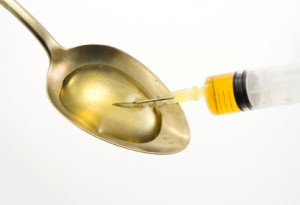 Everyone loves a poignant rags to riches tale.
We all want good to triumph over evil.
We all pray for those struggling through life that they eventually find their way. Struggling past insurmountable obstacles towards achievement is the all American dream.
In the case of Dr. Melinda Tyler, former heroin addict and sex worker, she has not only proudly triumphed drug addiction, but has become an award winning psychologist and professor, and is now using her personal experience to help drug addicts everywhere.
Every parent fears that their child will end up on drugs someday, and I have invited Dr. Melinda Tyler to the Kitchen Table to share with us the challenges she has proudly overcome. I hope Melinda’s inspiring story will help to create awareness for the signs of drug addiction as well as help everyone understand the true needs of drug addicts and what can and should be done in America to tackle this ever-growing problem.
Melinda, how did you become an addict?
I have thought about that a lot, naturally. My childhood laid a perfect storm for me to become self-destructive. I was sexually abused from the time I can remember until I was approximately 14 years old. I was self-destructive from an early age; I used to cut myself. If I felt physical pain, it helped the emotional pain subside. When I became involved in San Francisco’s punk rock scene and started working as an exotic dancer, I started dabbling in drugs.
I did cocaine for years before my taste in drugs turned to heroin. The first time I did heroin, I remember feeling so warm and secure—it was a feeling I’d always wanted and had never felt before. Although I had seen others become addicted, I was powerless to stop. It was as though I embraced that self-destructive lifestyle. I remember the day I realized I was a heroin addict—I thought it was a normal, natural course for my life—I thought I deserved to be an addict. I even accepted (and hoped) that it would bring me death.
What finally led you towards help for your addiction?
My first husband died of a heroin overdose and I found him dead. Our relationship had been mutually destructive but he had always managed to keep a roof over our heads—he was a functional addict. When Michael (my husband) died, I was devastated. I took on the guilt of being responsible for his death (we’d had an argument before I’d left the house that day). I kept wondering if Michael had really committed suicide and it tore me apart.
Within a few months, I lost everything—our apartment and all our possessions. I became homeless, sleeping with friends (and strangers) from time to time—sometimes even spending nights riding San Francisco’s Muni bus system because I had nowhere to go. I had worked as a high priced call girl earlier in my life—before I met Michael and to support my habit, I started turning tricks on the street. I did this for a year—living an absolute hell of a life.
Finally, one weekend, while I was staying at the apartment of a friend, I decided I’d had enough and tried to commit suicide. These were serious attempts and on the last one, I nearly succeeded and woke up in a hospital room after having been in a coma for the prior three days. While I was in the hospital, I met a man named Tim Callahan, who found a treatment center that was willing to take me with no money or insurance. I stayed there for six months—they saved my life. I have written about this experience on the Melindaville Blog in my blog post, “Courage to Change.”
What was the withdrawal from heroin like?
Heroin withdrawal is like having the worst flu you can imagine and multiply that by ten. One of the reasons why withdrawal is so intense is that through the course of becoming addicted to opiates, one’s body stops producing endorphins, which are our body’s natural painkillers.
These endorphins kick in more during times of exertion (such as when you are exercising) or when you injured yourself but they are always produced, which allows us to deal with the every day pains of life. Heroin is a synthetic painkiller, very similar in structure to endorphins, so your body stops producing endorphins when you become addicted.
Therefore, when you are going through withdrawal, your body has to learn to produce those endorphins all over again, which takes time. I have written more about the terrible effects of withdrawal in my post, “The Hell of Heroin Addiction,” on the Melindaville Blog.
Do you think that if you had earlier intervention for the sexual abuse that you could have avoided becoming a heroin addict?
As a psychologist, I can tell you that children are much more likely to respond to any kind of treatments than adults are because children are more malleable. It is hard to say what type of lasting effects the sexual abuse would have had, even if I had received help earlier. I believe if the problem had been recognized at an earlier time in my life and intervention taken, then I would not have been as self-destructive as I was.
Has heroin use left any lasting effects on your body?
Heroin, luckily, is one of the least damaging drugs on the body. It is not nearly as hard on one’s body as say, methamphetamine or even alcohol. However, the lifestyle is such that it is very damaging. For example, going into dangerous areas to buy drugs, sharing needles, using dirty needles, or overdosing are all more likely to happen if one is addicted to heroin.
For many years, when I was addicted to heroin, I didn’t have proper nutrition, particularly calcium; so as a result, I have had to have almost $40,000 worth of painful dental work. The other problem I am battling today is having degenerative disc disease, herniated discs, and arthritis in my lower back—and I believe both my dental and back conditions were the direct result of doing drugs for so long. I am very lucky, though, that I still have relatively good health and that my mind was not impaired.
What kind of help is available for addicts?
One of the biggest reasons I am writing my book is to increase awareness that about the need for free and available treatment—because so very few options exist today for those who don’t have money or insurance. And many insurance policies don’t pay for treatment at all. There are limited options in urban areas, such as drug detoxification or community daycare, but they are unfunded and inadequate. Recently, there has been a huge influx of heroin in rural areas of our country, which I wrote about in a recent post, “The Hell of Heroin Addiction.”
What kind of help do addicts really need?
It should be as easy to get into treatment as it is to buy a drug on the street—and that is the bottom line. Addicts need to have comprehensive treatment that addresses the root causes of addiction, which are multifactorial and complex. I was in treatment for nearly six months and I needed every minute of that time. Through the course of my treatment, I started cognitive behavioral therapy, group therapy, job and life skill training, and learned to understand my addiction. Thirty days and then back to the same old neighborhood is not enough to produce lasting change, in my opinion.
It would really be better for our country financially to address treatment rather than simply locking addicts up. The great majority of inmates of non-violent crimes have an underlying substance abuse problem that is the real root of their criminal behavior yet only about 10% of the time is treatment even offered. If we can offer comprehensive and truly rehabilitative treatment, we can go a long way in addressing overcrowding in jails.
What can you teach children and teenagers now to prevent them from becoming addicted to drugs?
I strongly feel that many cases of addictions are genetically driven; therefore, I feel it is so important for parents who know of addiction in their immediate or extended family to talk about those dangers with their kids. At some point, we will probably be able to have DNA testing to determine if people have an addiction gene (we know that genes are implicated in addiction). Early communication and prevention are key; this should to start in the home, and then be reinforced in school and in communities.
What kinds of signs should parents watch out for that may indicate their children are on drugs?
Disorganized behavior, drastic changes in mood or friends, problems at school, or children isolating, or stopping to enjoy things they used to like, such as extracurricular activities at school.
What can parents do to prevent their children from using drugs?
Communication is the best key there is. Parents are too often afraid to speak to their kids about these kinds of issues but this is so important. And again, parents should let children know about addiction or alcoholism in their family so children know they are at high risk for developing a problem themselves. Knowledge is the best defense, in my opinion.
What can President Elect Barack Obama do to fix the drug crisis in America?
Acknowledge that it exists and that it is worsening. And it will likely become even worse with the state of world affairs and the economy. One of the biggest reasons why people want to do drugs is to escape—and these are times that make people want to escape. President Obama needs to not only address universal health care, but have treatment be part of that care. There were so many times I had a moment of clarity and wanted to stop using—but I would become so frustrated at not being to find help—and after a time, those moments of clarity pass. In my Melindaville post, “The Woman in the Satchel.” I wrote about how my mother had saved this large bag of old poems, lyrics, letters, and artwork that I had written during my addict year. I came across letters I had completely forgotten I had even written in which I just begged her to get me into treatment.
How has this experience shaped your life?
In just about every way possible. Because of wasting so many years in addiction, I am extremely driven today. I feel like a woman who was on death row and who is now on parole. I want to take advantage of every second of life. I want to experience all the joy that had been missing from my life for so many years.
The biggest way in which my life has been shaped is in my commitment to my cause, which is to start The Melindaville Foundation, which will help addicts in the sex industry get into comprehensive treatment and from there, help them pay for college or job training of their choice. I am committed to the belief that anyone can change as I did if he or she is given access to the resources and help that I was so lucky to receive.
Thank you Melinda for sharing your empowering story at the kitchen table. It truly takes tremendous courage and compassion to share your story in order to help other addicts. I look forward to sharing your book with my readers when it comes out and working with you in the future to further raise awareness about drug addiction through prevention.
To follow The Melindaville Blog and read more amazing stories about Melinda Tyler’s challenges around overcoming heroin addiction, stop by her website and subscribe. The most important thing parents can do NOW is focus on prevention and early recognition of the signs and symptoms of substance abuse.
Related Reading: “How to Keep Kids off Drugs,” “Natural Healing from Meth Abuse.”
Dr. Nicole Sundene, NMD is a licensed Naturopathic Medical Doctor at Fountain Hills Naturopathic Medicine 16719 E Palisades Blvd, Suite 205, Fountain Hills, AZ 85268.She believes we should utilize natural medicines to treat the root cause of disease rather than just treating symptoms, as symptoms are a message of imbalance sent from the body and will persist until they are properly addressed.
For appointments please visit http://FHnaturopathic.com for more information about Naturopathic Medicine services.
©KitchenTableMedicine.com, LLC ™
Sauteed Spinach Recipe
November 3, 2008 by Dr. Nicole Sundene
Filed under Anti-Inflammatory, Antioxidants, Cervical Cancer, Depression, Diet Tips, Recipes
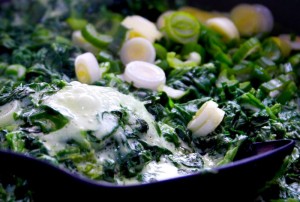 Today’s featured healing recipe is provided by ZestyCook.com!
Spinach is an especially healing food as it is rich in folic acid and beta carotene.
The root of folic acid comes from “foilage” and leafy greens are chock full of this nutrient shown to prevent cervical cancer and birth defects.
Folic acid also has been shown in research to make anti-depressants more effective. You will also be happy to know that it is OK to eat a little bit of fat with your vegetables. Fats paired with veggies help us better absorb the fat soluble vitamins they contain. Those on the Mediterranean Diet or Anti-Inflammatory Diet can substitute the low fat cream for olive oil.
Zesty has provides us with a SIMPLE five minute spinach side dish packed with flavour. Give this a try - you will be very glad you did! Feel free to get creative and substitute your favorite seasonal greens: Bok Choy, Swiss Chard, and Kale are also excellent healing choices.
Sauteed Spinach
Ingredients:
- 4 Cups Spinach
- 1/4 Cup Low fat Cream
- 2 cloves Garlic crushed and made into paste
- 1/8 teaspoon cayenne
- 1/8 teaspoon black pepper
- 1/4 cup pine nuts
- Handful of chopped Fresh Basil
- Organic sea salt
Directions:
- Preheat pan and add olive oil.
- Add spinach and allow to wilt down. Stirring for 1 minute.
- Add garlic, cayenne, black pepper. Stir for 2 minutes
- Add Low fat cream
- Top with Pine nuts and fresh basil
Zesty Tip: To make garlic paste, add a bit of organic sea salt to your cutting board and crush the clove of garlic on top. Then using your knife to smear the garlic back and forth into the salt mixture. The salt will help form a paste and you are ready to go.
Dr. Nicole Sundene, NMD is a licensed Naturopathic Medical Doctor at Fountain Hills Naturopathic Medicine 16719 E Palisades Blvd, Suite 205, Fountain Hills, AZ 85268.She believes we should utilize natural medicines to treat the root cause of disease rather than just treating symptoms, as symptoms are a message of imbalance sent from the body and will persist until they are properly addressed.
For appointments please visit http://FHnaturopathic.com for more information about Naturopathic Medicine services.
©KitchenTableMedicine.com, LLC ™