Being Healed By Our Compulsions
January 31, 2009 by Kitchen Table Medicine
Filed under Counseling, Fear, Kitchen Sink, Life Coaching, Lifestyle Tips, Mary O'malley, Zen Thinking
 Author of The Gift of Our Compulsions: A Revolutionary Approach to Self-Acceptance and Healing
 and Belonging to Life: The Journey of Awakening
What would it be like if your compulsive behaviors were no longer problems that you need to get rid of? What would it be like if they became doorways into the clarity, peace and joy you long for instead? This is entirely possible.
It is possible not only to release yourself from your compulsive urges but also to become free from the core compulsion we all have, the compulsion to struggle with ourselves and with our lives. And we are masters at it. I love to say that we are like little old people endlessly trying to unravel a ball of yarn and all the while we are sitting in paradise.
Your compulsion, rather than being the enemy, can be a guide through the world of struggle and back into a deep and trust filled relationship with yourself and with your life!
It certainly happened for me that way and for many people I have worked with over the years. How did that happen? You may know my story about how I gained 97 pounds in a year and at the same time was washing a lot of that food down with alcohol and taking every kind of pill I could get my hands on.
I tried to stop drugging myself and tried every diet under the sun - only to have them all fail. Was that because I was a weak willed ninny? No! They didn’t work because it is a law of the psyche that what you resist you empower!
But gradually I was taught how to be curious about what I was experiencing rather than always trying to control or change it. And as I learned how to be curious about what was happening within me when I was compulsive, my compulsions calmed down. For it is another law of the psyche that what you embrace ceases to have power over you.
So let’s take a good look at how we have been with our compulsions and recognize that it doesn’t work. 95% of all weight that is lost in the US is gained back plus some within a year and a half. Why is that? Because what we resist we empower, and because how we try to control our compulsions doesn’t work - not in the long run.
There is another way to work with your compulsions, a way that takes you beyond struggle itself. It is what my work and my book, The Gift of Our Compulsions is about. And now I am going to do something that I have never done in these newsletters. I am going to tell you about a CD set I just completed.
I haven’t ever done this because these letters are not about promotion. But these CDs contain a truly life-changing message, a message I want you to hear so that you can move beyond the struggles inside yourself into the joy of truly being fully alive that is your birthright! The CD set is from a workshop I did in DC last spring called, “Being Healed by Our Compulsions,” and it is a window into the incredibly healing experience of moving beyond our core compulsion to struggle with life by being present for what is showing up in our lives.
If it doesn’t call to you, that’s fine, but I invite you to at least contemplate the radical notion that your compulsions are a gift from life to wake you up out of struggle. As Stephen Levine would say, “May you be so blessed to come across something you can’t control.”
Why would he say that? Because control is an endless game of the mind, a game that you will never (thankfully) ever win, and because who you are is so much bigger than the game of control. May we use our compulsions to take us beyond the struggling self so we can discover who we truly are, and in that discovery may our world be healed!
~Mary
 The Gift of Our Compulsions: A Revolutionary Approach to Self-Acceptance and Healing and Belonging to Life: The Journey of Awakening are both available through Amazon, and are highly recommended at the kitchen table.
Mary’s books are both endorsed by Eckhart Tolle who offered the phenomenally successful web class with Oprah on his book “A New Earth”. You can sign up for her monthly newsletters by going to the home page of her web site. Each month you will receive a letter containing insight and information on how to stay in touch with your peace and joy no matter what is happening in your life.
 Dr. Nicole Sundene, NMD is a licensed Naturopathic Medical Doctor at Fountain Hills Naturopathic Medicine 16719 E Palisades Blvd, Suite 205, Fountain Hills, AZ 85268.
She believes we should utilize natural medicines to treat the root cause of disease rather than just treating symptoms, as symptoms are a message of imbalance sent from the body and will persist until they are properly addressed.
For appointments please visit http://FHnaturopathic.com for more information about Naturopathic Medicine services.
©KitchenTableMedicine.com, LLC ™
Are There Poisons In Your Baby’s Food?
January 31, 2009 by Kitchen Table Medicine
Filed under Allergies, Breast Feeding, Cancer, Diet Tips, Kitchen Sink
 Whether you breast-feed or bottle-feed your baby, there may be harmful chemicals in the food you feed them. Many additives in the food you eat may be very dangerous to your health. And since what you eat, you feed to your baby when you breast-feed, the chemicals that are harmful to you are going to harm your baby.
Even products designed for infants and very young children may contain harmful additives. Take, for example, a popular electrolyte replacement beverage for infants. It contains artificial flavors (which may cause developmental problems and many are not adequately tested), acesulfame potassium (a carcinogen), various food colorings (many of which may be carcinogenic or not adequately tested).
It may also contain the artificial sweetener Aspartame, also known as Nutrasweet. Aspartame can cause birth defects, central nervous system disturbances, menstrual difficulties, brain damage in phenylketonurics, seizures, death and a long list of other reactions too numerous to mention. It may cause irreversible health damage over the long term.
Aspartame was approved and claimed safe by a specially appointed FDA Commissioner after his own Board of Inquiry that investigated aspartame claimed it unsafe. This FDA Commissioner later left the FDA to work for the drug company that produces aspartame.
Monosodium glutamate (MSG) and free glutamate are flavor enhancers considered safe by the FDA. MSG may cause a variety of symptoms, including headaches, itching, high blood pressure and allergic reactions. Free glutamate, the active ingredient in MSG, may cause dizziness, shortness of breath, headaches, drowsiness and even brain damage, especially in children.
Because of bad publicity, food manufacturers found ways to hide MSG in foods they produce. They list the ingredients that contain MSG but not the MSG itself. Or they use free glutamates instead of MSG.
For example, broth may be listed as an ingredient on a label. Broth may contain MSG, but the ingredients in the broth are not required to be listed on the label. Hydrolyzed soy protein, a common ingredient in tuna, is high in free glutamates, but does not contain MSG. The label can legally say no MSG.
Even if the label says “all natural ingredients” and “no preservatives,” the product could contain harmful additives. Almost all packaged foods ─ even so called “health foods” ─ have additives in them, and many are harmful or inadequately tested. The manufacturer hopes you’ll think these are healthy natural products, but if you read the list of ingredients, you’ll find ingredients that are not common food items. If you learn to interpret food labels, you’ll find that many of these ingredients are harmful or of questionable safety.
So, how do you know which foods are safe to eat? Dr. Christine Farlow, in her handy pocket-sized book, FOOD ADDITIVES: A Shopper’s Guide To What’s Safe & What’s Not, now in its 2004 revised edition, makes it easy to identify which additives are harmful and which are not. She classifies 800 commonly used food additives according to safety, whether they may cause allergic reactions and if they are Generally Recognized As Safe (GRAS) by the FDA.
In just seconds, the average person can find out if an additive in the food they’re buying is harmful to their health. It’s clear, concise and easy to use. Make this book your constant groc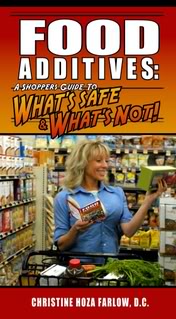 ery shopping companion and you’ll never again wonder about the safety of the ingredients listed on the package. You’ll know.
Dr. Christine H. Farlow, D.C. is a chiropractor, nutritionist and author. She has helped thousands improve their health through nutrition. For more information on food additives and healthy eating, visit http://www.healthyeatingadvisor.com or contact Dr. Farlow.
Dr. Nicole Sundene, NMD is a licensed Naturopathic Medical Doctor at Fountain Hills Naturopathic Medicine 16719 E Palisades Blvd, Suite 205, Fountain Hills, AZ 85268.She believes we should utilize natural medicines to treat the root cause of disease rather than just treating symptoms, as symptoms are a message of imbalance sent from the body and will persist until they are properly addressed.
For appointments please visit http://FHnaturopathic.com for more information about Naturopathic Medicine services.
©KitchenTableMedicine.com, LLC ™
Rock It - Pilgrim Style
January 30, 2009 by Kitchen Table Medicine
Filed under Bonnie Pfiester, Diet Tips, Kitchen Sink
 By Bonnie Pfiester Fitness Trainer
The Pilgrims were on a high-protein, low-carb diet
In 1621, the Plymouth colonists and Wampanoag Indians shared an autumn harvest feast known as one of the first Thanksgiving celebrations. I’ve often wondered what was on their menu back then. Something tells me it wasn’t high-calorie stuffing and pumpkin pie.
From what I understand, a person’s social standing determined the food they ate. The best food was placed closest to the most important people at the table. Instead of sampling everything, people just ate what was next to them.
Although the traditional Thanksgiving meal typically includes a big turkey or ham, we eat more side dishes than meat. The seventeenth century meal would have included a lot more protein from meats like deer and wild fowl.
Unlike today’s menu where we have loads of vegetable dishes, veggies weren’t always available to the colonists. Instead of high-calorie casseroles, the side dishes were either fresh or dried, like Indian corn. Since they had no refrigeration, they couldn’t have made my grandmother’s congealed salad either.
Pies were not an option since ovens weren’t even invented. That means no fancy bread or cakes either. As a matter of fact, although the Pilgrims did bring sugar on the Mayflower, the sugar supply had dwindled by that time so it was very unlikely there were many sweets at all.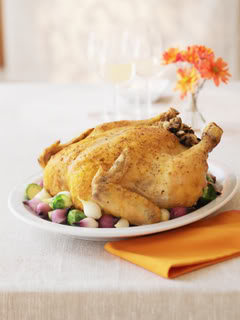
The colonists cooked more like I do – they used a lot of spices and didn’t use measuring cups. The pilgrims improvised with a lot cinnamon, ginger, nutmeg, pepper, and dried fruit in sauces for meats. Maybe that’s where we got the idea to make cranberry sauce.
The big meal was typically eaten at our lunchtime, which they called “noonmeat”. Their supper was a much smaller meal, which is definitely better for the waistline. By eating during the day, the colonists had more time to burn off the extra calories.
Finally, one thing we often forget is that the colonists were more active than we are today. Days consisted of hard labor for all the men, women and children. While the boys were building houses, gathering crops, collecting firewood and hunting food, women were churning butter, making candles, milking goats, washing clothes and cooking.
The colonists didn’t gather their food up in less than one hour at the grocery store. Resting simply wasn’t an option. Preparing the food for the celebration was hard work. No wonder they celebrated when they finally got to eat what they had worked so hard for.
~Bonnie
 Bonnie Pfiester is a Personal Trainer, wife to the famous fitness trainer Steve Pfiester of the reality TV show “Fat March”, and owner of the women’s health club Longevity Fitness.
You can enjoy more of Bonnie’s fitness and beauty articles at www.BonniePfiester.com or here at the kitchen table by visiting the Bonnie Pfiester page.
You are invited to leave your fitness and sports nutrition questions in the comments below for Bonnie to briefly answer or write about in future articles.
Dr. Nicole Sundene, NMD is a licensed Naturopathic Medical Doctor at Fountain Hills Naturopathic Medicine 16719 E Palisades Blvd, Suite 205, Fountain Hills, AZ 85268.She believes we should utilize natural medicines to treat the root cause of disease rather than just treating symptoms, as symptoms are a message of imbalance sent from the body and will persist until they are properly addressed.
For appointments please visit http://FHnaturopathic.com for more information about Naturopathic Medicine services.
©KitchenTableMedicine.com, LLC ™
Corn Syrup, Is it Really Just Like Sugar?
January 30, 2009 by Kitchen Table Medicine
Filed under Diabetes, Diet Tips, Dr. Scott Olson, Guest Posts, High Blood Pressure, Kitchen Sink, Sugar, Weight Gain
 The Corn Industry is spending massive amounts of advertising dollars trying to convince us that high-fructose-corn syrup is just as “good for you” as sugar. But does it really matter? Let’s talk to Dr. Scott Olsen about the differences between sugar and high-fructose-corn-syrup.
In your medical opinion…what is worse: Sugar or high fructose corn syrup?
Dr. Olsen: This is a little like asking if you would rather be shot or stabbed: both are bad. There is a lot of stir in the media lately about high fructose corn syrup and how it is different than sugar and the research on corn syrup does show it behaves differently in our bodies.
What you need to know about fructose is that the body can’t use it, so whenever you consume fructose, the body has two choices. The first is that it can convert the fructose into glucose and then the body can use the glucose to power all its energy needs. The second choice is that the body can choose to store the fructose as fat.
There is some evidence that the body finds it easier to make that second choice: turning the fructose into fat. (11) Since our consumption of high fructose corn syrup has increased dramatically in the last few years along with the rate of obesity, it makes us wonder if fructose is to blame.
 FRUCTOSE ALSO:
- Creates harmful proteins, called glycated proteins, much easier than glucose.(12)
- Leads to insulin insensitivity (and, therefore: diabetes and obesity as well).(13)
- Contributes to hypertension (high blood pressure).(14)
While avoiding both sugar and high fructose corn syrup is probably your best health choice, keeping high fructose corn syrup out of your diet is the next best step.
Notes:
11. Bray GA, Nielsen SJ, Popkin BM: Consumption of high-fructose corn syrup in beverages may play a role in the epidemic of obesity. Am J Clin Nutr. 2004 Apr;79(4):537-43.
12. Colaco CA. Sugar and coronary heart disease, a molecular explanation. J R Soc Med. 1993 Apr;86(4):243.
13. Miller A, Adeli K. Dietary fructose and the metabolic syndrome. Curr Opin Gastroenterol. 2008 Mar;24(2):204-9.
14. Johnson RJ, Segal MS, Sautin Y, et al: Potential role of sugar (fructose) in the epidemic of hypertension, obesity and the metabolic syndrome, diabetes, kidney disease, and cardiovascular disease. Am J Clin Nutr. 2007 Oct;86(4):899-906.
Dr. Nicole Sundene, NMD is a licensed Naturopathic Medical Doctor at Fountain Hills Naturopathic Medicine 16719 E Palisades Blvd, Suite 205, Fountain Hills, AZ 85268.She believes we should utilize natural medicines to treat the root cause of disease rather than just treating symptoms, as symptoms are a message of imbalance sent from the body and will persist until they are properly addressed.
For appointments please visit http://FHnaturopathic.com for more information about Naturopathic Medicine services.
©KitchenTableMedicine.com, LLC ™
Have a Fabulous Super Bowl Party With Mouth-Watering Ribs
January 30, 2009 by Kitchen Table Medicine
Filed under Recipes
Are you having a Super Bowl party, but want to try something besides the same-old, same-old chicken wings?
Try this recipe from La Cense Beef and treat your guests to some mouth-watering short ribs. Want your feast to be even better? Make sure you use grass-fed beef!
Beef Short Ribs with Tomatoes Smoked Peppers and Oregano
2lbs bone in short ribs salted overnight
1 large onion
6 garlic cloves
3 large tomatoes cut in chunks
4 sprigs of oregano or 2 t. dried
1-2 canned chipotle peppers in adobo sauce (use 2 if you really like a kick)
- In a large cast iron pot or casserole, heat some olive oil and brown the short ribs on all sides.
- Remove the meat.
- Add more oil if necessary and sauté the onions and garlic.
- When softened, add the tomatoes. They will give off some juice.
- Cook off some of that water then add the oregano and the chipotles. Salt the stew lightly. Add the meat back into the pot.
- Cover and simmer for about 2 hours either on top of the stove on a low heat or in the oven at 325. It should be loose when you pass a knife through it. Remove the meat. Skim off any fat that is on top of the sauce and reduce further if necessary. It should be a chunky consistency. Serve with soft polenta or mashed potatoes laying the meat down on the starch and then spooning all the sauce over everything.
Enjoy!
Dr. Nicole Sundene, NMD is a licensed Naturopathic Medical Doctor at Fountain Hills Naturopathic Medicine 16719 E Palisades Blvd, Suite 205, Fountain Hills, AZ 85268.She believes we should utilize natural medicines to treat the root cause of disease rather than just treating symptoms, as symptoms are a message of imbalance sent from the body and will persist until they are properly addressed.
For appointments please visit http://FHnaturopathic.com for more information about Naturopathic Medicine services.
©KitchenTableMedicine.com, LLC ™
Top 9 Cancer-Causing Ingredients To Avoid
January 30, 2009 by Kitchen Table Medicine
Filed under Cancer, Diet Tips, Kitchen Sink

Do you read the ingredients on the label of every item you put in your grocery cart?
Or do you just read what’s jumps out at you on the package? If you’re not reading the ingredients in the tiny print, you’re probably eating additives that are dangerous to your health, chemicals that cause cancer.
You see, the FDA allows manufacturers to add small amounts of cancer-causing substances to the food you eat. So, not only are many of our foods not healthy, they’re unsafe.
Here are some cancer-causing chemicals you’re going to want to watch out for and keep out of the food you eat:
- Acesulfame-K, also known as Acesulfame-potassium or “Sunnette” is an artificial sweetener. It has not been adequately tested for human consumption. The FDA approved this additive even though the tests done to determine it’s safety did not meet the FDA standards and caused cancer in lab animals, which increases the probability that it will also cause cancer in humans.
- Artificial colors, or FD&C colors, are mostly are derived from coal tar, which is a carcinogen. Over the years, many FD&C colors have been banned because of their harmful effects. And it is likely that more will be banned in the future. Some of the worst FD&C colors include: Green #3, Blue #1, Blue #2 and Yellow #6 which cause allergic reactions and cancer in lab animals. Red #3 is a carcinogen, which may interfere with nerve transmission in the brain and causes genetic damage. It is banned in cosmetics, but allowed in food, and it’s especially harmful to children.Yellow #5 causes allergic reactions in those sensitive to aspirin. It may be life threatening. Citrus red #2 is a known carcinogen. Its only allowed use is to color orange skins. So, If you use orange zest in some of your recipes, you may be ingesting carcinogens. Any color with “lake” after it means that aluminum has been added to the color to make it insoluble.
- BHA & BHT are widely used as preservatives, stabilizers and antioxidants. BHA is known to cause cancer in humans. Both BHA and BHT are toxic to the liver and kidneys. BHT may react with other ingested substances to cause the formation of carcinogens. BHT is banned in England.
- Potassium bromate is used to treat flour to give bread and baked goods a sponge-like quality. It is probably not used in California because it might require a cancer warning on the label. Outside of California, “unbromated” breads do not contain potassium bromate. It is also used in toothpaste, mouth washes and gargles. It is a carcinogen, mutagen and highly toxic. It is banned worldwide, except in the U.S. and Japan .
- Carrageenan is a seaweed derivative used in a wide variety of foods and cosmetics. In its native form, it has not been classified as a carcinogen, but in it’s degraded or broken down form it has been classified as a possible human carcinogen by the International Agency for Research on Cancer (IARC). Joanne Tobacman, M.D., University of Iowa assistant professor of clinical internal medicine, and researcher on carrageenan, said “There seems to be enough evidence associating carrageenan with significant gastrointestinal lesions, including malignancies, to avoid ingesting it.” According to Dr. Tobacman, the native carrageenan, after being subjected to stomach acids may be broken down into the degraded form and be a cancer risk. And even if it wasn’t, carrageenan cannot be identified as native or degraded on food labels, so there is no way of knowing if you are ingesting carrageenan, the carcinogen or not.
- Nitrates and nitrites are found primarily in processed meats. They combine with stomach acids and chemicals in foods to form nitrosamines, which are powerful carcinogens.
- Olestra has not been shown to cause cancer. However, it robs the body of carotenoids, which are known to have a protective effect against cancer. Studies have shown a 40-50% drop in blood carotenoids after consuming only 3-8 grams of olestra in a day, equivalent to 6-16 chips. It also may causes severe gastrointestinal cramping and diarrhea, which may last for extended periods of time.
- Propyl gallate is used as an antioxidant in fats, oils, candy and a variety of processed foods. It is a suspected carcinogen and is known to cause kidney, liver and gastrointestinal problems. It can cause allergic reactions in those with asthma and sensitivity to aspirin. It has not been adequately tested.
- Saccharin, or Sweet ‘N Low, is an artificial sweetener that is known to cause cancer. Because of pressure from the food industry, in 2000, saccharin was removed from the list of cancer-causing chemicals, in spite of the fact that studies still show that it causes cancer in lab animals.
So, how do you know which additives are really safe to eat? Dr. Christine Farlow, in her handy pocket-sized book, FOOD ADDITIVES: A Shopper’s Guide To What’s Safe & What’s Not, now in its 2004 revised edition, makes it easy to identify which additives are harmful and which are not. She classifies 800 commonly used food additives according to safety, whether they may cause allergic reactions and if they are Generally Recognized As Safe (GRAS) by the FDA.
In just seconds, the average person can find out if an additive in the food they’re buying is harmful to their health. It’s clear, concise and easy to use. Make this book your constant grocery shopping companion and you’ll never again wonder about the safety of the ingredients listed on the package. You’ll know.
Dr. Christine H. Farlow, D.C. is a chiropractor, nutritionist and author. She has helped thousands improve their health through nutrition. For more information on food additives and healthy eating, visit http://www.healthyeatingadvisor.com or contact Dr. Farlow.
Dr. Nicole Sundene, NMD is a licensed Naturopathic Medical Doctor at Fountain Hills Naturopathic Medicine 16719 E Palisades Blvd, Suite 205, Fountain Hills, AZ 85268.She believes we should utilize natural medicines to treat the root cause of disease rather than just treating symptoms, as symptoms are a message of imbalance sent from the body and will persist until they are properly addressed.
For appointments please visit http://FHnaturopathic.com for more information about Naturopathic Medicine services.
©KitchenTableMedicine.com, LLC ™
Fourteen Ways to Unleash Your Inner Fabulosity
January 26, 2009 by Dr. Nicole Sundene
Filed under Kitchen Sink, Lifestyle Tips
“Unleash your fabulosity on an unsuspecting world.” ~Maven
Everyone wants to be the best version of their self possible right? Giving yourself a few simple gifts is the easiest way to achieve that goal. Everyone is also always asking me as a Naturopathic Physician what I recommend the most, so this page is dedicated to all of my favorite things that will help you unleash that inner fabulosity.
Pick the easiest things to try to start with. As you become more healthy and balanced your body will naturally crave that which is good for you. Becoming healthy will gradually become that much easier.
#1 Freshly ground flaxseeds- One of the cheapest easiest things a person can do to enhance their health is purchase a small coffee grinder that is strictly used for grinding flax seeds. The omega 3 oils in flax are extremely delicate so it is best to grind them up fresh right before you eat them. I thought this was a huge inconvenience when I first learned about it and was disappointed to get rid of my expensive bag of pre-ground flax seeds kept in the freezer, until I simply started to keep a little container of flax seeds with a tablespoon scooper on the counter right next to the grinder.
It literally takes a minute to make a few tablespoons of ground flax to add to smoothies, brown rice, soups, or salads. Flaxseeds are also rich in protein, fiber, and have phytoestrogen like properties for those going through menopause. A tablespoon of ground flax has 2 grams of fiber.
# 2 Blueberries- The freezing process of blueberries actually makes the proanthocyanin pigments inside more bioavailable. Eating a half cup to a cup of lightly thawed blueberries daily is a delicious trick for slowing down aging, protecting your heart, and reducing inflammation.
#3 Fish Oil- Be sure to buy a quality salmon oil that has been independent laboratory tested for mercury content as the FDA does not currently regulate vitamins and supplements. While flaxseeds are a great source of omega 3’s the body actually has to convert them to the docosahexanoic acid (DHA) and eicosopentanoic acid (EPA) via the delta -6-desaturase enzyme which some people lack or is not functioning properly because they are deficient in the enzymatic cofactors, especially common in vegans as they tend to be deficient in the minerals necessary for biochemical conversion. Most people of northern European decent tend to suffer from this problem because traditionally their diet was rich with cold water fish. Signs that you are omega 3 deficient include: excessive ear wax, dry skin, dandruff, calluses on the heels, and any signs of inflammation or any condition that involves inflammation especially cardiovascular disease.
I typically recommend Carlson lemon flavored cod liver oil in the green bottle, because it is widely available at most health food stores. This doesn’t mean there aren’t other quality fish oils to choose from, I am simply trying to reduce confusion surrounding fish oil. You get more bang for your buck if you purchase a liquid oil instead of capsules. One to two teaspoons of fish oil a day taken with meals is a great way to supplement the omega 3 oils that our body’s rely on for necessary brain and nervous system functioning.
#4 Sleep- Working to improve your sleep will absolutely improve your overall health. Building good sleep hygiene habits will definitely serve you well in the long run.
#5 Water- A five percent decrease in hydration easily translates to a 25% decrease in overall energy. Water is the easy cure all and fix all for most people that are dehydrated. I can’t tell you how many headaches and bad cases of fatigue or muscle cramps I have “healed” by simply recommending 8- eight ounce glasses of water daily.
#6 Green tea- The key to preventing disease and aging well is to have plenty of antioxidants in your diet from fruits and vegetables and green tea. Green tea also has “thermogenic properties” which means that it helps you to burn fat. Start substituting one cup of green tea for a cup of coffee each day until you are eventually switched off of coffee. You don’t have to entirely give up coffee, just save it for special social occasions, or those mornings when green tea just isn’t going to cut it.
There are many different flavors of green tea available and some definitely taste better than others. The Japanese are role model “health nuts” as they use a really fine powdered green tea that is whisked in hot water for their tea ceremonies. I can only imagine how rich in antioxidants that intensely bright green tea is! Asian tradition always uses the freshest, most high quality foods possible. Americans would be much healthier if they adopted this philosophy and stopped stocking up on “dead foods” at warehouses each month to “save money”. It is unavoidable that you will have to pay for your health one way or another and you might as well do it with fresh healthy organic foods and a gym membership instead of medications and hospital visits.
#7 Exercise- I would say that most people that exercise regularly can get away with having a myriad of other bad health habits. I’m not saying that you should start exercising and then adopt a bunch of new bad habits. But, exercise does seem to cancel out much of the bad eating and bad lifestyle decisions that most of us make. Adopting a regular fitness program is the absolute key to “unleashing your inner fabulosity” while preventing high blood pressure, high cholesterol, diabetes, osteoporosis, depression, and anxiety to name a few.
#8 Vegetables are essentially “free foods” meaning that they have virtually no caloric value. This means that we should all be able to eat most veggies liberally while reaping the vast rewards of the vitamin, mineral, antioxidant, and fiber content for virtually no calories or other consequences. Veggies and artichoke dip, nut butters, or hummus are a great snack because the calories from the dip is basically incidental since the veggies are so low in calories.
Find a new vegetable to “make friends with” each week at the grocery store. Ask friends for recipe ideas or have fun together experimenting with how to cook new vegetables. Try to eat a “rainbow” of vegetables each day. Some of the best “free foods” are: Celery, broccoli, cucumbers, lettuce, asparagus, peppers, spinach, kale, and sprouts to name a few.
#9 Emergeng-C is a great thing to keep on hand for after exercising, fatigued afternoons, or when you feel like you are coming down with a cold. Sometimes a packet of this in some water is all you need to get perked back up for you day.
#10 Designer Protein is my favorite readily available protein powder. It is a whey based protein powder that is great for athletes. Starting your day with a protein smoothie takes a matter of minutes and a busy person can even drink it on their commute. Simple add 1-2 cups of soy milk, rice milk, or almond milk, a cup of frozen fruit (great way to get in your cup of blueberries for the day), a scoop of vanilla protein powder, and 1-3 tablespoons of freshly ground flaxseeds. Protein and fiber for breakfast will keep you energetic and feeling satisfied for your day.
#11 Chewable fiber tablets are a great way to “cheat the system” for those with diabetes, trying to lose weight, or just stabilize their blood sugar for better energy. Fiber tablets are great to keep on hand for those occasions when you eat too many carbohydrates and need to pull down the “Glycemic Load” of a meal. Fiber also increases the “satiety index” which means you will stay full feeling longer than usual.
Cholesterol and toxins are also pulled out of our system through fiber, so fiber is essential to a good detoxification program. Most people do not consume enough whole grains or fruits and vegetables to meet the recommended minimal requirements for fiber. Until you have perfected your diet you might want to consider a chewable fiber tablet to keep on hand. Be sure to purchase those from a quality health food store that are without artificial sweetners and chemical additives.
#12 Breathing- learning to breathe appropriately as a means to reduce stress is a very easy way to lower stress and keep centered in this crazy world. Breathing exercises are a great thing to practice at the end of the day to calm ourselves down. Whenever I find myself bored I find myself concentrating on my breathing. Set aside five minutes out of your day to work on deep breathing to properly oxygenate your system.
#13 My favorite diet: is the Low Glycemic Index Diet. Although it is intended for those with diabetes, I sincerely believe it is the best diet for most people wanting to lose weight, keep a steady amount of energy throughout their day, prevent aging, and stay satisfied in between meals.
#14 Gratitude- Things are almost never perfect, but they can always be worse, right? Focusing on what is positive in your life was recently shown to improve mood and reduce depression in those that listed the three positive attributes about each day. Share your successes large and small with your family over the kitchen table each night. Keeping a positive mental attitude and seeing the humor in things is the easiest way to reduce stress.
Optimal health is about keeping yourself in balance. Usually it is as simple as adding a few good things in to your routine so that a few other bad things can get shoved out. Most of the favorites listed above are the “foundations of health”. You wouldn’t build a house on a cracked or weak foundation, and neither should you try to build your health without these basic foundations.
Start with the changes that are the easiest to make and then work your way along from there. Enjoy the process of realizing how this positive change you are trying to get going is making you feel better. Each year we need to tighten up the reigns on our health care routine if we expect to experience the same level of health as the year prior, and even that much more if we want to be that much better, stronger, faster, healthier, and more fabulous.
Let me know if you have any questions, and feel free to share your favorite things in the comments.
Thanks for stopping by my “kitchen table”.
~Dr. Nicole
Dr. Nicole Sundene, NMD is a licensed Naturopathic Medical Doctor at Fountain Hills Naturopathic Medicine 16719 E Palisades Blvd, Suite 205, Fountain Hills, AZ 85268.
She believes we should utilize natural medicines to treat the root cause of disease rather than just treating symptoms, as symptoms are a message of imbalance sent from the body and will persist until they are properly addressed.
For appointments please visit http://FHnaturopathic.com for more information about Naturopathic Medicine services.
©KitchenTableMedicine.com, LLC ™
Seasonal Affective Disorder (SAD) Self Help
January 22, 2009 by Dr. Nicole Sundene
Filed under Depression, Kitchen Sink, Reader Questions
“Hi Dr. Nicole, my depression is much worse this time of year. What do you recommend?”
Immediately after the holidays is a great time to have a nervous breakdown…er…”nervous breakthrough.”
We tend to feel even more agitated and moody this time of year especially now that all the excitement of the holidays have died down and there isn’t much to distract us from the winter blahs.
We are also all feeling about ten pounds over weight after likely losing the battle of the holiday bulge.
Whether you just have depression during the winter months, or whether you struggle with depression all year round that is exacerbated by the low light conditions of winter; having a plan in place to better cope with the realities of winter depression is an important preventative measure.
My last name serves as a convenient mnemonic to help remember how to take care of yourself throughout the winter months…
The Sundene Protocol for Seasonal Affective Disorder
- Sun- for Sunshine or Sun Equivalent
- D- for vitamin D
- E- for Exercise
- N- for Nutrition
- E- for Everything else. SAD can have debilitating consequences. If you struggle with depression, be sure to share this plan with the family and friends on your “support team” so that if you find yourself in an excessively dark and gloomy place this winter you can easily get some help to pull you out of the “hole”. Consult with a physician before self treating with natural anti-depressants or natural anxiety aids.
Although severe depression should also improve with this protocol, those experiencing moderate to severe depression should ALWAYS be working with their health care provider. Anyone experiencing thoughts of suicide should be under the supervision of a physician.
The following are the basics for my protocol for seasonal depression.
“Sun” – We need 10,000 lux of light every day in order to produce enough serotonin to feel happy. This can be achieved by 15 minutes outside on a bright blue sky sunny day, or 1 hour outside when it is overcast. You may wonder “What in the world is a lux?” A lux is the light equivalent put off by one candle. So you can light 10,000 candles in your home to cheer yourself up (a bit of a fire hazard!) or you can just invest in a light box.
A light box is an excellent idea for those with seasonal depression and is best used for twenty to forty minutes in the morning depending on the manufacturer’s recommendations to achieve the 10,000 lux equivalent.If you are unable to afford a light box you can simply try full spectrum light bulbs as these often provide enough light for those with mild to moderate seasonal depression.
Keep in mind also that outdoor places near water or snow are great to visit during the gloomy months of winter as the light is intensified as it is reflected back up to our eyes. If you are concerned about protecting your eyes from UV radiation, you can buy sunglasses with a clear lens, but that still provide UV filtration as it is the actual photons of light that our brains use and not the UV radiation to produce serotonin.
Those struggling with seasonal depression need to make an appointment with the sun or the sun’s substitute every single day. Topping off your serotonin levels by day means that more of this neurotransmitter will be available for conversion to melatonin (the hormone that keeps us asleep at night). Using light as a medicine should easily improve your sleep, leaving you more energetic for the following day.
“D” -Vitamin D is no longer considered a vitamin, but a “pro-hormone”. Exciting research about vitamin D is on the horizon, and some evidence supports a link to depression, although some studies do not support this link. Just about every patient I have ever checked in Seattle has been vitamin D deficient.
Vitamin D is produced in our bodies when UV light touches our skin. Most people living in the northern latitudes are easily vitamin D deficient if they do not spend 20 minutes outside each day. Elderly people have thinner skin, and thus produce less vitamin D, they also absorb less dietarily. Until further evidence supports this theory linking depression with low vitamin D levels, it only makes sense to be sure that you are at least not deficient in vitamin D.
The RDA for adults ranges between 200 IU and 600 IU. Food sources of vitamin D are milk, fish, and yeast. I typically recommend 1000 IU of vitamin D for my patients struggling with depression as a cheap and easy insurance policy that they are not deficient in vitamin D.
If you would like to have your levels checked be sure that your physician orders the “25-OH-D” as that is the most reliable indicator of vitamin D stores. Do not ever exceed 1000 IU of vitamin D unless under the care of your naturopathic physician. Dangerous side effects such as hypercalcemia can occur.
“E” -Exercise- is the drug of choice for anyone that is depressed. It is a tough medication to take though when depressed because as best summed up by Newton’s laws of motion: “An object at rest stays at rest until acted upon by another force.”
When you are down in the depressed hole it is tough to get exercising, but stagnation is just going to perpetuate your problem.
Countless studies support the efficacy of exercise for depression. If you struggle with seasonal depression be sure to try to exercise outside EVERY SINGLE TIME the sun is out! Find a walking, running, or cycling buddy and take turns pushing each other out there. Whatever you do…just keep moving! Being cramped up in doors during the winter months is the problem and not the solution.
“N” –Nutrition is fundamental for anyone struggling with depression. When the body does not feel good the mind is soon to follow.Depressed thinking often results in poor dietary choices.
When we are depressed and in a low light setting we crave carbohydrates so that the body can produce more serotonin. However, sugar is exactly what the body does not need in the long term for healing from depression. The best diet for those with depression, anxiety, and bi-polar to follow is the LOW GLYCEMIC INDEX DIET.
Balancing out the blood sugar will help keep the mood at an even keel throughout the day. Be sure to eat protein with every meal and especially foods high in tryptophan such as turkey, cottage cheese, peanuts, fish, eggs, oatmeal, avocados, and bananas.
A high quality multi-vitamin will cover all the bases and ensure that you are not deficient in any of the B vitamins that are coenzymes for producing the neurotransmitters that make us feel happy.
“E” -For Everything Else, such as “Herbal Sedatives.” There are many treatment options for depression. Please do not give up hope.
Counseling, herbs, amino acids, and of course anti-depressants when need be will help keep you out of the “hole”. Naturopathic treatments for depression often take time as they are addressing the whole person and the long term.
As a physician, I give every treatment plan three to six months to determine it’s efficacy. If you are not experiencing improvement you may want to consider other treatment options. Various counseling and therapy techniques are also available, if you find you are not making progress with your therapist, consider a new referral for a different type of therapy.
Remember that aside from physical and mental components, there is also a social component to seasonal depression. Much time spent inside, or repeatedly with the same people inside can contribute to a poor mood.
Schedule weekly activities to get you out of the house and interacting with others. If you live alone, the winter months can feel especially isolating. Find an elderly person that also lives alone to check in on, it will do you both a world of good.
If you enjoyed this post please feel free to leave a comment, share this information with those that might benefit and subscribe to future articles. Thanks for stopping by my “kitchen table!”
~Dr. Nicole Sundene
Naturopathic Physician
Dr. Nicole Sundene, NMD is a licensed Naturopathic Medical Doctor at Fountain Hills Naturopathic Medicine 16719 E Palisades Blvd, Suite 205, Fountain Hills, AZ 85268.She believes we should utilize natural medicines to treat the root cause of disease rather than just treating symptoms, as symptoms are a message of imbalance sent from the body and will persist until they are properly addressed.
For appointments please visit http://FHnaturopathic.com for more information about Naturopathic Medicine services.
©KitchenTableMedicine.com, LLC ™
Best Vitamin D
January 22, 2009 by Dr. Nicole Sundene
Filed under Best, Kitchen Sink, Vitamins

“Hi Dr. Nicole, What vitamin D should I be taking for my seasonal depression, and how much?”
The best vitamin D is in a liquid or emulsion form called “calcitriol” or vitamin D3 (not vitamin D2.) For those of us north of California we need about 1000 IU’s daily, or twenty minutes of sunlight on our hands and face (which doesn’t happen too often here in Seattle.) I personally use and recommend Biotics.
If you have chronic disease, depression, or chronic pain please have your doctor measure your vit D 25-OH levels if exceeding 1000-2000 IU daily. Vitamin D influences calcium levels and a life threatening case of hypercalcemia may occur in the overuse of this fat soluble vitamin without the supervision of a naturopathic physician. Chronic elevated calcium levels may lead to atherosclerosis or “hardening of the arteries.” An optimal vitamin D 25-OH value is around 60-100. Most Seattlelites are deficient for obvious reasons. This is why we huddle in local Starbucks for comfort and safety.
When I was a student intern at Bastyr Bio-D Emulsion by Biotics was our favorite liquid vitamin D.
Thanks for stopping by my kitchen table to ask the question,
Dr. Nicole Sundene
Dr. Nicole Sundene, NMD is a licensed Naturopathic Medical Doctor at Fountain Hills Naturopathic Medicine 16719 E Palisades Blvd, Suite 205, Fountain Hills, AZ 85268.She believes we should utilize natural medicines to treat the root cause of disease rather than just treating symptoms, as symptoms are a message of imbalance sent from the body and will persist until they are properly addressed.
For appointments please visit http://FHnaturopathic.com for more information about Naturopathic Medicine services.
©KitchenTableMedicine.com, LLC ™
How to Eat Healthy While Traveling
January 19, 2009 by Kitchen Table Medicine
Filed under Diet Tips, Kitchen Sink, Weight Loss
By Bonnie Pfiester, Fitness Trainer 
Traveling is a dieter’s nightmare.
Traveling can destroy a diet if your not careful.
Traveling can be tough for dieters. Convenience store junk food, the infamous airline snack box and combo meals all add up to a diet disaster.
There is something about traveling that makes us think we’re hungry. Let’s start with road trips. I don’t know about you, but Steve and I have the worst snack attacks when driving long distances. Although the need to feed mostly stems from boredom, the million billboards showcasing juicy hamburgers don’t help either.
Once a billboard convinces you to stop and eat, you find yourself driving down an unknown road with restaurant after restaurant calling your name. Taco Bell, McDonald’s, Denny’s, Dairy Queen, Applebees – they all have a special, or menu item, to capture your attention.
Once you decide where to eat you, have to battle the menu. No matter how many times I’ve been to a restaurant, and even if I know what I should order, I still feel the need to read the entire menu. What in the world am I thinking? I’m just welcoming temptation. Before you know it, I’ve justified why I can afford to eat a Hamburger and fries.
If you are not traveling on the ground you have a different set of problems. Opposite of having too many choices, airline passengers have very few food choices. You’re trapped 35,000 feet in the air when a stewardess offers you an unappealing selection of nuts, cookies, crackers and cheese surprise. While first classers eat their high-calorie mystery meal, coach passengers get a sorry selection of the most boring sandwiches, bagels or salads they’ve ever wasted calories on.
In any case, the answer to the dieter’s traveling blues is planning ahead. You’ll pack your toothbrush so why not pack your food? It’s not like you don’t know you’re going to be stuck in a car or plane for several hours.
First, pack healthy snacks like pretzels, whole fruit, veggies, yogurt, cheese sticks, beef jerky, lunch meat, nuts, rice cakes or protein bars to prevent you from getting hungry and making poor choices. Second, learn to say no – plain and simple. Third, keep a calorie book on you. It’s much easier to cheat when you don’t know what you are eating. Lastly, bring other things to entertain you besides food, like a good book or magazine.
Traveling will always be tough for dieters, but with a little planning you can beat the need to feed.
~Bonnie
Bonnie Pfiester is a Personal Trainer, wife to the famous fitness trainer Steve Pfiester of the reality TV show “Fat March”, and owner of the women’s health club Longevity Fitness.
You can enjoy more of Bonnie’s fitness and beauty articles at www.BonniePfiester.com or here at the kitchen table by visiting the Bonnie Pfiester page.
You are invited to leave your fitness and sports nutrition questions in the comments below for Bonnie to briefly answer or write about in future articles.
Dr. Nicole Sundene, NMD is a licensed Naturopathic Medical Doctor at Fountain Hills Naturopathic Medicine 16719 E Palisades Blvd, Suite 205, Fountain Hills, AZ 85268.She believes we should utilize natural medicines to treat the root cause of disease rather than just treating symptoms, as symptoms are a message of imbalance sent from the body and will persist until they are properly addressed.
For appointments please visit http://FHnaturopathic.com for more information about Naturopathic Medicine services.
©KitchenTableMedicine.com, LLC ™
Japanese Prawn and Noodle Salad Recipe
January 8, 2009 by Dr. Nicole Sundene
Filed under Healthy Recipes, Kitchen Sink, Protein, Recipes, Weight Loss, Whole Foods Diet, Whole Foods Makeover
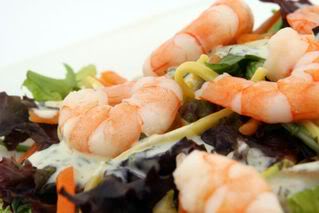 Prawns are a delicious, healthy light protein choice.
Try pairing them with veggies for lunch and keep the carbs “slow” for optimal energy at the office or while chasing kids around all day.
Today’s healthy recipe is brought to us by my friend Zesty of ZestyCook.com. Visit his website for more whole food recipe ideas.
Ingredients
- 150 g Japanese noodles or Chinese
- 6 Cups Mixed Greens
- 2 Cloves garlic; crushed
- 1 Red pepper; deseeded and cut into thin strips
- 4 tb Brown rice vinegar
- 3 Tbsp. Coconut Milk
- 1 Tbsp. Fresh root ginger grated
- 2 Tbsp. Soy sauce
- 2 Tbsp. Sesame seeds toasted (1oz)
- 2 tb Sunflower oil
- 1 Lb. Prawns
Method
- Place the cooked drained noodles in a salad dish and chill.
- In a small bowl add the the rice vinegar and soy sauce. Leave for 10 minutes.
- Heat the sunflower oil in a wok and add the crushed garlic,stir fry for 1-2 minutes and add the red pepper.
- Add Prawns to the hot pan and cook for 1 minute.
- Add coconut milk and allow to thicken. Then cool slightly.
- Combine the vegetables with the noodles and add the rice vinegar and soy sauce directly to noodles. Take the grated ginger and holding in one hand squeeze the juice over the salad and discard the pulp.
- Chill for 30 minutes before serving.
- Toss with mixed greens.
Delicious served as a light lunch or as part of an oriental meal.
Zesty Tip: When dressing a salad, place the dressing in the bottom of the bowl and the greens on top of them and gently toss with a pair of tongs just before serving. This will prevent damaging the greens.
More Zesty Recipes:
The Healing Power of Cauliflower
Sauteed Spinach Recipe
Dr. Nicole Sundene, NMD is a licensed Naturopathic Medical Doctor at Fountain Hills Naturopathic Medicine 16719 E Palisades Blvd, Suite 205, Fountain Hills, AZ 85268.She believes we should utilize natural medicines to treat the root cause of disease rather than just treating symptoms, as symptoms are a message of imbalance sent from the body and will persist until they are properly addressed.
For appointments please visit http://FHnaturopathic.com for more information about Naturopathic Medicine services.
©KitchenTableMedicine.com, LLC ™
Aura Cacia Massage Products
January 8, 2009 by Kitchen Table Medicine
Filed under Beauty, Dry Skin, Kat Lee, Kitchen Sink
by Kat Lee
 Aura Cacia makes so many different “flavors”, I’m going to have to focus on just one, or this review would be twenty pages! While picking a favorite is difficult, I have to say that my favorite massage product is the Lavender massage cream.
The scent is sufficiently strong, but not cloying; the cream is thick enough not to run everywhere, but not so thick that it is sticky. In a word: perfect.
It is great for massage, but also perfect for moisturizing your whole body after a shower. Just apply everywhere while your skin is still wet. Lightly pat yourself dry, and your skin will be baby smooth. It’s so gentle that I can use it on my kids as well. My older son has issues with dry, sensitive skin, and generally develops a rash if I try to use any kind of scented product.
When I used the lavender cream, it moisturized his skin very well. Not only did he NOT develop a rash - it has begun helping to eliminate the perpetual “dry-skin” rash he has on his stomach during the winter.
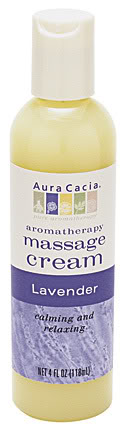 However, to those who have a soy allergy, I must post a warning. This product does contain soy in the form of GLYCINE SOJA (SOYBEAN) WAX. Dr. Sundene stresses the importance of knowing all of the different names for the item to which you are allergic, and this only underscores that fact.
Luckily, having also used the Lavender Harvest massage oil, I can say that it is a perfectly acceptable substitution. The only real difference that I noticed was that the oil is, of course, a bit runny and more difficult to apply to wiggly children. However, if you’re applying it to yourself or another adult, you should be just fine.
I’ve included ingredient lists below for both products, linking many of the ingredients to their respective pages at the Environmental Working Group’s Skin Deep Database. As you can see, the ingredients all rate very low on the toxicity meter — which is good!
Lavender Massage Cream Ingredients:
VITIS VINIFERA (GRAPE) SEED OIL, PRUNUS ARMENIACA (APRICOT) KERNEL OIL, PRUNUS AMYGDALUS DULCIS (SWEET ALMOND) OIL, COCOS NUCIFERA (COCONUT) OIL, SIMMONDSIA CHINENSIS (JOJOBA) OIL, GLYCINE SOJA (SOYBEAN) WAX, BUTYROSPERMUM PARKII (SHEA) BUTTER, EUPHORBIA CERIFERA (CANDELILLA) WAX, COPERNICIA CERIFERA(CARNAUBA) WAX, TOCOPHERYL ACETATE (VITAMIN E), LAVANDULA ANGUSTIFOLIA (LAVENDER) OIL, LAVANDULA X INTERMEDIA (LAVANDIN) OIL, LAVANDULA LATIFOLIA (SPIKE LAVENDER) OIL.
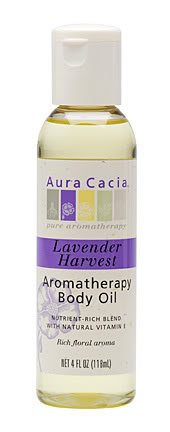 Lavender Harvest Massage Oil Ingredients:
VITIS VINIFERA (GRAPE) SEED OIL, PRUNUS ARMENIACA (APRICOT) KERNEL OIL, PRUNUS AMYGDALUS DULCIS (SWEET ALMOND) OIL, LAVANDULA ANGUSTIFOLIA (LAVENDER) OIL, LAVANDULA X INTERMEDIA (LAVANDIN) OIL, LAVANDULA LATIFOLIA (SPIKE LAVENDER) OIL, TOCOPHERYL ACETATE (VITAMIN E).
Dr. Nicole Sundene, NMD is a licensed Naturopathic Medical Doctor at Fountain Hills Naturopathic Medicine 16719 E Palisades Blvd, Suite 205, Fountain Hills, AZ 85268.She believes we should utilize natural medicines to treat the root cause of disease rather than just treating symptoms, as symptoms are a message of imbalance sent from the body and will persist until they are properly addressed.
For appointments please visit http://FHnaturopathic.com for more information about Naturopathic Medicine services.
©KitchenTableMedicine.com, LLC ™
Truvia - The Sweet Taste of Sugar-Free
January 8, 2009 by Kitchen Table Medicine
Filed under Kat Lee, Kitchen Sink, Sugar Substitutes
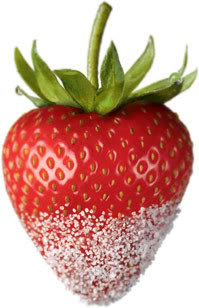 I tend to shy away from artificial sweeteners because of the undeniably harmful side-effects they all seem to carry. Even Splenda - touted as “natural” - is nothing more than chlorinated sugar.
I prefer not to ingest chlorine, thank you very much. (And before anyone steps up with the fact that tap water contains chlorine, let me assure you that I’ve taken care of that via my whole house filtration system.)
Chlorine levels commonly found in drinking water have now been linked to certain instances of cancer, which is why I try to avoid drinking it. So I would honestly prefer not to sweeten my food with it.
The only real alternative to artificial sweeteners has been Stevia, which has no side-effects and has been in existence years with no reported problems. My only issue with Stevia is that it tastes “okay”, but not fantastic. So when I heard about a new company, Truvia, who claimed to have produced a more “sugar-like” stevia, I was interested!
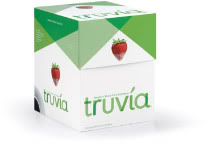 The Truvia company has discovered a way to isolate and extract the best tasting part of the leaf, and turn it into a calorie-free sweetener that is chemical-free. I’ve used it sprinkled over fruit and in my oatmeal and thought it tasted exactly like sugar.
When I tried it in my coffee, it was good, but the aftertaste was almost minty - which was not bad, just odd. (I’ll admit that I put way to much sugar in my coffee - so that may be the issue!)
At any rate, this is the ONLY artificial sweetener that actually tastes like sugar, and isn’t laden with chemicals. That makes it a one of a kind product for those looking for a calorie free way to get their sugar fix.
Here’s a recipe using Truvia courtesy of Truvia.com:
Pineapple Orange Banana Frostie
Ingredients
1 cup nonfat plain yogurt
½ cup pineapple juice
1 banana
1 cup orange juice
1 cup ice
8 packets Truvia™ natural sweetener
Procedure
Add all ingredients to blender
2. Blend on high until smooth
3. Enjoy
Dr. Nicole Sundene, NMD is a licensed Naturopathic Medical Doctor at Fountain Hills Naturopathic Medicine 16719 E Palisades Blvd, Suite 205, Fountain Hills, AZ 85268.She believes we should utilize natural medicines to treat the root cause of disease rather than just treating symptoms, as symptoms are a message of imbalance sent from the body and will persist until they are properly addressed.
For appointments please visit http://FHnaturopathic.com for more information about Naturopathic Medicine services.
©KitchenTableMedicine.com, LLC ™