Is the Swine Flu Really a “Pandemic?”
April 29, 2009 by Dr. Nicole Sundene
Filed under American Sickcare System, Colds/Flus, Kitchen Sink, Lifestyle Tips, Reader Questions
“Tamiflu!!!! I want Tamiflu NOW NOW NOW!!!!”
~Shouted at a Telephone Triage Nurse Yesterday
For those of you that are new readers to Kitchen Table Medicine, please keep in mind that I have been described to have a “very dry” if not “seriously warped” sense of humor.
So if you want the boring ol’ facts about “The Swine Flu Pandemic” visit my fav site www.CDC.gov, as that is precisely where I ascertained the following medical opinions.
I put the preamble there because I got busted joking around on Twitter by a doctor friend for saying, “it’s just diarrhea people.” On Twitter I follow many nurses, doctors, infection control, the CDC, and so forth.
Everyone has their opinion and the general consensus is that we need to practice standard precautions to prevent this from becoming the “Pandemic” the news is purporting it to be.
I understand the deaths associated with this disease, however, I also understand the disease, and the likelihood that you will get it, and that is what I would like to discuss today- the real non-hyped facts to alleviate panic on this “pandemic.” The news needs news, but what you need are facts. So let’s talk about the facts, educate ourselves on the symptoms, and know what exactly we need to do.
First of all let’s get some perspective on this “Swine Flu National Epidemic,” as 227 people died in America from deer related car crashes in 2007. Also, 1.5 million humans experienced deer related traffic accidents causing an estimated $1.1 billion in vehicle damages. (Source)
Yet are we declaring “Deer a National Epidemic?” Are we slaughtering deer left and right? (Which they are doing with pigs in Egypt unnecessarily!) Is the news reporting every five seconds on the latest person to die from crashing in to a deer?
No.
Because that is just not that interesting, and deer are so cute. Pigs may be filthy, and they may be the original host of this virus, but eating their products will not make you sick according to the CDC.
The news thrives on panic, drive by shootings, celebrity tragedies and similar daunting fear factories.
So far, one child in America has died of the Swine Flu, and my heart goes out to that family.
The very old, the very young, and those that are immunocompromised (will discuss below) are at the highest risk of death from the Swine Flu. Everyone else is just likely going to get a bad stomach ache, nausea, vomiting, diarrhea, fever, sweating, chills, and a cough. Spring is always diarrhea season. The Swine Flu may be a new spring antigen, but if you are a HCP that follows health trends you know what I’m talking about.
Now is NOT the perfect time to start maxing out all your credit cards, but if ever it is the perfect day to call in sick to work! If you are symptomatic you should not be in an office setting regardless of the etiology and your doctor will certainly be happy to write you a note excusing you. If your child is symptomatic keep them out of school until they are better. School after all is just formatting their brains to think like everyone else.
As my parents and I watched the initial breaking news on The Swine Flu, I said to my Dad, “Sure seems like this Swine Flu is being over-hyped by the news,” to which he laughed, “Well Nicole isn’t that the goal of the news? To over-hype everything?” Now that all news reporters hate me….
First of all let’s all not panic, second of all let’s do the most important thing and become aware of the facts about The Swine Flu. Educate yourself on the signs and symptoms so that you can obtain the necessary medical care and QUARANTINE YOUR SELF.
Something you should do anyways anytime you are sick.
OF SECOND IMPORTANCE, PLEASE CALL YOUR DOCTOR’S NURSE FIRST AND DISCUSS THE SYMPTOMS YOU ARE EXPERIENCING BEFORE ENTERING A MEDICAL FACILITY CONTAINING SICK, ELDERLY, AND PEDIATRIC PATIENTS THAT CAN POTENTIALLY DIE FROM THE SWINE FLU!!!
So let me don my old white Dansko nursing clogs and talk about the facts vs fears. Let’s be sensible. My former hospital co-workers said they are getting really sick of answering all the frantic calls they are receiving in the nursing triage room.
One of the RN’s I used to work with said yesterday, “Honestly Nicole, I think I had a mild case of this last week. I think the news is over-hyping it and scaring our patients, everyone wants Tamiflu and they don’t even need it. We need to save the meds for the people that truly need it. Lack of meds for those that actually need them is my greatest concern at this point.” I couldn’t agree more whole heartedly with nurse Judy.
The following is the Swine Flu FAQ I told my parents at their kitchen table as we watched the news:
AM I GOING TO DIE FROM THE SWINE FLU?
From a personal standpoint as a vibrantly healthy 33 year old woman I could only be so lucky as to die from the Swine Flu, instead I will be working for another 40 years to pay off my FAFSA med student loans and making social security money for my parents and all their friends. *wink*
On a serious note, lets imagine that the Swine Flu is very similar to it’s cousin “Influenza”, 30,000 people die annually from influenza due to secondary complications such as dehydration and pneumonia. It is not really the virus that kills you; it is the development of secondary symptoms.
So, “A stitch in time saves nine,” if you think you have the symptoms of the Swine Flu. Stay at home, rest, rehydrate, and tell people to be nice to you. Call your nurse and review your symptoms to determine if an appointment is prudent.
Remember that anytime you have symptoms that are extreme with the flu, if you are not improving after 24-72 hours (influenza is 7-10 days), if you have blood in your stool or vomit, you need to call your nurse.
Quick test for dehydration: pinch the back of your hand and if the skin stays pinched….you are dehydrated. If it falls back down, you likely are not dehydrated. You can do this on the back of your baby’s neck too.
WHAT ARE THE SYMPTOMS OF THE SWINE FLU?
Straight from the CDC: The symptoms of swine flu in people are expected to be similar to the symptoms of regular human seasonal influenza and include fever, lethargy, lack of appetite and coughing. Some people with swine flu also have reported runny nose, sore throat, nausea, vomiting and diarrhea.
SWINE FLU IS IT REALLY AN “EPIDEMIC?”
The first thing my family asks me the second they see something health related on the news is….is this true? Is this really an epidemic? Well actually it is a “pandemic” meaning that it is a global concern. My official answer though is that that news as usual is just hyping things up because, well that is what they do, and they need stories that will scare the heck out of people in order to keep them watching.
President Obama is not a HCP, he is simply conveying messages from the CDC or FDA and demonstrating that he is concerned by this, and that he is ultimately in charge of the welfare of all Americans. Instead of panicking let’s educate ourselves on the signs and symptoms to prevent this now pandemic. Those in third world countries are at far greater risk than those in industrialized nations.
WHAT IS THE SWINE FLU?
Straight from the CDC: “Swine Influenza (swine flu) is a respiratory disease of pigs caused by type A influenza virus that regularly causes outbreaks of influenza in pigs. Swine flu viruses cause high levels of illness and low death rates in pigs. Swine influenza viruses may circulate among swine throughout the year, but most outbreaks occur during the late fall and winter months similar to outbreaks in humans. The classical swine flu virus (an influenza type A H1N1 virus) was first isolated from a pig in 1930.”
Basically, the Swine flu is a mutant form of Influenza A, the virus that some of us get vaccinated from each year. The Swine Flu proves my point that viruses are constantly mutating as discussed by terms such as “antigenic drift” and “antigenic shift” this means that in order to survive and evolve the virus must continue to change it’s DNA or RNA sequence.
This is why we currently don’t have a cure for HIV, because it mutates faster than any other virus and also hides within the very immune system cells that should be killing it. This is also why the influenza vaccine each year is only an “educated guess” at best.
WHO SHOULD REALLY BE WORRIED ABOUT SWINE FLU?
Persons that are immunocompromised or live with those that are immunocompromised. Persons that have recently visited Mexico or have recently interacted with someone that has recently visited Mexico, or another area where outbreaks have been documented.
“Immunocomopromised” means that your immune system is not as healthy as the average bear and thus you are likely to die from something like the Swine Flu: Those with chronic diseases involving the heart and lungs, diabetics, organ transplant patients on immunosuppressants, the very young, the very old, and person’s that are not in exceptional health should take extra precautions as per usual.
WHAT SHOULD I DO IF I THINK I HAVE THE SWINE FLU?
First call your family practice nurse to review your symptoms and determine if an appointment is prudent, before entering a hospital where immunocompromised individuals congregate.
Our typical nursing telephone triage rule with colds/flus is that we almost NEVER want to see you in the office if you have the stomach flu because #1 there is nothing we can do for you unless you need an IV, and #2 We don’t want our patients exposed to it, nor do we want to be barfed on ourselves (yes I have been barfed on many times.) When you are not improving with self care is when you need to see your doctor. There I just saved everyone $300 dollars!
AM I PROTECTED IF I HAD A FLU SHOT THIS YEAR?
You may in fact be partially protected if you had a flu shot this year, however as I stated in my article questioning the ethics of “Employer Mandated Flu Vaccine Programs,” researchers are only making a highly educated guess on the viral particles included in each year’s flu vaccine, because Influenza rapidly mutates, and eventually YES we will see a PANDEMIC of much greater proportions than the Swine Flu when we see a LARGE shift in viral genetic make up. And I’m not talking about viral cosmetics….but you can think about it that way if it helps you understand how viruses use tactics to “cover up” and evade the immune system.
WHAT SHOULD CLINICIANS DO IF THEY SUSPECT SWINE FLU?
A simple sample can be obtained and sent to the CDC for examination.
HOW CAN I PREVENT MYSELF FROM GETTING ILL FROM SWINE FLU?
Enhance your immune system with supplements such as vitamin A 5000 IU (not for pregnant women, and don’t dose this high without the consent from your naturopathic doctor), zinc (typical adult dose is about 15-30 mg daily), vitamin C 500 mg 3 times daily, The Immune Support Diet, and Immune Support Breakfast.
I would also go to Target and buy some natural Cleanwell antiviral handsoap and handspray for my family (made naturally from thyme and aloe vera and shown to even kill MRSA! The laminaceae family…lavender…oregeno…and so forth rock!) Do your best to avoid infected persons, and PLEASE STAY HOME if you have the aforementioned symptoms to prevent further spread in the community. I’m sure your doctor will be happy to write you a note.
WHAT IS THE TREATMENT FOR THE SWINE FLU?
Oral rehydration, oral rehydration, and oral rehydration!!! Electrolytes, electrolytes, electrolytes!!!! REST REST REST!!! Most importantly, tell people to be nice to you. The most important thing to address with this illness is that you do not get dehydrated. If you are throwing up and can’t keep anything down then you need an IV.
My vomiting protocol for oral rehydration is 1 tsp of electrolyte fluid doubled every fifteen minutes (Sports drinks, diluted juices with a pinch of organic sea salt, Recharge, E-mergenc, etc.) If the patient cannot even keep this down….they need an IV STAT. Better to be safe than sorry.
CAN I GET THE SWINE FLU FROM PIGS?
No. Personally I don’t eat pork, but if you want to sausage it up, don’t let the Swine Flu stop you.
And this slaughtering of all pigs in Egypt is simply ridiculous!
Did you know that pigs are smarter than some people? Pigs are the fourth smartest mammals: Humans, primates, whales/dolphins….PIGS!!! It is estimated that they likely have the intelligence of a three year old human being.
SHOULD I WEAR A MASK?
No. A mask likely won’t protect you as transmission is from close contact or “Oral-Fecal Transmission” similar to most causes of gastroenteritis such as adenovirus and rotavirus. We get these types of bugs because people don’t wash their hands after they go potty and then they eat, touch their face, etc.
DO I NEED ANTIVIRAL DRUGS?
PLEASE don’t belabor the point that you need these drugs if your physician does not find it necessary, although laboratory testing has found the swine influenza A (H1N1) virus susceptible to the prescription antiviral drugs oseltamivir and zanamivir.
The CDC has issued interim guidance for the use of these drugs to treat and prevent infection with swine influenza viruses; this does not necessarily mean you need these meds to treat symptoms similar to the Swine Flu such as the common cold, strep throat, allergies, food poisoning, or whatever else you might be sick with this time of year!
Health Care Provider’s are becoming increasingly concerned that we may experience a shortage of these medications if this “pandemic” were to transform in to a true state of emergency.
TAKE HOME MESSAGE ON SWINE FLU
The Swine Flu just proves my point with the “Soil and Seed” model of medicine we talked about with the latest salmonella outbreak. Keep yourself as healthy as possible. The less healthy you are the more severe your flu symptoms will likely be. Most healthy individuals I have consulted with experiencing mild symptoms may in fact have the swine flu and it is best that they quarantine. But they do say that even if the most deathly virus- Ebola became airborne that still 10% of the population would manage to survive. So let’s not panic.
Furthermore, there is nothing really wrong with being sick every now and then.
Think of diarrhea and vomiting as nature’s detox. You can do a Spring Cleaning on your own or wait for nature to give it to you in the form of spring diarrhea.
SHOULD THE SWINE FLU STOP ME FROM TRAVELING TO MEXICO RIGHT NOW?
Personally the last place I would go right now is Mexico. I am scared enough to travel in a country where I don’t speak the language, or am not close to adequate medical care. I live two miles from the hospital, so frankly Dr. Nicole is staying put.
SHOULD THE SWINE FLU STOP ME FROM TRAVELING INSIDE THE US?
Well that is a tougher question, I guess I would decide that on a case by case basis. Personally I wouldn’t go camping or backbacking out in the middle of nowhere right now. I’ve been in situations like that when someone gets extremely sick, and it ruins the trip for everyone. Ask yourself a few questions… Is it necessary for you to travel?
Because airplanes are one of the best places to get infected with the latest thing going around, I wouldn’t travel unless it was necessary (like for vacation *wink*) If I were traveling to a place in the US that is near a hospital for my vacation, I would go. If it were a business meeting type of thing, I would use it as an excuse to get out of it! If I were symptomatic with the aforementioned symptoms, I would do the right thing and quarantine myself regardless.
Here is a Google map tracking the spread of this “swine flu”. For live updates, just click the pic.
Visit the Center for Disease Control for resources sited and for more info: CDC.gov
HAVE A HEALTH TIP TO SHARE IN THE COMMENTS TO PROTECT FROM SWINE FLU?
Please also share your opinions, if you disagree with me you are more than welcome to debate your position as long as it follows standard High School debate team protocol.
Thanks for stopping by my kitchen table!
~Dr. Nicole
Official Anti-News Source for The Swine Flu.
 Dr. Nicole Sundene, NMD is a licensed Naturopathic Medical Doctor at Fountain Hills Naturopathic Medicine 16719 E Palisades Blvd, Suite 205, Fountain Hills, AZ 85268.
She believes we should utilize natural medicines to treat the root cause of disease rather than just treating symptoms, as symptoms are a message of imbalance sent from the body and will persist until they are properly addressed.
For appointments please visit http://FHnaturopathic.com for more information about Naturopathic Medicine services.
©KitchenTableMedicine.com, LLC ™
Autism: A Case Example of Hope
April 29, 2009 by Dr. Nicole Sundene
Filed under Autism, Dr. KC Kelly, Guest Posts, Kitchen Sink, Lifestyle Tips
 Since it is “Autism Awareness Month” I have gathered together all my favorite autism experts to add their two cents to the topic.
Dr. KC Kelly is a psychotherapist who has many years of experience in helping autistic children and their families.
If you are a stressed parent of a child diagnosed on the autism spectrum, I would highly recommend writing in to Dr. KC for support, or seeking support somewhere, whether it be through a local or online support group.
Over at www.DocintheBIZ.com you can write in for professional confidential, caring support anytime. ~Dr. Nicole
“Autism: A Case Example of Hope”
Alex’s (name has been changed to protect anonymity) mother sat across from me and cried into her hands. “I just don’t know what to do anymore,” she began.
“From the moment he gets home from school, he races through the door and right to the couch in the living room where he throws all the pillows onto the floor and begins to run back and forth jumping all over both of the couches.
I’ve tried everything to stop him, but he doesn’t even seem to realize that I’m there. He’s in his own world. He climbs on the wall unit, breaking things and one day it almost fell over on him! He will also throw tantrums by screaming and crying at the top of his lungs for hours and I don’t know what he wants!” She stopped talking and continued to cry.
Alex has autism. He is five (5) years old and falls into the lower end of what we call the Autism Spectrum. He does not talk, does not communicate, and exhibits aggressive behaviors such as hitting, biting, pulling hair and scratching when he does not get what he wants.
What is Autism?
The experts define autism, also called autism spectrum disorders (ASD) or autism spectrum conditions (ASC), as a spectrum of psychological brain developmental disorders characterized by widespread abnormalities of social interactions and communication, and often patterns of highly repetitive behavior(s). Just like with any child, or any person with a disorder, symptoms and behaviors can vary greatly amongst those with autism.
The Bad News:
There is no known cure for autism.
The Good News:
No matter how low functioning the child, autism IS treatable and a child with autism CAN grow, learn and change.
The Scenario:
Alex goes to school in an autistic class and follows a schedule throughout his day with his peers. He works with professionals in the field of autism, so his behaviors ARE controlled to some degree. This is a definite indicator that Alex CAN learn at home.
My Challenge:
To help Mom become an expert, not necessarily on autism, but on her son.
How We Started:
Firstly, Mom and I did a home make-over into a child-proof safety zone. Next, we talked for a while about what needed to be done to help change Alex’s behaviors at home. I explained to Mom what Alex needed: Routine, Consistency, and Repetition as I witnessed a complete absence of all three of these imperative factors for change in the home. Sound simple to do? Well, the idea is simple. The execution of the idea? Not so much.
1. Routine: An autistic child needs a steady, consistent and solid daily routine. They also need to know what the routine is in a very visible, clear and easy to understand way. If an autistic child does not have a daily routine, this could be the reasoning behind exacerbated acting out behavior(s).
I made Alex a picture schedule including his entire day of activities from the moment he woke up in the morning until bedtime. Introducing the schedule to Alex was not easy, but with repetition, he stopped testing us and it became routine. Now the test would be to see if Mom could enforce this consistently everyday.
Note: Schedules can be made using either use words or pictures depending on the academic level of the child. The schedule is usually made from small laminated cut outs containing the words or pictures, and with the use of velcro, are put upon a rectangular shaped piece of colored cardboard. (This is how I do it.)
The activities of the day are all present and flipped over to show completion. A child should never start an activity without checking their schedule, and similarly, he/she should never end an activity without flipping the piece over and seeing what is next on the schedule.
2. Consistency: Never break the routine. I understand that “life happens” and we must leave room for flexibility; however, for the most part, the way a child is going to learn best is through consistency. The best way for an autistic child to learn is when they know what to expect. This also helps to reduce anxiety and increase reliability and a comfort level conducive to learning.
3. Repetition: An autistic child needs repetition. In order to learn, things must be done over and over and over again. It is important to have patience and if your child is not “getting it” right away, try not to get upset. Instead, take a deep breath and DO IT AGAIN. Repeat, repeat, repeat. And then praise.
Important: When introducing something new to an autistic child, you want to do so in a soft and gentle, yet firm manner. It may be very frustrating at times; however, use you must use repetition without losing patience. I promise you will be rewarded when manipulation ceases and learning begins. I also showed Mom how Alex learned that FIRST he will do a task and THEN he will get rewarded. I usually like rewarding with verbal praise or a small healthy snack. It all depends on to what the child responds best.
The Terrible Tantrums:
“Alex will SCREAM and cry for HOURS,” said Mom with exasperation. It was indeed a piercing scream that I witnessed myself on many occasions, and when I think of that noise today, my ears start to ring. I made pictures of basic needs, such as bathroom, hungry, thirsty, pain and demonstrated to Mom how to use these with Alex.
If none of those things were bothering Alex, we knew he was attempting to manipulate Mom for attention or because he was upset that he didn’t get something that he wanted. Mom needed to stay consistent in not giving in to Alex’s tantrums no matter how heart breaking they were to watch. She needed to allow him to “cry it out” until he was willing to either communicate with us using his pictures or give up his manipulating tactic.
Remember: We need to never get upset at a child who has difficulty communicating, but help them the best we can to let us know what they want/need.
After working for approximately 6 weeks, 2x/week with Mom and Alex, Alex changed his behavior at home dramatically. It was a long road. It was a frustrating road. But it paid off. Now that I’m not there anymore in the home to help, I can only hope that Mom (and I DO understand how difficult it is) will remain consistent  with Alex’s home routine and use repetition, patience, and love when teaching him new things.
If you are looking to get some specific questions answered about autism or to help you with an autistic child, whether the child is your own or a student of yours, please feel free to write to me at: www.DOCintheBiz.com. I would love to hear from you.
All my best,
KC Kelly, Ph.D.
Related reading:
Autism: 10 Strategies for Implementing Diet Changes
Click Here to Read More Kitchen Table Medicine Articles
Dr. Nicole Sundene, NMD is a licensed Naturopathic Medical Doctor at Fountain Hills Naturopathic Medicine 16719 E Palisades Blvd, Suite 205, Fountain Hills, AZ 85268.She believes we should utilize natural medicines to treat the root cause of disease rather than just treating symptoms, as symptoms are a message of imbalance sent from the body and will persist until they are properly addressed.
For appointments please visit http://FHnaturopathic.com for more information about Naturopathic Medicine services.
©KitchenTableMedicine.com, LLC ™
Autism: Lin and Sam Wessels’ Story
April 29, 2009 by Kitchen Table Medicine
Filed under Autism, Guest Posts, Kitchen Sink
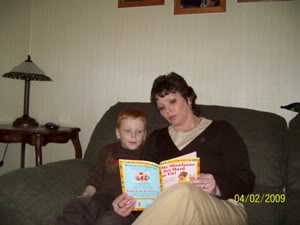 Samuel Fisher Wessels was born on January 19, 2002. He was literally an answer to prayer.
Oh yes, I’d prayed long and hard for little Sam Wessels. I wanted so badly to have a child, and I wanted just as badly for my husband to have a son. Quite frankly, neither of us was getting any younger.
After nearly two years of praying unremittingly, it happened.
We were going to be granted our wish for a child! I then prayed for my child every single day, “Please Lord keep him safe….Please Lord protect him. Please Lord keep him well…Please Lord let everything be okay.” One day, on bended knee, I even went so far as to pray for the son that I knew the man I loved more than life wanted so badly! I continued to pray, “Please Lord….”
When we learned our desire was about to be honored, I knew the name our son must have, Samuel. Ah yes, nothing else would do. Samuel from I Samuel 1:20, “…that she bare a son, and called him Samuel, saying, ‘Because I have asked him of the LORD.”
I loved being pregnant, absolutely adored it! It was quite possibly one of the happiest times in my entire life. I loved having that life growing inside me. I loved the anticipation. I loved the responsibility of caring for someone more than I cared for myself. I loved that he was a part of me.
When Samuel was born ten weeks premature, I was scarcely afraid. Oh yes, I was concerned and anxious, but I honestly felt comfortable that all would be well. I even joked at how badly I felt for little Samuel. “Poor kid he’s going to be just like his mother, has to do everything the hard way.” Little did I know….
We worked very hard for the next six weeks. The hospital had many milestones and stipulations which had to be met by both mother and father as well as baby, before baby Sam was allowed to accompany us home. I visited him every day without fail. We followed the rules to the “T”. All we wanted was for our beautiful little redheaded boy to come home, my little copper top. He weighed all of 3 lbs. 3 oz. when he made his hasty debut into this world, but he thrived! So much so, that his doctor told his hometown pediatrician he was doing “remarkably well” when he called to inquire.
Having spent the past forty days and nights in the NICU, having met all the stipulations and required milestones, little Samuel Wessels was allowed to come home! He was so beautiful! Still is! It was February 28, 2002.
We are fortunate here in Iowa, the state offers to assist parents of premature babies until the age of two, at which time they expect they will have caught up to their peers. As a result, Sam was afforded many state services. A nurse came to our home periodically; they tracked his development and kept us armed with any and all pertinent information on raising a healthy child. Sam continued to do well. He was developmentally delayed by exactly two months which was to be expected. We continued to work hard, especially little Samuel.
As a matter of fact, he had done so well, he had been discharged from nearly all of his state services, all but one. I’ll never forget how disappointed the Sioux Valley Children’s Specialty Clinic doctor evaluating Samuel was when I seemed less than enthusiastic that Sam was being discharged from their care for having met their developmental criteria.
It wasn’t that I wasn’t happy for Sam, I was. It was simply that I wasn’t surprised. Like I said, he had already been discharged from his other residual services, including his Early Intervention Educational program. His Health Families’ nurse agreed to continue only because I begged her to, and she too felt it was in Samuel’s best interest to have some professional support until he actually turned two.
As the two year mark approached, it was becoming apparent that something was not quite right. He had lost the few words he had spoken, he became irritated and agitated; we didn’t know what he wanted or how to console him. He seemed indifferent. And there was something new….he flapped his hands, walked on his toes and paced almost nonstop!
As we sat at the kitchen table one day, I inquired of his Healthy Families’ nurse when he began to flap his hands, “What do you think about that?”
“I’m not sure,” she replied, “What do you think of it? Does he do it a lot? Is it something new? Is it something he maybe learned at day care and is mimicking?”
I started, “I….I…I don’t know.”
“It’s okay, you can tell me,” she continued, “I know you’re thinking something, what is it?”
I took a deep breath, “I don’t know why but for some reason it makes me think of autism,” I confessed. And it was true; I had no idea why his hand flapping caused me to think that. I knew relatively nothing about autism. I had had minuscule exposure to the condition but that is what I thought of, nonetheless.
She began to ask me more detailed questions, “Does he still have the same words he had when we visited last month? Has he added any new words? He has lost language? How many words does he have now? How long has it been since you heard him use them? Does he respond to his name? How is his sleeping? What else have you noticed? Would you mind going to Spencer for an MChat?” I began to realize, she was suspect of autism too. Sam was just twenty-two months old.
Of course, we went to Spencer, to one of our state’s hospitals. We saw the same nurse practitioner who’d been following Sam since he’d come home to us. We did an eval and an MChat. I recall her telling me how he wasn’t closing the developmental gap. I recollect her commenting on how he had been closing the gap but that currently it was widening rather than continuing to close.
I remember taking the defensive and asking her if they realistically expected them to catch up miraculously at two simply because they have now turned two, and asked how it was that he could have been doing so well that all of his previous services had discharged him only to find that a few months later he was falling behind. He wasn’t only falling, he was now spiraling downward! I remember the concern in her face and the compassion in her eyes. She was very gracious and understanding. Sam was now two years, ten days old.
It seemed as though time had stopped. Everyone at work asked how Samuels’s appointment went; not knowing it was anything but routine. Of course they’d ask; he’d always done so well! I told them we were in a bit of shock, telling them, “They think Samuel may have autism.”
Exactly one week later, Spencer called with the results. Barb, the nurse practitioner, called us herself. She told me that the results of the MChat came back as significant.
“Significant? Significant for what?” I inquire, “Delays? Developmental delays?” There is an enormous pause; the silence was deafening!
“No, for autism.”
She wanted to know what we wanted to do next. My mind was spinning! “We are not qualified here to give that kind of diagnosis. You can come back in three months and we can evaluate him again, you can go to AEA (Area Education Agency) in Sioux Center and have him reevaluated in three months or we can send AEA to your home. Which do you prefer?”
“I guess it would be best if they could come here,” I suggested.
This is the first time that my husband and I really began to research autism. We turned to the Internet. Absolutely everything I read says that early intervention is the best chance for a better long-term outcome when it comes to autism. I began to wonder why we’ve been asked to wait an additional three months to repeat the same eval by someone still not qualified to give us a diagnosis. Either it is or it isn’t; I wanted to know! We were wasting precious time! So I got on my soapbox. I wanted a referral.
We visited Sam’s pediatrician a few days later and he tells me that he has patients with autism. He’s seen autism in his practice and in his opinion, Samuel does not have autism. I asked him about his language. “Boys are often slower to talk. He’ll catch up,” is the response he offered.
“What about that?” I asked. Sam was pacing around the exam room on his tip toes, flapping his hands.
“So. So what? I’ve seen plenty of other kids do that. He’ll outgrow it. I wouldn’t be concerned.” Our doctor seemed so certain.
“But he does it all the time,” I countered. “He doesn’t respond to his name. What about that? I know he can hear, he doesn’t respond to us.”
“Samuel. Samuel. Samuel! He’s going to ignore me now,” he insisted.
“He does that all the time, too.” I was weary by that point. “What about Barb in Spencer and Melissa from Healthy Families? Their tests show he is ‘significant’ for autism. Can’t we at least get a referral to someone who can evaluate him?” Now, I insisted and he agreee; however, a week later, we still had no referral. I called Melissa, who joined me on my soapbox! She concurred; either he has autism or he doesn’t and the sooner we can find out, the better.
In the mean time, I called around and found out exactly who WAS qualified to give a diagnosis such as autism. There was one doctor and his assistant within a 150 mile radius, so I called her clinic. Her receptionist informed me that it will take four to six months for an appointment without a referral. I called her office directly and got the answering machine. Sobbing uncontrollably into the phone, I begged her to “Please help me help my son.” No one returned my call.
Melissa did eventually get me a referral. She is a wonderful person to have in your corner! Because of a cancellation, we got an appointment for six weeks later.
As the weeks passed, we continued to search for answers via the net. We convinced ourselves our son didn’t have autism. He was loving after all. He didn’t bang his head, scratch, bite, wasn’t aggressive at all. He was just different, that’s all, just different. When they called two weeks prior to appointment day to confirm, I told them we didn’t want to waste anybody’s time when another family could perhaps put that time to better use. Fortunately for Sam, the hospital’s social worker convinced me that it would be best to know for certain and that finding out one way or the other couldn’t possibly be a waste of anyone’s time.
I’ll never forget that day. I try sometimes, but it is etched in my memory forever! It was March 25, 2004. Samuel Fisher Wessels was twenty-six months old. The room was filled with an entire team of evaluators, each doing their part of the evaluation. They kept both Sam and I very busy! There was a two way mirror in the room and we were told we would be observed as we underwent the process.
The entire evaluation took about an hour and a half. The doctor couldn’t get over what an ordeal it was for me to get to this point, to an actual team qualified to evaluate my son. She couldn’t believe the process was so brutal. Then I confessed to being the mom who called and left the message on her answering machine. I couldn’t help but wonder if she remembers and wondered what she must think of me.
The team of professionals left the room to discuss their results. They were gone about a half an hour, although it seemed like an eternity. When they returned, Ms. Mork informed me, “We have your diagnosis; it is autism.”
I tried with every essence of my being to choke back the tears and maintain my composure. I managed to ask, “So now what?”
“So now you need to go out and educate yourself on your son’s condition,” is what I was told. Something about at least one hour of speech three times a week, an OT and a PT eval to see what he qualifies for and blah….blah…blah…I was having a difficult time absorbing anything more.
I stood there in disbelief. So now I need to go out and educate myself on son’s condition. Is she serious? That’s it? Are they serious? Sadly, they were.
The first book I read was a loaner from our local Area Education Agency. It took me more than three months to read it. It was full of medical terminology I didn’t understand and many of the words had to be looked up on the computer as they were medical terms not in my dictionary. It was awful.
I was very depressed because I felt like I didn’t know how to help my son. I felt him slipping further and further away and I didn’t know were he was going. It was a helpless feeling because I didn’t know what to do. It was a very painful time. I cried a lot! I was often angry at our situation and I barely slept. All I could think was, but what about Samuel? What will become of my precious Samuel?
If I could change only one thing about autism today, it would be this: that it wouldn’t take parents so long to get the help their child needs and deserves; after pushing and prodding to get an eval only to be turned loose; alone, forlorn, terrified and bewildered, not knowing where to turn. I understand that in some areas this has gotten better, but in many areas of this vast nation, we’ve got a long way to go.
I, of course, did come to realize that it was up to me to pull myself up, put myself back together, and help my son, because no one else was going to! He needed me and I was not about to fail him.
Since then, we’ve been through the gamut of experiences, therapies and medications. We’ve found that melatonin is very effective for Sam for his sleeplessness. It has actually been a Godsend. We tried Metadate CD (time released Ritalin) when Sam was only four and a half. It had quite the opposite effect from what was intended. We nearly lost our little boy altogether! The sparkle in his eye was gone; he was no longer my incessantly chattering, clever and inquisitive little boy. He seemed as if to all but disappear.
On two different occasions, when trying to accommodate his difficulties in school, he had been prescribed Prozac and Strattera respectively. He was five. I nearly came unglued! It irritated me that they so eagerly reach for psychotropic meds for our small children rather than commit to them the extra time and one on one attention they require to learn and function in the classroom. Does medication have its place? Of course, but it is not the quick-fix, cure-all they’d sometimes have us believe it is.
We’ve had our educational and insurance battles as well. Sam’s mom’s a fighter, like Sam. I’ll not easily forget the time the President’s office called me concerning an Early Access educational dispute I’d written to him about. What made it especially interesting was the fact that the speech pathologist was here, in our home, when I received the call. She couldn’t help but notice as my jaw hit the floor.
We had been battling the system to obtain more speech services for Sam at the time, as our insurance wouldn’t cover private speech sessions. We couldn’t afford $105 for 15 minute sessions with a half an hour minimum. I wrote to our Governor about that one. His office did conduct an inquiry but had no jurisdiction over the private sector.
We’ve done Occupational Therapy, Physical Therapy, Speech and Discrete Trial. We’ve spent thousands of hours on the road going to and from each one. There have been many we would like to try but haven’t the funds, or they are simply not available to us in our area, which breaks my heart! You’d think you’d grow accustomed to hearing; “I’m sorry but I don’t know how to help your son, we can’t help your son, or we can help your son, but you can’t afford it.” But you don’t; you don’t ever grow a thick enough skin to accept that as satisfactory. So, I continue to write my elected officials and see them in person every chance I get. I’ve acquired an entire drawer full of responses from them.
We’ve tried a variety of bio-meds. Many different biomedical approaches; some have actually had adverse effects, while others have had none at all. I’ve never felt comfortable enough in what I’m doing with the biomedical approach to do it for very long.
Like so many other parents, I’ve grown weary of knowing Sam has a system which is unique from that of most of us. I know he has underlying medical issues and sensitivities. I’ve grown frustrated with mainstream medical doctors looking at me as though I have two heads when I try to discuss it with them. It disgusts me even more when they patronize me and tell me they will at least order the testing and the labs only to never hear from them again.
It’s exhausting trying to educate each of them one by one; doctors, nurses, teachers, aides, principals, relatives, neighbors, clerks, etc….about autism. I wish there were an easier way. I wish we could educate the masses.
I guess you could say there is A LOT I’d like to change about the realities of autism. It angers me that they’ve neglected to take autism seriously, to the point that is currently an epidemic! It infuriates me that so many of our children are now adults or nearing adulthood with nowhere to go and very little in the way of a support system. I am sickened to think of how their parents must feel. I am nearly consumed with grief when I think of how many parents have traveled this same journey before us, only to have their concerns fall on deaf ears, or worse…
I try to turn my anger into productivity. I am very proactive when it comes to my son and autism. I was appalled to discover how little was known about autism, how little funding has been allocated to autism and that, at the time, one in 166 children had autism. One in 166 is now one in 150. I fight for Sam’s rights and the rights of all the others on a regular basis.
Currently, Sam is in the first grade with a one on one aide, his “helper”, as he lovingly refers to her. With the extra help and attention he requires, that his autism requires, he is holding his own, keeping up with his peers and even learning to read. He is happy and well adjusted. He loves and he is loved, by many! That alone speaks volumes of his progress.
In looking back, knowing what I know now, I can honestly say the only thing I’d do differently is the vaccines. Do I know conclusively that vaccines caused my son’s autism? No, I do not. Do I think it is a possibility? Absolutely, I do! A very real and distinct possibility. What I’d like to have is to have been given the opportunity to decide for myself which vaccines were necessary and which carried entirely too much risk.
I’d like to have not been made to feel as though I had to choose between the flu shot and my job while I was carrying my son, after trying to refuse it not only once, but twice! I’d like to have been given a choice and a say in the matter. I’d like for the hospital to have felt as I do that an entire month before due date seems awfully early for babies’ first immunizations. I’d like to have at least been given the peace of mind in knowing that his autism was not caused by vaccines, because I would have opted to wait and see before allowing him to be vaccinated. Or even better, I’d like to have afforded my son NO autism because I refused to trust the status quo.
I can’t say what the future holds for my little Sam Wessels. I do know that I am going to leave no stone unturned, I am not going to accept no for an answer when it comes to helping him or finding answers, and I AM going to keep fighting the good fight for him and all the others like him!
Related reading:
Autism: 10 Strategies for Implementing Diet Changes
Dr. Nicole Sundene, NMD is a licensed Naturopathic Medical Doctor at Fountain Hills Naturopathic Medicine 16719 E Palisades Blvd, Suite 205, Fountain Hills, AZ 85268.She believes we should utilize natural medicines to treat the root cause of disease rather than just treating symptoms, as symptoms are a message of imbalance sent from the body and will persist until they are properly addressed.
For appointments please visit http://FHnaturopathic.com for more information about Naturopathic Medicine services.
©KitchenTableMedicine.com, LLC ™
Autism: Happy 19th Birthday Jake!
April 27, 2009 by Dr. Nicole Sundene
Filed under Autism, Guest Posts, Kitchen Sink
By Tanya Dutton
I took my boys to the doctor because my youngest son was sick. After less than five minutes in the exam room, the doctor turned to me and said “Mom, it is your other son you need to be concerned with. I think he may have autism.”
That moment will be embedded in my brain forever. I had known in my heart that something was wrong with Jake after he had his vaccinations at around one year of age.
The milestones he had reached seemed to have been erased, and further development had come to a screeching halt. Prior doctors had brushed off my concerns and told me that every child develops at their own rate, and I was a young mother so what did I know anyway?
For the next 15 years, I read every book I could get my hands on, joined support groups, and prayed every day that God would show me the way to help Jake get better.
I suffered a tremendous amount of guilt, along with sleepless nights, days full of frustration, and emotional breakdowns. Read more
Dr. Nicole Sundene, NMD is a licensed Naturopathic Medical Doctor at Fountain Hills Naturopathic Medicine 16719 E Palisades Blvd, Suite 205, Fountain Hills, AZ 85268.She believes we should utilize natural medicines to treat the root cause of disease rather than just treating symptoms, as symptoms are a message of imbalance sent from the body and will persist until they are properly addressed.
For appointments please visit http://FHnaturopathic.com for more information about Naturopathic Medicine services.
©KitchenTableMedicine.com, LLC ™
Zen To Done
April 23, 2009 by Kitchen Table Medicine
Filed under Bobbie Laing, Kitchen Sink
 By Bobbie Laing
Does your life need some reorganization? If you are like me, the answer is probably yes.
Americans are some of the most “stressed” people in our world today. We work hard, play hard, and fill our schedules full from the time we hit the floor in the morning until we tumble into bed at night.
Even our children are rushing to get things done. They have school, soccer practice, band, piano lessons, homework, and any number of other obligations that seem to grow as the years go by.
It is no wonder that we are stressed.
It is a wonder, however, that we ever get it all done. As the technological revolution exploded, our lives became more complicated.
Computers allow us to work virtually anywhere. You may have an office at work, but if you are like many people today, you also have one at home. There are multiple “inboxes” to check; voicemail, email, and “snail-mail” (a new term brought about in recent years to refer to the actual “paper” mail we find in the actual “mailbox” in front of our home).
Between multiple inboxes, calendars, and to-do lists, it gets difficult to remember where things are and what needs to be done. I make lists for just about everything. The problem is that these lists are everywhere: on the kitchen counter, my desk, the bedroom and even in my purse.
When I see one of my to-do lists and begin the task, I will get partway in and see another job that needs to be done, and off I go to the next task without having completed the one I started. Sound familiar? What I wanted was a plan; a simple, easy to follow plan that would help me get my life more organized.
“Much of the stress that people feel doesn’t come from having too much to do. It comes from not finishing what they’ve started.” - David Allen
 In Leo Babauta’s book, Zen To Done, you will find a comprehensive plan for “getting it all together”. The information presented is easy to follow and simple to implement. As the author himself states in the beginning of the book, the Zen To Done plan is a set of 10 habits that will help you get organized, simplify your life, get things under control, and actually get things done.
“Too often ideas pop into our heads, mail comes into our homes, paperwork comes onto our desks, phone numbers and appointments are given to us while we’re on the go … and they disappear or are forgotten or are relegated to a dusty drawer, never to be seen again.
The problem is that we have no system for collecting all of the information and papers and emails coming into our lives, and keeping them organized in a systematic way.” - Leo Babauta
My favorite section is the one entitled, “Minimal ZTD — the simpler alternative”. This brings the ten-habit plan down to just four. All that is necessary for this one is a pen and a small notebook. The habits are, Collect, Process, Plan, and Do. Whichever plan you prefer, the Zen To Done program is full of helpful advice to get you on your way.
More “Book Club” Book Reviews:
Dr. Nicole Sundene, NMD is a licensed Naturopathic Medical Doctor at Fountain Hills Naturopathic Medicine 16719 E Palisades Blvd, Suite 205, Fountain Hills, AZ 85268.She believes we should utilize natural medicines to treat the root cause of disease rather than just treating symptoms, as symptoms are a message of imbalance sent from the body and will persist until they are properly addressed.
For appointments please visit http://FHnaturopathic.com for more information about Naturopathic Medicine services.
©KitchenTableMedicine.com, LLC ™
It’s Hair Growing Season People!!! Wigs for Kids
April 23, 2009 by Dr. Nicole Sundene
Filed under Cancer, Hair Loss, Kitchen Sink, Lifestyle Tips

Spring and summer is the best time to grow hair, and the other day when I asked my normally professional looking friend what was up with his new hippie hairdo I hadn’t seen since college, he said “Wigs for Kids!”
“It’s really tough to still look professional while conducting an important business meeting….but it’s for the kids.” Matt said as we both smiled in our mutual “subvert the dominant paradigm kind of way.”
Matt was really excited about Wigs for Kids because, as we both agreed, getting wigs to kids is much more important than providing wigs for adults with cancer.
I don’t want to step on anyone’s toes….but we all know how much more cruel kids can be than adults with teasing, and having cancer or congenital alopecia is certainly a tough enough problem in itself.
I was really touched by my normally “tough guy” kind of friend growing his hair out, and then when I noticed the Operation Smile t-shirt he was wearing, I realized that we were both pretty hopeless bleeding hearts. Yup, I bought diamond grillz and braces for kids in Africa too…or something like that… *wink*
If you are a hopeless bleeding heart and want to join our hair growing team just visit….Wigs for Kids.….come on, it’s for the kids!
Wigs for Kids is easier for me because it only requires 8” which is great because most adult programs need a full 10” and that extra two inches can make a difference to some of us that refuse to let their hair be cut shorter than their collar bone.
Coming up! I will be talking about how we can grow the strongest and healthiest hair as QUICKLY as possible….
It’s hair growing season people!
Are you ready?
Don’t forget to get a little trim every now and then to prevent split ends. We want to grow pretty wigs.
Now let’s all unleash our inner hippies and grow some wigs for kids!
Drop me a comment if you plan to play along!
~Dr. Nicole
Dr. Nicole Sundene, NMD is a licensed Naturopathic Medical Doctor at Fountain Hills Naturopathic Medicine 16719 E Palisades Blvd, Suite 205, Fountain Hills, AZ 85268.She believes we should utilize natural medicines to treat the root cause of disease rather than just treating symptoms, as symptoms are a message of imbalance sent from the body and will persist until they are properly addressed.
For appointments please visit http://FHnaturopathic.com for more information about Naturopathic Medicine services.
©KitchenTableMedicine.com, LLC ™
Autism: Marin’s Personal Story
April 23, 2009 by Kitchen Table Medicine
Filed under Autism, Guest Posts, Kitchen Sink
By Marin
I was born healthy in NYC and at that time, nobody knew that there was anything different. However, when I was a toddler, I wasn’t walking or talking, nor did I hit any of the usual developmental milestones.
I don’t remember any of this obviously, but my mom tells me. She kept taking me to different doctors (a speech therapist, a neurologist, a physical therapist, etc.) to try getting answers and they all told her that I’d most likely never learn to do anything and wouldn’t be able to go to school.
There were so many times she would cry because she was scared and confused, so friends and family would rally around her and give her strength to do what was needed.
A breakthrough came when I learned sign language, which was either before or during my time at St. Agnes, a special school for disabled children. My mom told me about the time when she put me in the bath and I signed that the water was too hot; then she burst into tears because she could have placed me into baths that were too hot for years, but never knew.
I think I had a lack of self-awareness in the past which prevented me from communicating…so it wasn’t like I couldn’t, but that I never knew how. The understanding was there; it was just locked away until I learned how to access it. Anyway, when I was older, I attended special-ed in Thomas Jefferson Elementary until we moved to Scarsdale, NY, and then I attended Seely Place Elementary.
I made my first friends there and we ended up going to high school together. To this day, I am grateful to the girls from Seely, as well as those from the other elementary school, Greenville, for accepting and supporting me through the years. I loved being at school because my intellect thrived even though I was socially awkward and always felt like an invisible wall separated me from the other kids.
The teachers loved me because I was such a diligent student and my mom made it clear at every PTA meeting that she would not tolerate slip-ups or misunderstandings from them…I think a lot of them were terrified of her! She was like a lioness protecting her cubs. When I was a teenager going through the wonders and hell of puberty, I experienced emotional upheaval and depression due to hormonal imbalances as well as life circumstances, specifically having to do with my self-destructive father.
I idolized him and he hid his shortcomings well for a long time, until he allowed his mental illness to destroy him from the inside out. My only “role model” at the time had betrayed me, so who could I trust? Bitterness consumed me and I blamed my family for not understanding me and not helping me.
There were terrible things I had done during those times that took me years to recover from…I don’t know which was worse, the intense despair and anger, or the haunting guilt that followed every time I thought about the ones I hurt, especially my mom, who’d never given up on me.
One day, I had a panic attack at school during my sister’s lunch hour and she displayed amazing mercy by coming to my aide. That’s when I realized she wasn’t the enemy. If anything, she admired me (and still does) and wrote essays about me that I never even knew about. Now she and I are tight. I went on an anti-anxiety/anti-depression medication called Paxil for about 5 months until I’d emotionally and mentally stabilized.
When I was about 18, I was diagnosed with Asperger’s Syndrome, a high-functioning form of autism and my mom and I researched it together. It was amazing to finally understand why I am the way I am, and to know that there are communities of people who went through similar things and think the way I do.
I graduated from mainstream high school and sang “The Star Spangled Banner” at the ceremony with two other friends. I remember the tears of joy running down my mom’s face, as she no doubt remembered those ignorant doctors telling her to basically give up on me. After graduation, I attended a 3-year program for learning-disabled adults at the New York Institute of Technology out on Long Island and made new friends.
I’m still close to many of them to this day. After that, I moved to an apartment and have been living in it for 5 years. I also have a step-dad named Alan, who my mom married in 2000, and I call him my “partner in lunacy” since we act goony around each other. He tells me stories that he doesn’t even tell my mom because she would think they’re stupid or gross, but he knows I’d crack up at them!
Also, in 2004, I decided to become a Christian (my family is Jewish) because I needed spiritual guidance and redemption that only Christ could give me. It gave me an opportunity to share my life with a community of accepting and fun people, who would love me because of my differences rather than in spite of them. I love them, my friends, and my family who’ve all made such a profound difference in my life.
Would medication have helped?
If a “vaccine” or meds for autism were to come out, I’d give it a shot (pun intended, haha!) just to see if anything dramatic would happen…actually that’s what scares me. I’m afraid that these things would mess up my brain and take away my personality and strengths, as well as my weaknesses. If someone is willing to take that risk, then God bless them, but I don’t know if I would.
Asperger’s isn’t a disease that can or even should be cured…it’s part of who I am as a person. Don’t I have a right to be happy and fulfilled exactly as I am? I know people may think that my limitations get in the way of doing better for myself, but the fact is, I’ve already overcome so much and will continue to do so. People should have more faith in me.
I even tried that gluten-free/casein-free diet that everybody raves about as a “cure” for autism, for about a month, but it was just too difficult (the GFCF waffles and pizza were delicious though!). My mom has regrets about not introducing the diet when I was a child because then I’d have accepted it. I guess that makes sense. I don’t want to look back at the past any more and I don’t like “What if’s”, since they are useless, so the only thing I can change is what I do now. Besides, I always thought laughter really was the best medicine!
Do you have a message for society?
Try to love one another and learn about the differences that make each person beautiful and special. You might learn something new! Don’t take life too seriously and don’t be afraid to be who you are.
God bless!
~Marin
Related reading:
Autism: 10 Strategies for Implementing Diet Changes
Dr. Nicole Sundene, NMD is a licensed Naturopathic Medical Doctor at Fountain Hills Naturopathic Medicine 16719 E Palisades Blvd, Suite 205, Fountain Hills, AZ 85268.She believes we should utilize natural medicines to treat the root cause of disease rather than just treating symptoms, as symptoms are a message of imbalance sent from the body and will persist until they are properly addressed.
For appointments please visit http://FHnaturopathic.com for more information about Naturopathic Medicine services.
©KitchenTableMedicine.com, LLC ™
Autism Treatment Center of America: The Son-Rise Program
April 23, 2009 by Kitchen Table Medicine
Filed under Autism, Guest Posts, Kitchen Sink
 Autism Treatment Center of America: The Son-Rise Program
Parents and others who care for and work with children with special needs will find The Autism Treatment Center of America to be a breath of fresh air. Located in Sheffield, Massachusetts at The Option Institute, the program is designed to support and inspire adults as well as the children.
The staff receives extensive one-on-one, observed (through a one-way mirror), training with children having a variety of challenges. Parents and others who attend their programs are also trained in the basic principles as outlined in the book Son-Rise. The program originated in 1974 from Bears and Samahria Kaufman’s successful efforts to reach out to their son Raun (now the CEO of the organization).
In this video of various staff members working with children using the Son-Rise method, notice that the program is flexible to meet the individual needs of the child. The child’s inner motivations are used as bridges for connections and opportunities to encourage the next developmental steps.
Some Key Features Include:
*Joining the child in exclusive behaviors to learn about him/her and building a trusting relationship.
*Encouraging the child to make eye-contact, develop language skills, and learn to attend and be comfortable with people.
*Sincerely celebrating the child with energy, excitement and enthusiasm.
* Embracing the parents as the child’s primary advocates and most significant relationships.
*Training and encouraging the parents to work with their child as much as possible.
*Providing guidelines on creating a specially designed play room or specialized learning environment to minimize distractions and make it easier for the child to connect with people.
* Believing that there are NO limits to your child’s potential to learn and grow.
*Helping parents develop an un-waiving attitude regarding their abilities to support their child.
Various levels of support and programs are offered and can be reviewed online. Son-Rise also offers a free inspirational DVD detailing the stories of three different families, and they offer a free 25 minute consultation and other start-up packages. If you are interested in becoming a certified Son-Rise Child Facilitator, professional training is available.
Make a donation to offer hope for families and these amazing children. Donations are tax-deductible.
Author: Tara McClintick is an Early Childhood/Special Education teacher as well as a Son-Rise mom. A great deal of Tara’s 20+ years experience has been working one on one with her youngest son, Jake, who was diagnosed with severe autism shortly after his first birthday.
Jake is now 13 and together they continue the journey towards learning and recovery through nutritional and natural methods. Tara also creates fun, unique picture books for kids using real-life scenes and images www.BooksByTara.com.
Dr. Nicole Sundene, NMD is a licensed Naturopathic Medical Doctor at Fountain Hills Naturopathic Medicine 16719 E Palisades Blvd, Suite 205, Fountain Hills, AZ 85268.She believes we should utilize natural medicines to treat the root cause of disease rather than just treating symptoms, as symptoms are a message of imbalance sent from the body and will persist until they are properly addressed.
For appointments please visit http://FHnaturopathic.com for more information about Naturopathic Medicine services.
©KitchenTableMedicine.com, LLC ™
Autism and Jenny McCarthy
April 23, 2009 by Dr. Nicole Sundene
Filed under Autism, Kitchen Sink, Lifestyle Tips
 By Dr. Nicole Sundene
I was just reading this article by Jim Carey on vaccines and started thinking….
Wouldn’t you love to be a fly on the wall at Jim Carey and Jenny McCarthy’s house? I have always been a fan of both of theirs and am delighted to see that they found each other.
Nothing makes me happier than seeing a celebrity take on a cause that is personal to them. Jenny McCarthy’s son has autism and she wrote a book about it. As a physician, I appreciate celebrities personalizing these causes because I can only imagine how frustrating and alone it would feel to be a mom or dad of a child with Autism.
God bless Jenny McCarthy for writing a candid book on her personal experience. Nothing warms my heart like seeing that someone with a hilarious sense of humor also has a huge heart. On top of that, she is an educated and informed parent.
Jenny did not accept the doctor’s lack of answers for her son’s condition, or the medications that were not helping. She took responsibility for his health by spending hours on the internet researching her son’s condition. Now normally, this kind of parent or patient scares the heck out of most doctors. We don’t like you to know more than us.
After all her research, she then placed her son on a gluten free casein free diet. Is there a whole lot of research out there supporting this? Not really…a little bit. But who cares? It is wheat and dairy! It is not an anti-psychotic medicine that causes Tardive Dyskinesia as a side effect (given off label to boot! Meaning there is no FDA indication or research supporting its efficacy…)
So what is the harm in trying it? After a while, I think, in order to really problem solve conditions, you HAVE to think outside the box, outside the “standard of care” and go back to the basics…like that childhood game of “Hot and Cold”. Are we getting warmer or getting colder? Maybe there isn’t a name for what is wrong with you, so let’s instead play a game to find out what makes it better and what makes it worse.
Ok…then let’s avoid the things that make it worse and only do the things that make it better.
Sorry is that too simple?
 Sometimes I think that a preschooler would make the best doctor. We have over-complicated medicine to the point that doctors are so stressed out that half the time they cannot even think clearly or freely. We need our palm pilots and our Merck Manuals and heaven forbid that the internet is down and I can’t look stuff up on FP consult or Google it.
What!??!!??
What is that?
The internet is down today?
I have to THINK!!!
Oh the horror!!!
Trust me, I am not poking fun at any particular doctors as I am just as guilty of these mannerisms as the next doctor. I love my PDA and Google is my best friend. I will be the first person to ask you where your double blind randomized controlled trial is to support your treatment choice….
However, do we really need this kind of research for common sense?
If Jenny McCarthy comes in to my office and tells me that her son is better without gluten and casein, instead of acting in shock and disbelief shouldn’t I just rejoice with her that it was as simple as avoiding wheat and dairy? So we make sure her son gets enough fiber, zinc, b vitamins, and calcium somewhere else in their diet while we give it a whirl…why not?
Why must doctors always play the role of the authority figure in the situation? Listen I am happy to step down from my pedestal…I am scared of heights as it is. Why not let the parents play some of this “Hot and Cold?” game. Like the parent’s in the movie “Lorenzo’s Oil” that took curing their son’s rare condition in to their own hands.
If you or your child have a rare disease I highly recommend watching that movie with a BIG box of Kleenex. It may just be the inspiration you need to keep on going, and keep on doing what you are doing.
Now I am not saying that you should ever go against what your doctor says. I am simply suggesting thinking critically for yourself and your family. If something doesn’t feel right, if something doesn’t sound right, then question it.
Participate in your health care, ask questions, keep copies of your own labs, understand when your doctor says “I don’t know,” and allow for that to be an acceptable answer.
Too many doctors think they have to be the know-it-all. Let’s all keep in mind that “I don’t know” is actually a fantastic answer!
Doctors are only human beings, they are not gods (that may be new information to some of my colleagues in Orthopedics…he he.) One of the leading causes of death in America is from “Iatrogenic causes” a fancy way of saying that some medical person seriously messed up and killed you.
Whether you grab the wheel away, or just sit shot gun, whatever you do….don’t take a backseat to your health. Pay attention, take notes, let Jenny McCarthy and her son’s “recovery from autism” remind us that all hope is not lost when the current answer is “I don’t know.”
I believe that for every problem there is a solution it simply is a matter of us taking the time to look for it. Is the treatment that helped Jenny’s son, Evan, going to help your kid? I don’t know….but there is very little harm in trying it when done properly with the guidance of a nutritionist or qualified physician.
Thanks for stopping by my kitchen table,
Dr. Nicole
Related reading:
Autism: 10 Strategies for Implementing Diet Changes
Dr. Nicole Sundene, NMD is a licensed Naturopathic Medical Doctor at Fountain Hills Naturopathic Medicine 16719 E Palisades Blvd, Suite 205, Fountain Hills, AZ 85268.She believes we should utilize natural medicines to treat the root cause of disease rather than just treating symptoms, as symptoms are a message of imbalance sent from the body and will persist until they are properly addressed.
For appointments please visit http://FHnaturopathic.com for more information about Naturopathic Medicine services.
©KitchenTableMedicine.com, LLC ™
Autism: Tara’s Story “My Introduction to Autism”
April 21, 2009 by Dr. Nicole Sundene
Filed under Autism, Guest Posts, Kitchen Sink

I’ve always LOVED kids. Unlike most of my friends who weren’t sure what route they wanted to take in life, I was confident in my choice to become an Early Childhood Teacher.
My first post-college position was to teach a preschool class for the County MR/DD program. It was here I was introduced to the diagnosis of “autism.” No one told me about it, I found a list of the symptoms while searching for answers.
Most of the kids in my classroom played and interacted as I expected kids to do. A few of the kids, however, did not play. They did not respond to other people in the usual ways. I was concerned because I knew play and interaction are how kids learn about the world.
Yet, these kids were smart. Little, surprising things they would do demonstrated there was a lot going on in those brains. What was my role as their teacher? Obviously language skills and small motor skills were lacking or far behind, and I wanted to know how to help them. I began seeking any information I could find on the autism.
A Teacher Becomes “Mom” After three years of teaching, I began having my own kids. I have been blessed with two boys –Derek and Jake. Both of my pregnancies went smoothly right up to the delivery. Jake, in fact, was an all natural child birth –as he was born 15 minutes after arriving at the hospital.
Despite my begging for an epidural, there wasn’t time! Jake was 8 lbs. 10 oz, so compared to Derek’s 6 lbs.9 oz, he was quite the solid baby. Derek was born 2 weeks before due date, Jake was 2 days before due date.
Especially with my first child, Derek, I was naively shocked at the intensity of the 24 hour care and millions of parental decisions involved. Like every parent, I wanted to do everything right! So, we got all the immunizations right on schedule. I breastfed both kids their entire first year.
I decided to post-pone teaching a while and do child care in my home. To prepare myself for returning to teaching I began working on my Master’s degree in Special Ed. one evening class at a time. My hope was to learn how to be a better teacher for the kids diagnosed with autism.
The Miracle of Child Development Taking care of babies and preschoolers at home could be quite chaotic at moments, but I loved it. It was fascinating to hear new words popping out, watch new skills develop, and watch those curious eyes and hands explore the world brand-new. Derek’s development was like magic. By 2 he was extremely verbal, and quite the drama child. He literally thought himself as “the king” at times and would demand control, “I do SELF!! I do SELF!!”
Jake’s development also moved along nicely up until slightly past his first year. The only concerns I had were oozing red sores on his cheeks that the doctor called “eczema” or “extremely dry skin.” Ok. Why would he just have extremely dry skin on his cheeks? He also had chronic ear infections. Go to the doctor, antibiotic, infection clears up, a week later after stopping the medicine the infection comes back.
They were pretty constant. I figured that I was being a good mom by doing what the doctor told me to do. You hear about kids getting chronic ear infections all the time, so it didn’t seem alarming in my mind. I had no idea how antibiotics could damage the digestive system.
Later I read that a milk allergy could cause eczema, so I took dairy out of my diet. Jake’s eczema cleared right up. Despite these seemingly minor annoyances, he was walking at 10 months just like his brother did. He seemed aware, active, good-natured, and I was deeply in love with him. He loved his mommy right back.
Jake’s cuteness was undeniable, and our entire family was excited about watching every little step of his development. By one year he was saying single words, keenly observing his big brother’s every move, and playing chase games with another toddler I was caring for at the time.
Hearing the Alarm At 15 months, Jake got his MMR vaccine. The changes came in like the tide. Except unlike the tide, they stayed put.
First I noticed he started constantly leaving the activities of kids I cared for and going off by himself. He’d either look at books alone or pace back and forth. He let me read him books, but any amount of chaos or rambunctiousness from the other kids –he was off by himself again.
The words he was using seem to fade away too. Once he excitedly stood up in his high chair, and was holding out his bib which had a picture of a Christmas tree on it. He struggled to comment “tttrrrEEEeeeee.” He had my full attention, and I remember reassuring him, “That’s right, Jake, that’s a Christmas tree.” He continued to try to say “tree” over and over. It kept coming out in various distorted ways. He sat back down with a defeated look on his face.
Another evening he took my hand and toddled to the fridge with me, and we opened the door. “What you want Jakey?” I asked him. He looked at me, opened his mouth, and jerked his arms wildly. No sounds came out of his mouth. He did this a couple more times, then got the most confused look on his little face, and wandered off. I remember saying to my husband, “it’s like he’s trying to talk, but the words are getting lost in there.”
What’s Going On? Jake became more and more unresponsive. I remember one day watching him pace in his room, totally unaware of my existence anymore. I stood and watched him for a long time. In frustration and fear, I began screaming his name. Not a flinch. Not a glance. It was as if he didn’t even hear me. Thus began my journey for seeking answers that continues to this day….
Jake is 13 years old now. He is nothing less than a miraculous gift in my life. I have learned so much about this condition called autism, more generally known as PDD –Pervasive Development Disorder. It is indeed, pervasive. It effects not only every area of a child’s development, but every level of society in profound ways.
How we live, how we learn, how we treat each other, and what we do daily is shaping the future of our world. It is up to society to open our hearts to what these lives can teach us. The impact each one of us has is significant, whether we know it or not.
The aim right now seems to be to help (or even try to force) these kids to adapt to the real world. What doesn’t make sense is - these kids are our real world now. Why can’t we adapt to them? There are so many things we can all learn from the condition of autism. So many ways we can change for the better. These kids may be here to help us. We may need their help, as much as they need ours.
“We must not, in trying to think about how we can make a big difference, ignore the small daily differences we can make which, over time, add up to big differences that we often cannot foresee.”
- Marian Wright Edelman
Related reading:
Autism: 10 Strategies for Implementing Diet Changes
Dr. Nicole Sundene, NMD is a licensed Naturopathic Medical Doctor at Fountain Hills Naturopathic Medicine 16719 E Palisades Blvd, Suite 205, Fountain Hills, AZ 85268.She believes we should utilize natural medicines to treat the root cause of disease rather than just treating symptoms, as symptoms are a message of imbalance sent from the body and will persist until they are properly addressed.
For appointments please visit http://FHnaturopathic.com for more information about Naturopathic Medicine services.
©KitchenTableMedicine.com, LLC ™
Son-Rise Book Review
April 21, 2009 by Kitchen Table Medicine
Filed under Autism
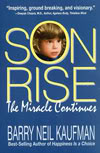
Son-Rise is the true story of Raun Kaufman who, as a child, displayed all the symptoms of and was diagnosed with severe autism.
“Bears” and Samahria Kaufman had two daughters prior to the birth of Raun, and had been learning how to explore their beliefs to become happier people. The Option Process is the gentle self-exploration tool they used to uncover the beliefs fueling their discomforts and fears.
As Raun approached his first birthday, he appeared to be profoundly autistic in every way. He was unresponsive, would go limp when held, and spent a great deal of time spinning objects. He acted both deaf and blind, and rocked or stared in silence for hours on end. Seeking answers from the doctors, the Kaufmans were told there was nothing that could be done to help Raun. He had autism and there was no hope for improvement. They were told to institutionalize Raun and concentrate on their daughters.
The Kaufmans decided instead to use this experience as an opportunity. They applied the Option Process to let go of their discomforts, fears, and assumptions. They enthusiastically attempted to connect with their son. They happily created an intense home program in which they compassionately reached out to Raun by spending time with him and joining his world. Starting with the first thrills of eye contact, to sounds, to words, Raun emerged little by little out of autism.
This miraculous story is a testimony of the power that love can have when made tangible through actions. It shows how tapping into our inner beliefs can help us create profound changes in our daily choices. The Kaufmans were told that Raun’s condition was horrible and beyond hope. The Kaufmans decided to instead believe that their child was amazing, beautiful, and doing the best he could. Then they decided to actively reach out to Raun and connect in ways that would demonstrate their love and respect.
Having a child with severe challenges myself, this book changed my life. Son-Rise shows how we are not victims of our circumstances. It shows us the benefits of tapping into our inner power to decide how we will respond to the events in our lives. I found it encouraging, enlightening, and practical for creating wondrous changes in my own attitude and life. The message is way beyond a “how I helped my kid” story. It also clearly portrays how Raun came into their lives and blessed them.
The Kaufmans found Raun’s emergence to be such a powerful experience that they now teach other people about The Option Process in Sheffield, Massachusetts at the Option Institute. A large portion of their programming is teaching other parents (and others who work with children) how to create a Son-Rise program at The Autism Treatment Center of America.
Raun, now the CEO, is currently speaking at Autism Conferences around America.
Related Books by Barry Neil Kaufman: A Miracle to Believe In, Happiness is a Choice.
Author: Tara McClintick is an Early Childhood/Special Education teacher as well as a Son-Rise mom. A great deal of Tara’s 20+ years experience has been working one on one with her youngest son, Jake, who was diagnosed with severe autism shortly after his first birthday.
Jake is now 13 and together they continue the journey towards learning and recovery through nutritional and natural methods. Tara also creates fun, unique picture books for kids using real-life scenes and images www.BooksByTara.com.
Related reading:
Autism: 10 Strategies for Implementing Diet Changes
Dr. Nicole Sundene, NMD is a licensed Naturopathic Medical Doctor at Fountain Hills Naturopathic Medicine 16719 E Palisades Blvd, Suite 205, Fountain Hills, AZ 85268.She believes we should utilize natural medicines to treat the root cause of disease rather than just treating symptoms, as symptoms are a message of imbalance sent from the body and will persist until they are properly addressed.
For appointments please visit http://FHnaturopathic.com for more information about Naturopathic Medicine services.
©KitchenTableMedicine.com, LLC ™
Autism: A Brain Under Attack
April 17, 2009 by Dr. Nicole Sundene
Filed under Autism, Dr. Scott Olson, Kitchen Sink

While the number of children with autism continues to climb, the reason for this devastating disease has remained a mystery.
A central mechanism (or a theory that explains the entire disease) has been elusive, but Russell Blaylock MD, author of Excitotoxins, has recently authored scientific articles that support the notion that autism may be the result of chronic microglial activation.
What exactly is chronic microglial activation? Let’s take a look.
What is in Your Head?
If you were to ask someone what their brains are made out of, their most likely answer would be to say that their brains are made out of nerves. This, it turns out, is not true.
Saying that the brains are made up of nerves is a little like saying that the universe is full of stars (ignoring the immensity of space that surrounds those stars). The trap is obvious: Stars are bright and interesting, and we tend to focus on them because they are shiny; the rest (we assume) is just empty space.
The same has been true of our brains: Nerves only make up 10 percent of the brain, yet have commanded all our attention. While the nerves are interesting and easy to see (just like the stars), it is the other 90 percent of the brain (mostly filled with cells called glial cells) that play a vital role in the brain functioning and development.
Understanding glial cells and how they react to conditions in our environment has lead Dr. Blaylock to his unified theory of brain destruction in general, and specifically to why the brains of autistic patients don’t work well.
Glia Cells
Glia or glial cells make up 90 percent of the brain. The term “glia,” is derived from the Greek word for glue and was coined by Rudolph Virchow, a Polish scientist, who observed the glial cells held the brain together. For many years, these glial cells were thought to be inert and non-functioning; they were simply thought to be the putty holding the whole messy tangle of nerves together in the brain.
In recent years, though, scientists have begun to sit up and notice the glial cells, and – in particular for those interested in autism – the microglial cells.
The microglial cells are a unique type of brain cell that make up 20 percent of the glial cells (or 15 percent of the entire brain mass). These microglial cells act as the immune system for the brain and this is important because when these microglial cells become chronically activated, the end result is destruction of brain cells.
Activated Microglial Cells
Normally the microglial cells are just sitting there in a passive mode, ready to protect the brain. In certain cases, though, these cells go crazy and become “activated.” When microglial cells become activated, it spells disaster for a brain, notably for developing brains.
When microglial cells become active, especially when they become chronically activated, they dump neurotoxins (or nerve toxins) into the brain. These toxins called excitotoxins (mostly glutamate and quinolinic acid) excite nerves to fire. When microglial cells continuously dump glutamate and quinolinic acid into the brain, the result – over the long term – is nerve cell death.
The blessing and problem with human brains is that they develop over a long period of time. The brain begins developing in the womb and continues largely until the child is around four years old. While this type of brain development has its advantages (it may be why we are as smart as we are), is also means that there are almost five years when childrens brains especially need to be protected from attack from excitotoxins.
Excitotoxins
The question that is probably running around in your head by now is how do you stop these excitotoxins?
Good question.
To understand how to stop excitotoxins from harming the brain, you have to take a detour to a scientific lab where excitotoxins were discovered. In 1969, John Olney, a scientist, discovered that the brains of experimental animals could be destroyed by giving them monosodium glutamate or MSG during key stages in development.
There are two things you should notice about what Olney discovered. The first is that monosodium glutamate is a substance that contains the exact same chemical (glutamate, an excitotoxin) that the microglial cells secrete when they become chronically activated.
The second thing you want to notice is that MSG is a food additive.
Now you can understand that there are two ways that brains can be destroyed by excitotoxins. The first is that excitotoxins can show up in our environment (in the foods we eat, the chemicals we are exposed to, the air we breathe…) and the second is excitotoxins can be released by chronically stimulating microglial cells.
These two ways, while different, are actually closely related. Many toxins in our environment can actually stimulate the microglial cells to become “primed” or ready for activation or act directly as excitotoxins.
Excitotoxicity
The toxins that tend to lead to chronic microglial activation or act as excitotoxins directly are these:
• Mercury: Mercury, a heavy metal, gets special mention because not only has it shown up in vaccines, but it is also used in dentistry, and is present in some foods (mainly fish and seafood).
• Other Heavy metals: fluoride, lead, cadmium, and aluminum and others.
• Gluten: a protein found in wheat and other grains.
• Casein: a protein found in milk products.
• Food Additives: The food additives that cause the most problems are those that contain glutamate and aspartate.
There are also some thoughts that gut dysbiosis may also lead to microglial activation. Gut dysbiosis is a general term for an imbalanced gut ecology and is often marked by an overgrowth of the yeast Candida.
What to do?
The simply answer is to protect our children’s brains for chemical and environmental insults.
• Avoid vaccinations: I know this is controversial and many people won’t agree, but there are many unknowns about the long-term health of children taking so many vaccinations. The upsurge in autism occurred somewhere in the 1990s, which coincided with an increase in the number of vaccines our children are receiving (the number of suggested vaccines increased from 10 to around 36).
You have two strategies if you don’t want to avoid vaccines altogether. The first is to wait until children are older; this allows their brains and immune systems to develop more before introducing vaccines. The other strategy is to pick-and-choose; you don’t have to have every vaccination, despite what some authorities are suggesting.
• Avoid food additives: While you might think it is easy to avoid MSG, it is not. MSG, or something like it, can be found it almost every prepared food you eat (notice I didn’t say all the food you eat, but almost every prepared food you eat). The foods with the most MSG-like food additives are soups, gravies, diet anything, including diet soft drinks, most frozen foods, sauces, salad dressing, and more. These food additives have names such as yeast extract, textured protein, soy protein extract, MSG, hydrolyzed vegetable protein, vegetable protein, sodium or calcium caseinate and more. And, yes, these food additives show up in baby food as well. If you pick up a package and it has more than four ingredients, set it down and move to the next one.
• Avoid artificial sweeteners: NutraSweet® and Equal® contain aspartate (an excitotoxin) and should be avoided. Other artificial sweeteners are just as bad for your health and the health of our children.
• Keep your house clean: It goes without saying that you should avoid as many chemicals as possible and the house is a major source of many toxic exposures. There are many natural solutions to using chemical cleaners in your home.
Most of what I have suggested is for people who want to avoid the damage done by excitotoxins and is a good preventative. If you child already has autism, then following the above suggestions are likely to help, although some damage may be irreversible. Reports on the removal of gluten and dairy from the diet are encouraging, but need more study. A gluten and dairy free diet is certainly worth a trial to determine if dietary interventions will help.
Works consulted:
1. Millward C, Ferriter M, Calver S, Connell-Jones G. Gluten- and casein-free diets for autistic spectrum disorder. Cochrane Database Syst Rev. 2008 Apr 16;(2):CD003498.
2. Blaylock RL. A possible central mechanism in autism spectrum disorders, part 3: the role of excitotoxin food additives and the synergistic effects of other environmental toxins. Altern Ther Health Med. 2009 Mar-Apr;15(2):56-60.
3. Blaylock RL. A possible central mechanism in autism spectrum disorders, part 2: immunoexcitotoxicity. Altern Ther Health Med. 2009 Jan-Feb;15(1):60-7.
4. Blaylock RL. A possible central mechanism in autism spectrum disorders, part 1. Altern Ther Health Med. 2008 Nov-Dec;14(6):46-53.
5. Whitehouse CR, Boullata J, McCauley LA. The potential toxicity of artificial sweeteners. AAOHN J. 2008 Jun;56(6):251-9; quiz 260-1.
Related reading:
Autism: 10 Strategies for Implementing Diet Changes
Dr. Nicole Sundene, NMD is a licensed Naturopathic Medical Doctor at Fountain Hills Naturopathic Medicine 16719 E Palisades Blvd, Suite 205, Fountain Hills, AZ 85268.She believes we should utilize natural medicines to treat the root cause of disease rather than just treating symptoms, as symptoms are a message of imbalance sent from the body and will persist until they are properly addressed.
For appointments please visit http://FHnaturopathic.com for more information about Naturopathic Medicine services.
©KitchenTableMedicine.com, LLC ™
Autism: Gretchen Wilson & Sean Ashley’s Story
April 17, 2009 by Kitchen Table Medicine
Filed under Allergies, Autism, Guest Posts, Kitchen Sink
 By Gretchen Wilson
When my grandson was four years old, we went through a very difficult time. He is both autistic and blind, and I really thought placement in a foster home would help me to care for him and keep him safe while I dealt with a few situations. Unfortunately I was wrong. In foster care, he was neglected. He looked like a starving war orphan with a distended belly - he was chubby before.
So I took pictures, went to the judge, and he had Sean at the courthouse within two hours and I was able to take him home. The attorney advised me to put Sean in a state institution, stating that I was young and needed a life of my own. Sean’s case worker said that she was placing him in a state institution because he was a vegetable, that he did not talk, and threw fits. I told her “over my dead body”.
When Sean was small, he had tactile issues and ate mostly bread type foods. He now eats almost everything. He loves milk a lot, but would never drink water. I started mixing whole milk with water, just to get some water into him. Once, I accidentally bought 2% milk and he would not touch it, even with no water in it. He would make an angry sound and shove it away.
To help him with his memory skills, I would sing songs and then leave a blank for Sean to fill in. He knew every word I left blank!!! I also used a drum beat to modulate his language. I would put his hand over my mouth so that he could feel how I said the words.
In fact, he still loves to do that, even at 29 years old, especially when we are in the car. Sean has enough language now to let one know just about everything he wants and has a great memory. His mobility skills are great; it’s like he has a sensory antenna in his head.
I founded The Sean Ashley House in 1994 so that I could be assured that he would always have a happy, loving and safe environment, even when I could no longer care for him. He now thinks his last name is House. If someone says “Sean Ashley”, he adds the “House”.
When I founded the House, I made sure to offer the services that autistic children need. He now loves swimming, music, horse riding therapy, dancing, using the treadmill… and I could go on. He loves to go up and down my stairs, and the minute he gets into my car, he doesn’t stop saying “hamburger” until we finally stop to get one.
Now when I bring him home for weekends, after about 24 hours, he starts saying “Sean Ashley House.” This makes me feel so very good that he loves his home. I’m at peace now when I think about what will happen to him when I can’t take care of him any longer.
Everyone, even the court system and social workers, needs to be educated on autism!!!!
Related reading:
Autism Awareness Month
Autism: 10 Strategies for Implementing Diet Changes
The Autism Diet Connection
Autism: 10 Tips for Everyone
Autism: A Brain Under Attack
Read more stories in the Autism Category
Dr. Nicole Sundene, NMD is a licensed Naturopathic Medical Doctor at Fountain Hills Naturopathic Medicine 16719 E Palisades Blvd, Suite 205, Fountain Hills, AZ 85268.She believes we should utilize natural medicines to treat the root cause of disease rather than just treating symptoms, as symptoms are a message of imbalance sent from the body and will persist until they are properly addressed.
For appointments please visit http://FHnaturopathic.com for more information about Naturopathic Medicine services.
©KitchenTableMedicine.com, LLC ™
Autism: Debi’s Story
April 17, 2009 by Kitchen Table Medicine
Filed under Autism, Guest Posts, Kitchen Sink
 By Debi Tyree Haney
I had a normal pregnancy with my second daughter, the only exception being that I was diagnosed with gestational diabetes at week 34 of pregnancy. In July of 1999 I gave birth to a 7lb, 13oz baby girl named Allie. For the entire 9 months following her birth, she cooed, babbled, reached out, and made all her major developmental milestones within appropriate time frames.
At 9 months old she contracted chicken pox. Two weeks after the onset of her illness, while still scabbed over, she was given a hepatitis B vaccine. Within two weeks, she rejected my breasts for nursing, refused all foods but a handful of hard, crunchy, white foods, stopped pulling up to stand, stopped making eye contact, and virtually stopped doing anything but laying on her back with her feet in the air most of the day.
While I made multiple trips to the pediatrician to complain about what she was not doing, each time I was met with excuses and was basically blown off. When I complained at 12 months that she appeared to be blankly staring off into space, the pediatrician asked me if it was getting worse in frequency or length. As a layperson, seeing her do this at all was pretty unsettling.
Unfortunately, again, I was blown off. Finally at 18 months of age, someone at church asked me if we’d had her hearing tested. At that moment, I knew I was no longer just a paranoid parent and called the pediatrician while crying to insist that we test her for something, anything. I even shared my fears that it may be autism, which terrified me. By 18 months, she was beginning to show some of the characteristics of autism that I had read about on the internet; remember, in 2000-20001, there still wasn’t a lot of info on autism and younger infants.
On July 16, 2001, at 23 months old, we received the diagnosis of Autism Spectrum Disorder. Since that time, we have found biomedical treatment to be extremely helpful for Allie. She has lab tests which confirm a plethora of physiological anomalies including gluten sensitivity, markers of mitochondrial disorder, immunological anomalies, gastrointestinal issues, and the list goes on.
Her growth rate stayed at the 50th percentile mark until she was 12 months old and she began to drop off the growth charts. At 9 years-old, she is still below the first percentile in height. She has normal genes, as confirmed by electrophoresis and microarray testing from two different geneticists.
Today, Allie is doing far better but still has a way to go. She is now verbal, and loves to play with her 11 and 6 year-old sisters. Her favorite activities are art, hiding our cats in her bedroom, and playing Super Mario Brothers on her sisters’ Nintendo DS. She’s still saving up her allowance money and/or waiting on her birthday for a DS of her own.
She is essentially on grade level. She reads her Bible independently and talks about God and Jesus. When she’s sick with respiratory or gastrointestinal issues, which is often, she tells me she is dying and tells me what her funeral will be like.
If I could tell society anything, it would be that we have to come together to find the cause of autism, to provide support and treatment for those with autism and their families, and we have to embrace those with autism as valued members of society.
Those with autism deserve quality health care as much as everyone else. Those with autism deserve education as much as their non-disabled peers. Those with autism have a right to live full, independent lives as much as any other adult.
We have to stop arguing about whether or not vaccines cause autism, and accept the fact that there is a large body of evidence showing the possibility they do, and commit ourselves to finding the answer. We need to stop ridiculing those who seek answers. As Dr. Healy, former NIH director, has suggested, we should not be afraid to seek the answers because we fear what we may find.
We have to respect parents who live with autism and the many challenges that can come with it. We need to celebrate with parents for the incredible blessings their child or children with autism bring to this world. Those affected by autism need faith, hope, and love, with the greatest of these being love.
Related reading:
Autism Awareness Month
Autism: 10 Strategies for Implementing Diet Changes
The Autism Diet Connection
Autism: 10 Tips for Everyone
Autism: A Brain Under Attack
Read more stories in the Autism Category
Dr. Nicole Sundene, NMD is a licensed Naturopathic Medical Doctor at Fountain Hills Naturopathic Medicine 16719 E Palisades Blvd, Suite 205, Fountain Hills, AZ 85268.She believes we should utilize natural medicines to treat the root cause of disease rather than just treating symptoms, as symptoms are a message of imbalance sent from the body and will persist until they are properly addressed.
For appointments please visit http://FHnaturopathic.com for more information about Naturopathic Medicine services.
©KitchenTableMedicine.com, LLC ™
Autism: Seth’s Story
April 17, 2009 by Kitchen Table Medicine
Filed under Autism, Guest Posts, Kitchen Sink
My name is Kelly, and I am the very proud mom of a beautiful little boy named Seth. He is seven years old and has Autism.
 Back when I was pregnant with Seth, I never knew that Autism was becoming the most rapidly growing epidemic of our time. Back then, I’m sure it was still around 1 out of 500 or so. Did I ever think that I would be here today, fighting this battle? No, in fact, the only time I had ever heard of autism was when I saw a primetime movie about a young child with autism back in the 80’s. I never in my wildest dreams thought that I would be living out that movie myself. Never did I think I would be in the forefront, fighting for my son.
Firstly, I had a normal pregnancy! I was a single mom, but Seth’s dad and I made the decision to live together and raise Seth, even though we didn’t have a relationship anymore. It was a good decision.
Seth was no ordinary baby and he loved to be loved. I would sing to him or play music to him while giving him a bath. He loved to be held, he smiled, laughed, had the most beautiful blue eyes. We were so proud of him when he began walking on his own at 10 months old, speaking his first words, and reaching his milestones much earlier than normal.
Being good parents, we kept up with his physicals and vaccines. Around 18 months, things started to change. I really noticed big changes around age 2. He spoke, but made no sense; he had bowel issues, he flapped his hands, made us read the same book over and over, ran in circles. He would get up every morning, take the register off of the heating/air duct in the kitchen, stand INSIDE it, and proceed to take out everything and line it all up.
What’s more, he was sick constantly with fevers that seemed to come out of the blue. He developed pneumonia, his ears would drain, and he cried more than usual. Still, I had no idea this raging epidemic that was going on all around us had its latest victim right in front of my face. No clue that it could have been related to his last vaccination.
We moved to a larger house. My oldest son finally got his own room, and Seth got a yard! I thought it would be great! It gave Seth all the room he wanted. He became obsessed with trains. He still talked, but still didn’t make a lot of sense. He just wasn’t where he should be at three years old. It bothered me but his dad would say “oh, he’s just odd, he’ll grow out of it.” I actually remembered that TV movie from 25 years prior, and thought to myself, “Could my son ALSO have autism?” I didn’t want to think about it.
 When Seth was 3 1/2, his dad and I parted ways and I worried about the impact it would have on Seth, but he adjusted quite well. Not long after that, I met a wonderful man. From day one he was on the bandwagon with me. The first time he met Seth, he immediately knew something was amiss; did he have a delay? I said “No, but I think he may have Autism.” He BELIEVED me and encouraged me to have Seth checked. I actually had someone on my side.
When Seth was four, this boy who never said “I love you” walked up to me, put his arms around me and said, “Mommy, I love you.” I looked at Alan, tears in my eyes. This was the first time that my son had said this to me and I’ll never forget it. Alan looked at me and said “That was huge, and you KNOW he meant it.” Still, even with all of the signs, I didn’t have him checked. I should have taken that boy the next day, and the bottom line is that I didn’t. Denial still had its hold on me.
Fast forward a year to kindergarten. Seth had an EXTREMELY rough time adjusting to a new schedule. He cried every morning when I left him. His teacher would send notes home about the troubles he was having. What was I going to do? I knew what was wrong, but didn’t want to admit it to myself. My answer came during parent-teacher conferences about a month after school started.
We talked about Seth, I mean really talked. Then there came a point where I looked into her eyes and she didn’t have to say a thing, her silence said it all. Neither one of us could say the A word, but when I told her that I was going to take him to have him evaluated, she said to me in a very soft voice, “I think that’s a good idea.” I left that room with tears in my eyes for my child.
At his next physical, Seth was sick (once again.) When he had a fever, oddly, he was more coherent - almost normal. So during this visit, when I told his doctor that I thought Seth had Autism and I would like a referral, he looked at me like I was from Mars. He said: “Well, he’s acting fine NOW. Why do you think there’s something wrong with him?” I said “I didn’t say I thought there was something WRONG with him. I said that I think he may have Autism. He’s sick today! See him when he’s NOT sick!” He took my word for it, and referred us to a child psychologist.
This man was absolutely fantastic. He saw us within a week, observed Seth and worked with him. After five days of waiting, he told me what I knew in my heart all along. Seth had Autism. Funny thing is, he never said “I’m sorry, but…”
I like to describe his diagnosis like this: “Here is your son. I’m giving him an Autism Badge, NOT a label. Yes, he will always have it; however, great things lie in store not just for him but for YOU as well, depending on what you do. Now, here’s a sword, a shield, and a suit of armor, you go out of this office a Warrior Mother, go fight the monster and get your son! You make him the best thing he can be!”
ME? I know nothing, and I’m no fighter! Soon, Google became my best friend. I read a ton of books, joined a support group, and made a few friends. I learned to work WITH Seth, not against him, and learned to give him the strength he needs to just be Seth.
Since that day, Seth has blossomed. He still exhibits some signs of Autism, but for the most part he is so much better than he was last year at this time. My fears have been put to rest. This monster isn’t so scary, because a mother’s love for her child is the most powerful force in the universe. Autism may have won a couple of battles, but this mom has won the war.
Related reading:
Autism: 10 Strategies for Implementing Diet Changes
Dr. Nicole Sundene, NMD is a licensed Naturopathic Medical Doctor at Fountain Hills Naturopathic Medicine 16719 E Palisades Blvd, Suite 205, Fountain Hills, AZ 85268.She believes we should utilize natural medicines to treat the root cause of disease rather than just treating symptoms, as symptoms are a message of imbalance sent from the body and will persist until they are properly addressed.
For appointments please visit http://FHnaturopathic.com for more information about Naturopathic Medicine services.
©KitchenTableMedicine.com, LLC ™
Autism Awareness Month
April 9, 2009 by Dr. Nicole Sundene
Filed under Autism, Guest Posts, Kitchen Sink, Lifestyle Tips
By Trécera Lee
April is Autism Awareness Month.
Sad that we have to have special “days” in order for the world to recognize that autism is EVERYWHERE!
Today, I’m asking, “What do YOU want the world to know about autism?”
What information are you willing to share in the hope that others may learn from you?
It can be:
- How do you feel about autism?
- How do you feel your child is affected?
- How is your family/life affected?
- Struggles of autism?
- Joys of autism?
- ANYTHING
Here’s what I want the world to know: Read more
Dr. Nicole Sundene, NMD is a licensed Naturopathic Medical Doctor at Fountain Hills Naturopathic Medicine 16719 E Palisades Blvd, Suite 205, Fountain Hills, AZ 85268.She believes we should utilize natural medicines to treat the root cause of disease rather than just treating symptoms, as symptoms are a message of imbalance sent from the body and will persist until they are properly addressed.
For appointments please visit http://FHnaturopathic.com for more information about Naturopathic Medicine services.
©KitchenTableMedicine.com, LLC ™
Naturopathic Medicine Series Airs Tonight on PBS! April 8th
April 8, 2009 by Dr. Nicole Sundene
Filed under Kitchen Sink, Naturopathic Theory, Press Releases, Preventative Medicine
 Press Release: For Immediate Release
On April 8, 2009 the country’s first series on naturopathic medicine will air on southern California’s KOCE, the sixth-largest PBS station in the country.
Produced by the award-winning American Health Journal in conjunction with the American Association of Naturopathic Physicians (AANP), the series will educate the public about the practices and philosophy of naturopathic medicine.
“The public is hungry for a system of health care that is patient-centered, wellness focused, cost-effective, and which uses natural remedies without side effects,” said Karen Howard, AANP’s Executive Director. “Naturopathic medicine is what the public wants and needs. We’re excited about this opportunity to educate the public about naturopathic medicine.”
The program will cover a broad range of topics, including the training and education of naturopathic physicians, environmental health and cancer, naturopathic approaches to chronic disease, family medicine, preventing heart disease and diabetes, mental health, allergies, and chronic pain.
The six-part series (with a seventh “best of” episode) will begin airing April 8, 2009.
Naturopathic physicians combine the wisdom of nature with the rigors of modern science. Steeped in traditional healing methods, principles and practices, naturopathic medicine focuses on holistic, proactive prevention and comprehensive diagnosis and treatment. Naturopathic medicine embraces the medical oath “first do no harm.”
By using protocols that minimize the risk of harm, naturopathic physicians help facilitate the body’s inherent ability to restore and maintain optimal health. It is the naturopathic physician’s role to identify and remove barriers to good health by helping to create a healing internal and external environment.
Currently, 15 states, the District of Columbia, and the United States territories of Puerto Rico and the U.S. Virgin Islands have licensing laws for naturopathic doctors. In these states, naturopathic doctors are required to graduate from a four-year, postgraduate naturopathic medical school and to pass an extensive postdoctoral board examination (NPLEX) in order to receive a license.
Please Repost this Press Release to Your Website or Newsletter
The American Association of Naturopathic Physicians is a professional association that strives to make naturopathic medicine available to every American, and to increase recognition of naturopathic physicians as the identified authorities on natural medicine. Our members include accredited schools of naturopathic medicine, students, physicians, and individual and corporate supporters, participating independently or though 40 state-level affiliate organizations.

Learn more at
Dr. Nicole Sundene, NMD is a licensed Naturopathic Medical Doctor at Fountain Hills Naturopathic Medicine 16719 E Palisades Blvd, Suite 205, Fountain Hills, AZ 85268.She believes we should utilize natural medicines to treat the root cause of disease rather than just treating symptoms, as symptoms are a message of imbalance sent from the body and will persist until they are properly addressed.
For appointments please visit http://FHnaturopathic.com for more information about Naturopathic Medicine services.
©KitchenTableMedicine.com, LLC ™