How are you Voting for your Health?
November 11, 2008 by Dr. Nicole Sundene
Filed under American Sickcare System, Discipline, Environmental Medicine, Kitchen Sink, Life Coaching, Lifestyle Tips, Motivation, Preventative Medicine
 Call me old fashioned but I refuse to vote by absentee ballot. I just love Election Day, and to me there is something really special about driving to the same elementary school year after year and filling out my ballot alongside everyone else in my community. There is that certain spirit in the air. That friendly neighborhood free cookie and coffee hour that can’t quite be replicated anywhere else. “Does my vote really make a difference?” I always wonder to myself as I look around the crowded room.
It certainly does to me.
Election time is about much more than voting for the lesser of two evils, it is about taking the time to educate ourselves about the issues.
As I carefully went through my voter’s ballot one last time, I realized, “wow voting is just like making healthy decisions!” Voting can be simple, and voting can be tough. There is that clear section in your voter’s pamphlet that you quickly breeze through, and then there are those decisions that you still aren’t certain about after never ending research and reading. What does this issue even mean? Do I need to hire an attorney to translate this legal gibberish? You may be left even at the last minute to deliberate over what is right and what is wrong.
Whether my vote is actually counted or not, I am left that much more educated as I submit my passionately researched opinions on how this world should be -in to the giant garbage can er…ballot counter.
We are truly blessed in our country to at least be given choices, even if they aren’t the best choices, they nevertheless are still choices. The freedom of choice is what makes America the amazing country that it is. Your choice may not always make the difference in America, but it does make a difference in you.
One thing that always ticks me off year after election year though is the blanket statement “everyone should vote.”
Do you really think everyone should vote? Sometimes I think that people should be forced to take a basic test on the issues and pass it before they can vote. Now I am not saying this to offend people that can’t read. Really, you shouldn’t have to even know how to read in order to vote, illiterate people can and should still be allowed to vote—as long as they are educated on what they are voting about!
What happens when we don’t educate ourselves on the issues and just go blindly vote? Does the thought of hundreds of thousands of uneducated voters making decisions about our government terrify anyone else?
One uneducated vote is actually enough to throw off an entire election.
In this year’s presidential election the “vote was rocked” by all the previously apathetic people that never really cared enough to go out and vote. That is what made the difference. That is what got the underdog in to office. That is what has created a great deal of hope that, “change is coming”, “that race is not an issue”, “that the average person can be president” (well George W. already demonstrated that) and that MLKJ’s dream that “people are not judged by the color of their skin, but the content of their character,” has alas come true. At least the majority of the American population is now looking at character and not color. We are progressing!
The votes of the previously apathetic are what has made American history. In all reality that is more amazing than the first African American being elected to office. Apathy is a far bigger problem than prejudice these days. Of course there are still and will always still be ignorance around race, but we have an entire Generation of “X”ers that don’t care about anything except video games and Sex in the City. Young people everywhere are starting to take pride in their country, starting to see that “this is MY country too.” People in Seattle have been dancing in the streets, making eye contact, and some strangers have even been caught making polite small talk despite the start of the nine month rainy season.
Regardless of your party preferences, I think we can all agree that the choice to vote is a right that many Americans take for granted. You shouldn’t just go blindly vote, it is important to educate yourself on the issues at hand, the pros, the cons, and then to support things moving in a positive direction.
Every day, everywhere you go, you are given a choice. You are given an opportunity to vote for your health. Sometimes the choices aren’t that great like “do you want fries with that?” or “diet coke or regular coke” or “pumpkin pie vs mince meat pie” and “sugar or something made from sugar?” But nevertheless they are choices that we should still attempt to think about.
Is Barack Obama right? Is change really coming? Only you can decide.
It’s the synergy of these little daily choices that build us up; or stack up as obstacles in our path.
In naturopathic medicine one of our main nature cure healing principles is to “remove the obstacles to cure”. The body wants to heal. The body wants to repair. It is the intrinsic nature of the body to constantly heal and repair, but the body also requires the right tools, the foundation has to be properly set, and obstacles must be removed from the path of “The Healing Power of Nature” or “The Vis Medicatrix Naturae” or “The Vis” as most naturopaths fondly refer to it. “The Vis is strong in this one,” you can go around joking to all your healthy friends if you want to be nerdy like me.
Obstacles to healing typically come from our unhealthy diet and lifestyle choices. All the white refined food garbage we eat, stagnation, negative thinking, unhealthy relationships, drugs, alcohol, smoking, etc, etc…nag, nag, nag…these are all the roadblocks to healing.
Sometimes the right choices are crystal clear. Everyone knows drugs are bad. Everyone knows smoking kills. Everyone knows 1-2 glasses of wine a day not the whole bottle, right? But when it comes to our diet things can be a bit trickier. We usually are left picking between what appears to be the lesser of two evils. So what would you vote for:
High Fructose Corn Syrup or Aspartame?
Wow!!! Did I really just vote for High Fructose Corn Syrup? Well, I was left no choice when it went head to head with aspartame. *sigh*
Which is the lesser of the two evils? High fructose corn syrup as noted in Dr. Scott Olson’s amazing book about sugar addiction, “Sugarettes” is linked to obesity, diabetes, aging to our arteries, and hypoglycemia. Whereas aspartame, is guilty of causing a “cephalic response” which leads to obesity and weight gain. In the cephalic response the brain is tricked by the sweet taste of aspartame and then tells the pancreas to secrete insulin, despite normal levels of glucose. This insulin dump causes low blood sugar or “hypoglycemia” which makes you hungry, and ultimately leads to being overweight.
Is aspartame not the biggest joke in health “care”? The man made garbage you are drinking to lose weight is making you fat? Yikes the issues can be deceiving, and just like in politics, the government refuses to acknowledge this conundrum, while both the FDA and American Diabetic Association also refuse to acknowledge that sugar causes diabetes (type II) and weight gain. (Source: OlsonND)
Yet another reason that politics mirror health care—you don’t always agree with the government!
Do you trust the government? Do you believe every single bit they tell you? Whether you do or you don’t the correct answer is “you shouldn’t always.” The government has to keep prison and school caffeteria programs funded so the average American best not base their “optimal daily allowance” off what the government says. I think the RDA should be called the MDA for “Minimal Daily Allowance”. The government also only cares about the collective and not the individual. There is no “NDA” (Nicole’s Daily Allowance).
So—now that you have been educated on aspartame vs high fructose corn syrup, do you still want to vote for aspartame? My guess is “no” if you are trying to use aspartame as a weight loss aid.
“Well Dr. Nicole, sugar makes people fat too, and high fructose corn syrup is converted by the liver to fat-all biochemists know that fructose is typically converted in the liver to fat,” you may argue.
Which I would then deliberate back that aspartame has MORE consumer related complaints than any other man made substance we consume. Frankly I don’t even have all day to rattle off the ever-growing list of skin rashes, autoimmune disease, fibromyalgia, arthritis, cancer, mood disorders, so forth and so on that consumers are reporting to the FDA. Thus I am left to make an ugly vote for high fructose corn syrup.
Rarely in health just like in politics, are we ever given a win-win situation to deliberate over like “soup or salad?” You can’t fail on that choice, unless the soup is a rich fatty cream base with chunks of sausage, or the salad is a lifeless sad case of iceberg lettuce and Thousand Island dressing.
My point with this rambling about voting for our health is that every single day, every place you go you are given the power of choice. Exercise that power with extreme privilege. Educate yourself on the issues. Read one new health tip every single day. Create a new whole foods recipe each day. Our day to day choices do in fact have influence not just on us but on our environment and those around us.
We live in a country where we have the constitutional right to choices, and many of us are not exercising these rights when it comes to our health. It may initially be overwhelming to think about all the diet choices we have to make, but in the end it all boils down to the same thing whether you are voting for a candidate or voting for your health—education. Educate yourself on the issues and then make your decisions based off your values, based off what works for YOU.
The more you educate yourself on the things you choose to put in your body the healthier you will inevitably become. We truly “are what we eat,” and the tritest expression in nutrition should be the motivator behind all your health decisions. What are your values? Who do you really really really want to be? Fat or thin? Healthy or unhealthy? Organic or Polluted? Positive or negative? Fit or fat? Selfish or contributory? Environmental or Apathetic? Believer or Non-believer? Who do you want to be?
You are invited to decide that today.
If you want to prevent disease, if you want to be healthy, if you want to teach your children by example; if you want to be that positive person and most importantly if you want to inspire the people around you by the choices you make—the bigger “votes” although initially tough—become that much simpler.
Hmmm…that gym membership is suddenly worth it, that home cooked meal at the kitchen table is suddenly worth the extra effort rather than just another night of drive through dining. Reading your child a book before bed suddenly becomes a million times more special than drinking a fat glass of wine in front of the television. Maybe that extra 20 cents for that organic apple really isn’t that bad after all when we decided to vote with our consumer dollars against pesticides being allowed to poison our environment and our children, and our children’s environment. Your consumer dollars are always voting too.
It all boils down to living by your values.
What is it that you really value? Life coach and author, Tim Brownson is constantly nagging me…er…um…I mean… he is always INSPIRING me to consider my values, and some of the healthy or environmental things I have previously been in a naturopathic rebellion against have more easily slid into place.
Anyone that has been chronically ill—that has been so sick that they have seen death’s door and made it back again knows the value of their health. If you have visited death’s door you do not take your health for granted. You realize you were given a second chance, you were given life. You choose life and you choose everything that supports the existence of your life. Unfortunately those of us that have not been forced to pay that visit to death’s door, have no clue what the true value is in our health. We may never fully understand until it is too late.
As a result, our health is always a value that will get cast aside with apathy. And apathy is the biggest war we have to wage for this century.
Whether you are traveling, visiting a friend, dining out, or eating at your kitchen table-you are always given choices. Get political, vote for the lesser of the two evils. Use your money as your ballots. That is exactly what keeps us always moving in a healthier direction. That is how we save the environment and ourselves. That is how we prevent disease. One day at a time, one choice at a time.
One healthy vote at a time.
Ha- you thought Election Day was over now did you? Sorry I can’t let you off the hook that easy, voting season has just begun. Now get out there and make your votes count!
“Progress not perfection.”
Thanks for stopping by my kitchen table.
~Dr. Nicole Sundene
Related Reading: 45 Years to American Health Care
©KitchenTableMedicine.com, LLC ™6 Steps to Calorie Counting in Your Kitchen
November 11, 2008 by Dr. Nicole Sundene
Filed under Bonnie Pfiester, Diet Tips, Kitchen Sink, Weight Loss

By Bonnie Pfiester, Fitness Trainer
One of the greatest treasures I received after my grandmother died was her recipe box. Recently, I was thumbing through all the recipes and noticed an odd number written on the top of some of the cards.
All the sudden it hit me, the number reflected the calories for that dish.
One recipe, Salmon-Broccoli Bake, had the numbers “1600” noted at the top of the card. Another recipe for Overnight Coffee Cake had “3700 cal” written in my grandfather’s handwriting.
It’s funny how the smallest thing can bring back certain memories.
Since I was a kid, I remember my grandfather jotting down notes with his unique squiggly handwriting on 3×5 cards in the kitchen. Over time, I watched him weigh food on a small scale and listing numbers as if he was doing some science experiment. Although my grandfather was a professor at Florida State University, I learned his mad science skills were simply being used to manage his waistline.
As I reflect back on those days in my grandparent’s kitchen, I can vividly remember my granddad counting out his favorite rye crackers, making sure to abide by the serving size on the box. He would then add the number to his 3×5 card. After supper he would continue his list of calories for each dish, always keeping a tally for the day.
Once I saw those recipe cards it made me think how we could all learn by his example. Unfortunately, many people don’t know exactly how to count calories. Truth is, besides reading labels and looking up whole foods, I rarely took the time to add up all the ingredients in my own recipes until lately. I discovered tracking calories is easy and rewarding.
Here are a few steps to help you get started.
1. Use a calorie book or an online calorie counter to find the number of calories in your whole food ingredients.
2. Measure ingredients using food scales and/or measuring cups for the most accurate information.
3. Tally the total calories for packaged foods by multiplying the number of servings used in your recipe by the number of calories per serving.
4. Use alternative ingredients for high-calorie items to help save calories in your favorite dish.
5. Add the final list of calories for each ingredient and divide by number of servings to get your final count. For instance, the 3700 calorie Overnight Coffee Cake served 15 people 247 calorie treats.
6. Once you have completed the math, document your answer on your recipe card or book.
If you love to cook but need to watch your waistline, begin counting calories in your favorite dishes today. What you will learn in the process will be more valuable than you could imagine.
~Bonnie
Bonnie Pfiester is a Personal Trainer, wife to the famous fitness trainer Steve Pfiester of the reality TV show “Fat March”, and owner of the women’s health club Longevity Fitness.
You can enjoy more of Bonnie’s fitness and beauty articles at www.BonniePfiester.com or here at the kitchen table by visiting the Bonnie Pfiester page.
You are invited to leave your fitness and sports nutrition questions in the comments below for Bonnie to briefly answer or write about in future articles.
©KitchenTableMedicine.com, LLC ™The Healing Power of Music: An Interview with Jeremy Dion
November 11, 2008 by Dr. Nicole Sundene
Filed under Counseling, Guest Posts, Kitchen Sink, Music
 Hi Kitchen Table Medicine readers! Ever wonder about the healing power of music?
Well, I have invited therapist and musician Jeremy Dion to the kitchen table to discuss the therapeutic benefits of music.
I am delighted to host this interview because it is wonderful to see health care professionals use their creative talents to further help people. Please welcome to the kitchen table therapist and musician Jeremy Dion…
Jeremy, what is your professional background?
I make a living as a psychotherapist in private practice, in Frisco, Colorado. I work mainly with kids doing play therapy, and teens, but I also work with couples, adults, and families. Adolescents were the last group of people I wanted to work with as I made my way through graduate school, as I keenly remembered the type of teenager I was. Yet after graduation I took a job with a Wilderness Therapy program, and would up providing therapy to the roughest and toughest kids on the block. I learned how to reach and care for kids who weren’t getting that from many other sources, and it flipped a switch in me.
Now, working with the “trouble makers” is one of my specialties. I have degrees in music therapy and counseling psychology, but somewhere along the way I decided to focus my musical efforts on my own songwriting and performing, rather than using my specific training as a music therapist. I am in the midst of the transition to making my living as a professional musician.
How long have you been playing music?
As long as I can remember. I grew up playing the piano, and singing to myself. I was in the Middle School choir, but so was everyone else it seemed. Later, I began singing in earnest with the encouragement of Issaquah High School vocal teacher Lavonne Watson. It was during that time that I really developed the internal awareness that I could sing, and sing pretty well. Up until that point it was mostly family members giving me positive feedback on my singing, but they can’t be trusted to be too objective.
So I sang all through High School, performed in the school musicals, etc. But It wasn’t until I was a freshman at U.C. Berkeley that I picked up the guitar and began to write my own songs. Since that time, making sense of the world through songwriting has always been a natural outlet.
I enjoy the performance aspect of being a musician, of course, but even if I wasn’t performing, I would still be writing songs and playing the guitar. Corny as it may sound, sometimes I feel like I might explode if I didn’t write songs, play guitar, and sing. It has become so much a part of me at this point that I would be literally lost without it.
What are the therapeutic benefits of playing and listening to music?
Oh man, how much space have you got for this interview? Pick an aspect of being alive, and therein lies a musical benefits. Whether we look at physiology involving things like heart rate, measurable stress level, breathing patterns, neuro-synaptic activity, or the less tangible things like motivation, emotional awareness, emotional processing, memory recollection, etc. music has been demonstrated again and again to bolster health.
Furthermore, spirituality and music have been paired long before recorded history. As a species we resonate with music as a means of worship, as a way of connecting more deeply with the divine both internally and externally. Music therapy as a field has been around for generations, but sadly still fights an uphill battle for recognition in our western medical models. Yet we all seem to know intrinsically that music adds innumerable dimensions to the human experience, and we use this knowledge in unique ways. We use music purposefully to match our mood, to conjure memories, to shift our mood, and to feel more deeply.
In addition, with the advances in fields like quantum physics, we are reminded again and again that everything is vibrating, from the largest knowables in the universe to the most microscopic sub-atomic particles, we are vibrations. In a very real sense, everything we know and everything we are is music.
How has your professional training in psychology been of benefit to your career as a musician?
First of all, I went through a very unique graduate program at Naropa University in Boulder. As a three year program, it focuses on one’s internal process as much as (if not more than) the academic information. We had years of training in meditation and mindfulness, were required to participate in our own therapy, and were encouraged to become painfully familiar with our own habit patterns and nuances before we could hope to be of benefit to someone and theirs.
In that sense, my graduate training reminded me again and again to go inward, to dig in the dirt, plumb the depths, and get in touch. I must say, this type of program does not suit everyone. Yet it was perfect for me, and encouraged me to learn more about myself in those three years than in the previous twenty three combined.
From this depth of understanding, most of my songs are born. As a result, my lyrics are intensely personal to me, and releasing this first CD was akin to publishing my personal diary. Thankfully, people have been resonnating with music. In addition, my career as a psychotherapist has continued this path of understanding, of seeing aspects of myself in my clients’ process and heightening my awareness about my own personality, my own idiosyncrasies, and my own divinity. All of this informs my writing and my performances.
Who is the musician that inspires you the most?
Paul Simon. His brilliance shines through on so many levels both musically and lyrically. He has a way about him that I very much admire - a way of speaking simply, but giving the sense that he is really getting at so much more.
I have never been accused of under-analyzing anything, and I’m sure I read much more into his music than others might, but his music consistently inspires me the most. My own journey as a songwriter has been to become more transparent in my writing. I used to write very poetically but in a way that was wide open to interpretation, and often left the listener feeling detached from the music.
That was purposeful at the time, because I wasn’t ready to open up and get too clear about my internal world. That has been changing, and as my songs become more true and clear, they have been reaching a broader audience. I credit Paul Simon with some of this.
What kinds of positive messages do you promote through your music?
Elvis Costello wrote, “What’s so funny about peace, love, and understanding?” My music, I suppose, promotes those things in such an unabashed way that sometimes I just have to laugh at myself. As a described earlier, my music is about me.; it is about being alive on the planet; it is about love and loss, anger and resentment, beauty and laughter, joy and pain.
Others may read into it many other things, and that is welcome. That’s what music is about - being able to personalize it and make sense of it the way it adds up to you. But in the end these songs are about me and the things I think about and feel about. To me, that’s the positive message: go within.
Share with us a specific example of lyrics intended to make a difference.
They all have made a difference. I don’t mean that in a “I can save the world” sort of pompous way. I mean in the way that I am different for having written them, having worked through them, having sung them again and again. As I said before, if I didn’t have this outlet, the world would make less sense to me and I might explode out of sheer overwhelm. If I had to pick a lyric to share, it would be from “Back Breaking Wall,” and was intended to extoll the virtue of looking within:
“Every now and then I feel one more step away from being here
Even though in earnest how I try to get back to you, my dear
Resurrecting all these ancient bones under centuries of soil
The sanctity of self-reflection separates the water from the oil”
Where are you currently on tour?
Mostly in Colorado - Denver, Boulder, and the mountain cities around Breckenridge.
What is your favorite stress management tip?
Exercise, meditation, and some sort of creative outlet. I don’t care if it’s painting, drawing, poetry, journaling, music, dance, scrapbooking, etc. Just create.
Thanks Jeremy for sharing your creative and professional wisdom with us!
To purchase Jeremy Dion’s CD’s you can visit www.JeremyDion.com. You can also add Jeremy as a Myspace friend, load his songs to your Myspace profile, and follow Jeremy’s tour updates on Facebook.
I am always interviewing various health care providers, contact us if you have a unique health related story to share at the kitchen table.
©KitchenTableMedicine.com, LLC ™How to Transform Fear
November 5, 2008 by Dr. Nicole Sundene
Filed under Counseling, Fear, Kitchen Sink, Life Coaching, Lifestyle Tips, Mary O'malley, Zen Thinking
 By
By Author of The Gift of Our Compulsions: A Revolutionary Approach to Self-Acceptance and Healing and Belonging to Life: The Journey of Awakening
In his first inaugural speech in 1933, Franklin Roosevelt said “…the only thing we have to fear is fear itself…”
This was a profound thing to say given the economic climate of that time and was intended to shake people out of their focus on their material losses.
But what if that is not actually true? What if we don’t need to fear fear. In fact, what would our lives look like if the voice of fear inside of us couldn’t catch us in its web?
This is certainly a time on our planet in which fear is up big time - financial fears, terrorist fears, fear for the future. But what would happen if, rather than being seduced by fear, we could frame this time differently?
Rather than seeing it as a time of breakdown, we could see it as a time of break-through.
Yes, it certainly looks as though things are breaking down, but that is true of all breakthroughs. Think of a woman giving birth. It is challenging and it is messy and it is necessary for her body to contract in order for the baby to be born. What would it feel like to see what is happening on this planet as a time of birth, of going through the contraction of the birth passage so that we can emerge into a more aware level of consciousness?
The key to this birth is a different relationship with fear itself.
Let us go back to the butterfly story we explored last year because it holds the keys to the evolutionary shift we are currently undergoing. For our purposes, the caterpillar represents the old level of consciousness this planet has been living in which is based in fear and reaction.
The caterpillar is, for its size, one of the most destructive beings on our planet, and if you recognize that human beings in the last century killed over 100 million of their fellow human beings in the name of war, it is reasonable to say that we have been in our caterpillar phase.
As the caterpillar’s time comes to an end, it creates a cocoon, and in its dark embrace, the caterpillar turns into goo. Out of that goo comes a wave of what they call imaginal cells - the first appearance of the butterfly. The amazing thing is that the goo kills this first wave of cells! In other words, the old tries to kill the new. Such chaos! And if we looked at all the great evolutionary shifts on this planet, we would see that there is always chaos as the old phase is dying out and the new is being born.
This chaos of the goo killing the new cells of the butterfly causes these imaginal cells to come together into communities that begin to differentiate into the butterfly. This is the place where breakdown (the caterpillar turning into goo) becomes the breakthrough into the new expression of life called a butterfly. The butterfly is life transforming itself as it has done billions upon billions of times as evolution has progressed on this planet. The butterfly is a completely different kind of being than the caterpillar. Rather than being destructive, this new being gives to the world, both beauty and pollination.
I believe that the butterfly of human consciousness is being born - a much wiser, more loving consciousness - and fear is the birth contraction. We are in the “goo phase” where our fear-based perspective on the world is now coming to an end, and more of us are beginning to see the possibility of living from a level of consciousness that is as transformative as the shift from caterpillar to butterfly. This level of consciousness doesn’t divide us like fear does.
Instead it unites.
And at its core it deeply trusts life, so rather than living through fear and all of its reactions (that cause so much devastation on this planet), it lives from wisdom and heart. This allows us to live from the level of consciousness that recognizes we are all in this together and each person is a necessary and integral part of the human family that we are.
You are the place where this evolutionary shift is happening - right there inside of your own mind and heart. Life is asking you to relate to fear rather than believing what it is saying. It is asking you to move from “I am afraid!” to “That is the voice of fear inside of me.”
What would it be like in your life if every time you noticed fear showing up in your mind, you took a breath and came back fully to life right here, right now and said, “I choose to trust life.”
Is this a lot to ask our fear based consciousness? Yes! But fearing life comes from a misunderstanding of life. And trusting life comes from the truth. Life is in charge of life and it is much smarter than our little egos. It has created stars and planets and galaxies and waterfalls and ladybugs and you and me from light, of all things!
To trust life is to step off the cliff of fear and, rather than falling to our death, discover that it is our nature to fly!
~Mary
The Gift of Our Compulsions: A Revolutionary Approach to Self-Acceptance and Healing and Belonging to Life: The Journey of Awakening are both available through Amazon, and are highly recommended at the kitchen table.
 Mary O’Malley, author of “Belonging to Life” and “The Gift of Our Compulsions”, is offering a retreat February 21st – 27th on the beautiful Hawaiian Island of Molokai.
For our readers she is offering a $200 discount on this nourishing retreat that restores your joy, your trust in yourself, and your connection with life. Visit MaryOmalley.com for more information on Mary, and visit the following link for more information on the Hawaiian retreat Waking Up in Paradise Residential Retreat in Hawaii.
Mary’s books are both endorsed by Eckhart Tolle who offered the phenomenally successful web class with Oprah on his book “A New Earth”. You can sign up for her monthly newsletters by going to the home page of her web site. Each month you will receive a letter containing insight and information on how to stay in touch with your peace and joy no matter what is happening in your life.
©KitchenTableMedicine.com, LLC ™Terra Tints by Alba Botanica: Product Review
November 5, 2008 by Dr. Nicole Sundene
Filed under Beauty, Kat Lee, Kitchen Sink, Lifestyle Tips
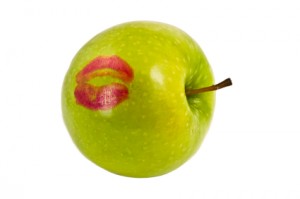 By Kat Lee
There’s nothing that makes me feel prettier than wearing lipstick.
I’m not sure why… it must just be a girl thing. At any rate, I’ve known for quite some time that the ingredients used in lipstick were less than stellar.
However, it was when it was discovered that several mainstream companies had lead in their lipstick products that I decided enough was enough. Then I began my search for quality lipstick that I wouldn’t have to take out a second mortgage to purchase!
It wasn’t easy; let me tell you. First I went to some trendy, all natural shops – and found nothing that cost less than the pair of shoes I was wearing. After that, I asked around and was told that any organic lipstick would cost at least one pair of shoes. In one last desperate attempt, I went to my local farmer’s market, Sprouts (my usual go-to for all natural products) and found several tubes of organic lipstick for almost $20 per tube. To be honest, I didn’t want to shell out that much dough for something that I wasn’t sure I would even like.
Then I saw Terra Tints for only $3.50 per tube. Granted, it’s actually tinted lip balm, not “real” lipstick, but for that price, I was willing to chance it. I picked “Blaze” because it sounded nice and bright, and I was just in that kind of mood that day. When I put it on, it was pretty, red and very lipstick-like. But even better than that, it was menthol tingly. When I put it on my lips, it’s like I’m giving them a hot rock massage, and who doesn’t want that on a dry winter day?
I know, I know, you’re wondering if they’re paying me for this… and the answer is no (although I wouldn’t be opposed). I just really like this product because it meets all my requirements. It’s organic, all natural, pretty, stays on, and doesn’t dry out my lips. I have to say that I’m hooked!
For more of Kat’s fun and fabulous natural beauty reviews stop by http://katzhealthyliving.blogspot.com
©KitchenTableMedicine.com, LLC ™Stress is For Suckers: Free Book!
November 5, 2008 by Dr. Nicole Sundene
Filed under Life Coaching, Stress
 My favorite Life Coach, Tim Brownson has done it again!
His new ebook “Stress is for Suckers” is out- and as a gift to my Kitchen Table readers you are all welcome to access a free copy for the next week! Be sure to get it while it’s hot.
Stress is THE most important lifestyle factor to get a grip on above anything else, and Brownson does a thorough job breaking down and simplifying all the best life coaching tactics for busy people coping with a stressful lifestyle.
Simply visit Tim’s online bookstore and enter the coupon code KITCHENSTRESS to grab your free copy for this limited time period.
Happy Stress Busting Everyone!
~Dr. Nicole
©KitchenTableMedicine.com, LLC ™An Interview with a Heroin Addict turned Psychologist
November 5, 2008 by Dr. Nicole Sundene
Filed under Drug Abuse, Guest Posts, Kitchen Sink
 Everyone loves a poignant rags to riches tale.
We all want good to triumph over evil.
We all pray for those struggling through life that they eventually find their way. Struggling past insurmountable obstacles towards achievement is the all American dream.
In the case of Dr. Melinda Tyler, former heroin addict and sex worker, she has not only proudly triumphed drug addiction, but has become an award winning psychologist and professor, and is now using her personal experience to help drug addicts everywhere.
Every parent fears that their child will end up on drugs someday, and I have invited Dr. Melinda Tyler to the Kitchen Table to share with us the challenges she has proudly overcome. I hope Melinda’s inspiring story will help to create awareness for the signs of drug addiction as well as help everyone understand the true needs of drug addicts and what can and should be done in America to tackle this ever-growing problem.
Melinda, how did you become an addict?
I have thought about that a lot, naturally. My childhood laid a perfect storm for me to become self-destructive. I was sexually abused from the time I can remember until I was approximately 14 years old. I was self-destructive from an early age; I used to cut myself. If I felt physical pain, it helped the emotional pain subside. When I became involved in San Francisco’s punk rock scene and started working as an exotic dancer, I started dabbling in drugs.
I did cocaine for years before my taste in drugs turned to heroin. The first time I did heroin, I remember feeling so warm and secure—it was a feeling I’d always wanted and had never felt before. Although I had seen others become addicted, I was powerless to stop. It was as though I embraced that self-destructive lifestyle. I remember the day I realized I was a heroin addict—I thought it was a normal, natural course for my life—I thought I deserved to be an addict. I even accepted (and hoped) that it would bring me death.
What finally led you towards help for your addiction?
My first husband died of a heroin overdose and I found him dead. Our relationship had been mutually destructive but he had always managed to keep a roof over our heads—he was a functional addict. When Michael (my husband) died, I was devastated. I took on the guilt of being responsible for his death (we’d had an argument before I’d left the house that day). I kept wondering if Michael had really committed suicide and it tore me apart.
Within a few months, I lost everything—our apartment and all our possessions. I became homeless, sleeping with friends (and strangers) from time to time—sometimes even spending nights riding San Francisco’s Muni bus system because I had nowhere to go. I had worked as a high priced call girl earlier in my life—before I met Michael and to support my habit, I started turning tricks on the street. I did this for a year—living an absolute hell of a life.
Finally, one weekend, while I was staying at the apartment of a friend, I decided I’d had enough and tried to commit suicide. These were serious attempts and on the last one, I nearly succeeded and woke up in a hospital room after having been in a coma for the prior three days. While I was in the hospital, I met a man named Tim Callahan, who found a treatment center that was willing to take me with no money or insurance. I stayed there for six months—they saved my life. I have written about this experience on the Melindaville Blog in my blog post, “Courage to Change.”
What was the withdrawal from heroin like?
Heroin withdrawal is like having the worst flu you can imagine and multiply that by ten. One of the reasons why withdrawal is so intense is that through the course of becoming addicted to opiates, one’s body stops producing endorphins, which are our body’s natural painkillers.
These endorphins kick in more during times of exertion (such as when you are exercising) or when you injured yourself but they are always produced, which allows us to deal with the every day pains of life. Heroin is a synthetic painkiller, very similar in structure to endorphins, so your body stops producing endorphins when you become addicted.
Therefore, when you are going through withdrawal, your body has to learn to produce those endorphins all over again, which takes time. I have written more about the terrible effects of withdrawal in my post, “The Hell of Heroin Addiction,” on the Melindaville Blog.
Do you think that if you had earlier intervention for the sexual abuse that you could have avoided becoming a heroin addict?
As a psychologist, I can tell you that children are much more likely to respond to any kind of treatments than adults are because children are more malleable. It is hard to say what type of lasting effects the sexual abuse would have had, even if I had received help earlier. I believe if the problem had been recognized at an earlier time in my life and intervention taken, then I would not have been as self-destructive as I was.
Has heroin use left any lasting effects on your body?
Heroin, luckily, is one of the least damaging drugs on the body. It is not nearly as hard on one’s body as say, methamphetamine or even alcohol. However, the lifestyle is such that it is very damaging. For example, going into dangerous areas to buy drugs, sharing needles, using dirty needles, or overdosing are all more likely to happen if one is addicted to heroin.
For many years, when I was addicted to heroin, I didn’t have proper nutrition, particularly calcium; so as a result, I have had to have almost $40,000 worth of painful dental work. The other problem I am battling today is having degenerative disc disease, herniated discs, and arthritis in my lower back—and I believe both my dental and back conditions were the direct result of doing drugs for so long. I am very lucky, though, that I still have relatively good health and that my mind was not impaired.
What kind of help is available for addicts?
One of the biggest reasons I am writing my book is to increase awareness that about the need for free and available treatment—because so very few options exist today for those who don’t have money or insurance. And many insurance policies don’t pay for treatment at all. There are limited options in urban areas, such as drug detoxification or community daycare, but they are unfunded and inadequate. Recently, there has been a huge influx of heroin in rural areas of our country, which I wrote about in a recent post, “The Hell of Heroin Addiction.”
What kind of help do addicts really need?
It should be as easy to get into treatment as it is to buy a drug on the street—and that is the bottom line. Addicts need to have comprehensive treatment that addresses the root causes of addiction, which are multifactorial and complex. I was in treatment for nearly six months and I needed every minute of that time. Through the course of my treatment, I started cognitive behavioral therapy, group therapy, job and life skill training, and learned to understand my addiction. Thirty days and then back to the same old neighborhood is not enough to produce lasting change, in my opinion.
It would really be better for our country financially to address treatment rather than simply locking addicts up. The great majority of inmates of non-violent crimes have an underlying substance abuse problem that is the real root of their criminal behavior yet only about 10% of the time is treatment even offered. If we can offer comprehensive and truly rehabilitative treatment, we can go a long way in addressing overcrowding in jails.
What can you teach children and teenagers now to prevent them from becoming addicted to drugs?
I strongly feel that many cases of addictions are genetically driven; therefore, I feel it is so important for parents who know of addiction in their immediate or extended family to talk about those dangers with their kids. At some point, we will probably be able to have DNA testing to determine if people have an addiction gene (we know that genes are implicated in addiction). Early communication and prevention are key; this should to start in the home, and then be reinforced in school and in communities.
What kinds of signs should parents watch out for that may indicate their children are on drugs?
Disorganized behavior, drastic changes in mood or friends, problems at school, or children isolating, or stopping to enjoy things they used to like, such as extracurricular activities at school.
What can parents do to prevent their children from using drugs?
Communication is the best key there is. Parents are too often afraid to speak to their kids about these kinds of issues but this is so important. And again, parents should let children know about addiction or alcoholism in their family so children know they are at high risk for developing a problem themselves. Knowledge is the best defense, in my opinion.
What can President Elect Barack Obama do to fix the drug crisis in America?
Acknowledge that it exists and that it is worsening. And it will likely become even worse with the state of world affairs and the economy. One of the biggest reasons why people want to do drugs is to escape—and these are times that make people want to escape. President Obama needs to not only address universal health care, but have treatment be part of that care. There were so many times I had a moment of clarity and wanted to stop using—but I would become so frustrated at not being to find help—and after a time, those moments of clarity pass. In my Melindaville post, “The Woman in the Satchel.” I wrote about how my mother had saved this large bag of old poems, lyrics, letters, and artwork that I had written during my addict year. I came across letters I had completely forgotten I had even written in which I just begged her to get me into treatment.
How has this experience shaped your life?
In just about every way possible. Because of wasting so many years in addiction, I am extremely driven today. I feel like a woman who was on death row and who is now on parole. I want to take advantage of every second of life. I want to experience all the joy that had been missing from my life for so many years.
The biggest way in which my life has been shaped is in my commitment to my cause, which is to start The Melindaville Foundation, which will help addicts in the sex industry get into comprehensive treatment and from there, help them pay for college or job training of their choice. I am committed to the belief that anyone can change as I did if he or she is given access to the resources and help that I was so lucky to receive.
Thank you Melinda for sharing your empowering story at the kitchen table. It truly takes tremendous courage and compassion to share your story in order to help other addicts. I look forward to sharing your book with my readers when it comes out and working with you in the future to further raise awareness about drug addiction through prevention.
To follow The Melindaville Blog and read more amazing stories about Melinda Tyler’s challenges around overcoming heroin addiction, stop by her website and subscribe. The most important thing parents can do NOW is focus on prevention and early recognition of the signs and symptoms of substance abuse.
Related Reading: “How to Keep Kids off Drugs,” “Natural Healing from Meth Abuse.”
©KitchenTableMedicine.com, LLC ™Sauteed Spinach Recipe
November 3, 2008 by Dr. Nicole Sundene
Filed under Anti-Inflammatory, Antioxidants, Cervical Cancer, Depression, Diet Tips, Recipes
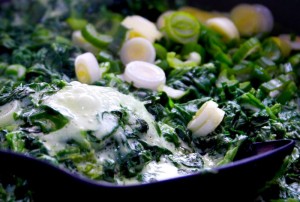 Today’s featured healing recipe is provided by ZestyCook.com!
Spinach is an especially healing food as it is rich in folic acid and beta carotene.
The root of folic acid comes from “foilage” and leafy greens are chock full of this nutrient shown to prevent cervical cancer and birth defects.
Folic acid also has been shown in research to make anti-depressants more effective. You will also be happy to know that it is OK to eat a little bit of fat with your vegetables. Fats paired with veggies help us better absorb the fat soluble vitamins they contain. Those on the Mediterranean Diet or Anti-Inflammatory Diet can substitute the low fat cream for olive oil.
Zesty has provides us with a SIMPLE five minute spinach side dish packed with flavour. Give this a try - you will be very glad you did! Feel free to get creative and substitute your favorite seasonal greens: Bok Choy, Swiss Chard, and Kale are also excellent healing choices.
Sauteed Spinach
Ingredients:
- 4 Cups Spinach
- 1/4 Cup Low fat Cream
- 2 cloves Garlic crushed and made into paste
- 1/8 teaspoon cayenne
- 1/8 teaspoon black pepper
- 1/4 cup pine nuts
- Handful of chopped Fresh Basil
- Organic sea salt
Directions:
- Preheat pan and add olive oil.
- Add spinach and allow to wilt down. Stirring for 1 minute.
- Add garlic, cayenne, black pepper. Stir for 2 minutes
- Add Low fat cream
- Top with Pine nuts and fresh basil
Zesty Tip: To make garlic paste, add a bit of organic sea salt to your cutting board and crush the clove of garlic on top. Then using your knife to smear the garlic back and forth into the salt mixture. The salt will help form a paste and you are ready to go.
©KitchenTableMedicine.com, LLC ™Children are Eating their Weight in Sugar Each Year
October 29, 2008 by Dr. Nicole Sundene
Filed under Diabetes, Dr. Scott Olson, Kitchen Sink, Pediatrics, Sugar
 By
By Research shows children are eating their weight in sugar each year!
That bag of candy your child lugs home after a long night out trick-or-treating is certainly heavy, but, if your child is typical, that amount of sugar is only a small portion of what they are going to eat throughout the year.
Children, it appears, are eating their body weight in sugar every year.Recent research looking into what children are eating has found that they are eating more sugar than ever before and that the major source of all that sugar is exactly what you might guess: fruit juice and soda.
When all tallied, a typical child in America is eating somewhere between 1/4 and 1/2 pound of sugar a day, that means somewhere between 100 to 150 pounds of sugar end up in their little bodies each year.
A study released by the journal, Pediatrics, looked into how much sugar children are getting from their drinks (soda and fruit juice); and here is what they found:
- Children get 10 to 15 percent of their total calories from these two drinks (soda and fruit juice).
- Children aged six to nineteen drank an average of 30 oz of soda or fruit juice every day.
- Two to five-year-olds drank an average of 15.5 oz of juice or soda a day.
- The size of an average drink a child consumes has climbed 46 percent (almost double) sine 1972.
It is astonishing to think that 10 to 15 percent of the calories these children are getting are coming from just soda and fruit juice, because that 10 to 15 percent doesn’t included added sugars from what they eat for breakfast, lunch, or dinner, or the cookies, candies, ice cream or other sugary snacks they consume. It also doesn’t include the hidden sugars in crackers, chips, peanut butter or fast foods they eat.
Total sugar amounts become even crazier when adding all the additional foods they eat that act like sugar in their bodies such as starchy vegetable (such as potatoes) and many grains.
It is clear that our children are overdosing on sugar.
Really? A Half a Pound of Sugar a day?
Whenever I write that children (and, yes, adults too) eat between 1/4 to 1/2 pound of sugar a day, people always question the amount. Let’s see how easy it is to make eat that much sugar every day.
In order to make this calculation, you have to remember that 30 teaspoons of sugar is equal to 1/4 pound of sugar.
Look at how many teaspoons of sugar are in typical foods:
- Twelve ounces of soda contains 8 teaspoons of sugar, a 16oz soda contains 10.5 teaspoons.
- Breakfast cereals contain 4 to 6 teaspoons of sugar (more than that if they sprinkle sugar on top).
- Donuts contain between 8 to 20 teaspoons of sugar.
- Cookies have between 2 to 4 teaspoons of sugar (each).
- For a more complete list, look here: Percentage Of Sugar In Common Foods.
Look how easy it is to get that 30 teaspoons (or 1/4 pound) of sugar:
- Three sodas almost gets you there.
- A few donuts would do the same.
- Breakfast cereal, a soda, peanut butter, a few cookies and desert means you hit your quota for the day.
Who’s Responsible?
The most surprising revelation in the article in journal, Pediatrics, was that fact that children are getting the bulk of this sugar at home. Most (55 to 70 percent) of sugar-sweetened beverages were consumed in the home, while only 7 to 15 percent in schools. Preschools and Daycare tilt the percentage away from parents as they typically hand out more sugary drinks than a regular school.
These results show that parents actually have a lot of influence over what their children are eating and need to consider these facts with every trip to the grocery store.
Is Everyday Halloween?
Yes, parents should be concerned about how much sugar their children are eating on Halloween, but this holiday is far from atypical when we are talking about sugar consumption. Kids are eating a lot of sugar every day.
The long-term affects of sugar-eating are many and children are especially susceptible to sugar as is shown by the incredible rise in childhood obesity and diabetes.
Parents can do a lot to determine the health of their children and help them to make better choices about sugar. Since the majority of the sugar eaten by children happens at home, it should be easy for parents to curtail its use. The first best step is to stop buying soda and fruit juice, which may cause a mini-revolt, but is in the best interest of everyone.
Reference: O’Connor TM, Yang SJ, Nicklas TA. Beverage intake among preschool children and its effect on weight status. Pediatrics. 2006 Oct;118(4):e1010-8. PMID: 17015497
~Dr. Scott Olson
Naturopathic Physician
Dr. Scott Olson is a Naturopathic doctor, expert in alternative medicine, author, and medical researcher. Spurred on by his patients’ struggles with sugar addiction, he was determined to discover how addictive and harmful sugar can be and ways to overcome that addiction.
The result of that study is his book Sugarettes, which details the addictive qualities of sugar and the harm that sugar does to our bodies.
Dr. Scott also maintains a blog which highlights the latest in health and healthy living. Subscribe or stop by to check out his latest research on sugar addiction.
©KitchenTableMedicine.com, LLC ™Flu Shots: Pros and Cons of Employee Vaccination Programs
October 29, 2008 by Dr. Nicole Sundene
Filed under Influenza, Kitchen Sink, Lifestyle Tips, Preventative Medicine
“Do I need a flu shot?” This question always comes up repeatedly this time of year, and I will attempt to present an unbiased review of the pro and con opinons of being vaccinated against influenza.
In the second part of this article we will examine the ethics behind employee mandated flu vaccination programs, and the questionable ulterior motives of flu vaccine manufacturers promoting these mandatory programs.
First of all, I would NOT like my honest critical eye on the cons of the flu vaccine to stop anyone from getting a flu shot. If you feel you need a flu shot—then by all means please go get one right now.
However, if you are a person that prefers to thoroughly examine new medications or vaccines before implementing them, then this discussion is for you. The Center for Disease Control (CDC) makes blanket recommendations based off the research conducted by flu vaccine manufacturers.
These recommendations are designed with the intention to keep as many people healthy and free of influenza as possible, however they address the needs of a POPULATION, whereas this discussion is intended to weigh the benefits vs the risks for the INDIVIDUAL.
Remember that if you do opt out of having a flu shot you have a certain ethical responsibility to the immunocompromised people that can die from influenza related complications. If you indeed get influenza, you should STAY at HOME.
Can a Flu Shot Give Me the Flu?
Before I start my discussion I just need every single person reading this article to wrap their brains around the fact that the flu shot does NOT give you the flu…the flu shot does not even contain a live virus, it just contains an inactive component of the virus so that your immune system can easily recognize the flu virus before it makes you sick. If you get the flu a few days after getting vaccinated it is likely that you CAUGHT the flu in the exact place that influenza is likely proliferating—your doctor’s office.
If you feel ill immediately after having the flu vaccine you are probably having an allergic reaction because you are allergic to eggs; are experiencing normal side effects as your immune system forms antibodies; or are the unlucky one to end up with a rare but very severe and serious condition thought to be related to vaccines called Guillan Barre syndrome.
What are the Side Effects of the Flu Shot?
Typical side effects of the flu shot are fatigue and muscle aches. It is perfectly normal for this to occur for a short period of time while your immune system creates antibodies to the newly introduced vaccine particles. Occasionally some may experience cold like symptoms or soreness at the injection site. Extreme symptoms may occur if you are allergic to eggs. Extreme and (rare) numbness and tingling, or paralyzing symptoms such a Guillan Barre should be reported to your doctor immediately.
How Many People Develop Guillan Barre?
Although only about 2 in 100,000 develop Guillan Barre Syndrome (GBS). There has not been a clear connection between the development of GBS and flu vaccine since the 1976 swine flu vaccine. Most cases develop for unknown reasons. The disease is thought to be autoimmune in nature and the immune system attacks healthy tissues in the body, including the nervous system which then may result in paralysis.
Currently the CDC is more concerned about the meningococcal vaccine causing GBS and is investigating complaints related to the administration of Menactra. While GBS is a rare and highly unlikely side effect of influenza vaccine, it may occur with the administration of ANY vaccine. Symptoms typically start with numbness in the hands and feet which may continue to paralysis.
If you think you have these symptoms, or have ever had these symptoms after receiving a vaccination you should notify your doctor immediately, most doctors will not administer vaccinations to anyone suffering from or recovered from GBS.
How Does the Flu Shot Work?
The shot simply primes your system to the new protein sequence of THIS YEARS flu. Early recognition is how the vaccine works to prevent the flu. However, if scientists are unable to correctly identify the new molecular sequence of the flu they anticipate will afflict people in the northern hemisphere this year- six months in advance, then the shot will not be effective in preventing the flu you are exposed to through coughing, sneezing, and other close contact.
How Effective is the Flu Shot?
If researchers pick the correct flu sequences for their vaccines, then the shot is estimated to be preventative for up to 70-90% of HEALTHY people under the age of 65. That is pending of course that the antigenic strains were chosen appropriately. So those numbers are rarely seen, do not promise protection for the immunocompromised, and are the BEST case scenario. Flu vaccine is 80% effective in PREVENTING death from influenza related pneumonia in the elderly.
Why do I Have to get a Flu Shot Every Year?
The influenza virus is constantly changing…thus the vaccine must change each year as well. Effective vaccines provide protection for up to a year and a half. Ineffective vaccines still provide partial protection and typically lesson the severity of the flu.
Who Decides if I Need a New Flu Shot?
Well only YOU can decide if you need a flu shot (unless you are a government employee or work at certain hospitals). Many doctors and nurses push flu shots heavily on patients because that is simply all they know and are what they are taught by the CDC. However, the guidelines made by the CDC are ultimately put together with research done by the producers of the flu vaccine, therefore of course the guidelines are going to be erring on the side of OVER vaccinating everyone in our population.
It all boils down to selling more flu vaccines. This is a major money making industry and should therefore for ethical purposes be cast a critical eye as flu vaccinating is becoming more common yet many previously healthy people are complaining of side effects. Protection from the flu is also nowhere near a guarantee. The vaccine is brand new every single year and is nowhere near as efficacious as most other vaccines we commonly administer.
Are Vaccines Safe?
While vaccines are great preventive medicine, and prevention is the name of the game here at Kitchen Table Medicine, I still think that vaccines are not perfect, and the safest vaccines are the ones that have withstood the test of time, and cycled through multiple generations without incident. Because influenza is constantly modifying it’s own structure, scientists creating a flu vaccine also have to update the flu shot every single year.
This means that the flu vaccine you are given this year is entirely different from last year. This prevents us from ever really knowing if the flu shot can withstand the test off time, because it is essentially a new shot each and every year! Anything new always gets a critical review from me, which is why I choose to exercise extreme caution before administering any new vaccine.
The Hippocratic Oath advises we “First Do No Harm”. In most healthy individuals side effects from flu vaccines can be reportedly quite miserable, and while we are still looking at how vaccination practices may be affecting our children with autism, I think it is better to be cautious in our thinking. With that word of caution being said the most important thing for you to do is READ ON and decide if you or your close contacts are at risk of DYING from influenza…and if so then the benefits likely outweigh the risks.
What is Influenza?
Now influenza is not the stomach flu we commonly refer to as “the flu”. This shot is not preventing you from developing symptoms of a viral gastroenteritis that commonly causes diarrhea and vomiting for 2-3 days. Influenza is “the flu” and influenza causes a high fever, cough, sore throat, headache, chills, muscle aches, vomiting and fatigue-and may develop in to a life threatening case of pneumonia for the elderly and immunocompromised.
How Many People Get Influenza Each Year?
According to the Center for Disease Control 10-20% of the American population will be afflicted with influenza each year.
Who Dies from the Flu?
Although most people feel like they are going to die from the flu, chances are they won’t. Typically the very young, the very old, and those that have weakened immune systems from chronic disease such as HIV, cancer, diabetes as well as chronic heart or respiratory problems are at risk of developing secondary infections such as pneumonia that result in death. Influenza doesn’t typically kill people, it just sets the stage for pneumonia to take over.
How Many People Die from Influenza Each Year?
According to the CDC an estimated 36,000 people die from pneumonia related to influenza. These deaths are not your average healthy people. They are the very old, the very young, and the immunocompromised by chronic disease. If you are in this high risk category then you likely should get a pneumococcal vaccination as well.
Who Should NOT have a Flu Shot:
- People currently ill, feverish, or symptomatic.
- People with previous allergy or extreme reaction to the flu shot.
- People that have developed Guillan Barre from a previous vaccination.
- People with allergies to eggs should absolutely under no circumstance have a flu shot. Even if you suspect that you have an egg allergy you should be cautious with most vaccines as some are grown inside chicken eggs.
It is therefore possible to have a severe anaphylactic allergic reaction to the flu vaccine. Always notify your physician of food allergies for this exact reason. Chances are your food allergy doesn’t really matter that much, except in occasional cases like the flu shot.
Better to be safe than sorry though, right? If you fall in the high risk group and are uncertain if you have an egg allergy ask your doctor to be tested, and if negative for egg allergy you are then able to get the flu vaccine.
CDC Highly Recommends Flu Shots for:
- Immunocompromised people: HIV, cancer, diabetes, and other chronic diseases that suppress the body’s ability to fight infections such as influenza.
- People with chronic respiratory problems: Asthma, COPD, emphesema, lung cancer, babies with respiratory problems.
- People with chronic heart Problems
- Children between the ages of 6 months and 18 years (new change this year, previously was only for children over the age of 6 months and under the age of five).
- Women that will be pregnant during the flu season (get it before you are pregnant if you can, pregnant women should always be cautious about taking ANY medicine while pregnant).
- People who live or work in nursing homes.
- Family members and household contacts of babies under six months of age (six months is the earliest you can vaccinate a child).
- Anyone working with or living with people in this category that are at risk for dying from the flu.
Flu Shot is Considered Optional for:
- Those between the ages of 18 and 50. (CDC changed the pediatric recommendations this year, previously it was 6 to 50. Although two subsequent years of study in the efficacy of flu vaccine in children under the age of five found that the vaccine was ineffective as noted in the research study listed below. Your child does not have to be vaccinated against your wishes. If a doctor or nurse tries to insist on this-find a new doctor!)
- Those that are healthy and without chronic disease.
- People that are NOT in frequent close contact from the aforementioned people that die from the flu.
Flu Shots are Mandatory For:
- Government Employees
- Employees of certain companies: Thanks to some great marketing tactics by the makers of the flu vaccine, flu shots are now mandatory for employees of many hospitals.
Can Employers Mandate Flu Shots?
- Currently 48 states allow exemptions for those that do not believe in vaccination for religious purposes.
- Otherwise, chances are your options aren’t that great for getting out of an employer mandated flu shot. Some hospital’s go as far as to demand allergy testing if you claim you are allergic to the flu shot. If you are allergic to the shot your employer may request that you go in for testing and if you prove negative to allergy, you may still be vaccinated. If positive allergy for the shot (egg proteins) is determined you then will be told you have to take an anti-viral influenza prophylactic medication for six months that has known severe side effects including depression and suicide per certain NEW hospital protocols.
I understand why a hospital would want to force flu shots on nurses and doctors in close contact with critically ill patients. However, isolated telephone receptionists, IT help desk people, delivery drivers, and other people that don’t even work inside the hospital are also affected by these blanket flu shot policies.
What are Employee’s Rights with Mandatory Flu Shots?
Many employees that have had bad reactions to a flu shot feel that being forced to have a flu shot is against their constitutional rights. Nurses filed a lawsuit against the hospital I previously worked for and WON, flu shots then became optional for nurses, as the hiring contract only mandated a current measles vaccination, and even Hepatitis B was considered optional upon hiring. So you can always sue for your rights.
However, in my experience working for a hospital that made this mandatory-you really don’t have a whole lot of a choice and are just “stuck” with your shot.
Your best option is to just quit. That is exactly what happened at the hospital I worked at for 8 years. People were in such an unbelievable tirade over being forced to have a flu shot that many of them just gave notice after working there for decades. On the final day that employees had to get their flu shot-there was an organized walk out.
What are the Legal Concerns around Employers Mandating Flu Shots?
We don’t know the long term consequences of each new flu vaccine developed and administered each and every year-employers mandating flu shots may be at serious legal risk if ever a bad vaccine batch were to come out, and harm ensued to employees as a result of an employer’s blanket policy. Employers risk class action lawsuits if harm results from flu shots they mandate. Employer’s that want to promote vaccination should do so while making it optional.
Why Do Employers Make Flu Shots Mandatory?
Money of course. Money is what drives most corporate decisions in business, and health care just like everything else is unfortunately a business. Keep in mind that certain employers are only making influenza inoculation mandatory because flu shot manufacturers want to sell more vaccines. Money is almost always the bottom line. The hospitals in return get a break on the cost of vaccines, or “free vaccines for ALL of their employees” by jumping on the “mandatory flu vaccine wagon”. The more hospitals persuaded in to this program for financial reasons, the more inevitable it shall be that other employers will follow suit. The hospital I previously worked for was used as a “role model” in presentations by the flu shot manufacturers that provided our free flu shots.
This is the long term goal of flu vaccine manufacturers-to create a larger distribution of there product. It is not for public health concerns-it is simply for marketing. It is highly unethical for hospital employers to force vaccines on their employees simply because they want to get a break on the price of their flu shots. It is also highly unethical for employers to force flu shots on their employees simply because they want to cut down on the number of sick days used during flu season. A GOOD employer will offer flu shots. A BAD employer will make flu shots mandatory.
Most hospital employees upon hire are only REQUIRED to have their MMR vaccine updated for public health reasons. These new flu vaccine protocols are highly unethical and violate employees rights. Even the Hepatitis B vaccine comes “strongly recommended” and is not mandatory by many hospitals.
The mandatory nature of flu shots is a publicity stunt organized by flu shot manufactures. As more hospitals get on board with this deal then flu shot manufacturers will have that much more leverage to persuade other large corporations to also make flu shots mandatory for employees. This means big bucks for the flu shot manufacturing industry. For Americans it means an unnecessary violation of our constitutional rights. First your employer tells you flu shots, then what’s next for your employer to decide about your health? Forcing flu shots on employees that do not work with critically ill patients is not only unnecessary it is unconstitutional, and sadly unethical.
On the other hand, if you are working closely with critically ill patients such as those with cancer, HIV, severe respiratory problems, and the ICU-it truly is in their best interest that you are vaccinated against the flu, and in my opinion as a health care provider your moral obligation and responsibility. There is no way to know if you are in a prodromal infectious early state of influenza and if you work in the ICU, with HIV or cancer patients you can kill them by exposing them to the flu.
Flu shot manufacturers should be allowed to promote mandatory vaccine programs for only those types of settings. Business owners absolutely have NO right to make decisions about their employee’s health care especially when we move this discussion outside of health care. Most doctors don’t even tell patients what to do when it comes to the difficult decisions that surround vaccinations these days.
What Does an Immunologist Recommend about Vaccine Decision Making?
As taught by Dr. Sheryl Berman, an esteemed immunology professor and researcher, “the best doctors educate patients on the facts about vaccines and let the patient decide.” When Berman was then asked what her personal recommendations are for each vaccine she replied, “As an immunologist I get asked all the time what the right choice is around different vaccines. The answer I give is always the same-the right decision is the decision that is right for you. Only you can make that decision. Educate yourself on all the facts, risks, and benefits before making your decisions about vaccinations.”
CEO’s of businesses should never be allowed to make health care decisions. And they furthermore should not be making health care decisions because they want to save a few bucks.
A flu shot is absolutely ethically warranted for health care employees of in-patient settings. If you don’t want to get a flu shot-then simply find a job somewhere else that does not involve the critically ill. If you REALLY care about your critically ill patients-you will get a flu shot. For everyone else, it should be optional.
What are my Community Responsibilities?
Remember that just because you got vaccinated from the flu does not mean you still can’t get the flu. I believe it is an important MORAL obligation to stay at home if you are sick with the flu. Your doctor will also agree and will be happy to write you or your child a note.
Just because the flu won’t kill you, doesn’t mean that it can’t kill someone else that you are exposing your germs to. Be sure to quarantine yourself or your children until you are no longer symptomatic. If more people would be considerate in this manner we likely would not have as many influenza related deaths. If you are unable to take time off when ill, then you should heavily consider vaccination.
Is it Healthy to get Sick?
Yes, actually being sick according to nature cure philosophy inspires your immune system to do a thorough “clean up”. A good solid sickness where you cough out and blow out and sweat out a bunch of junk is actually quite detoxifying. Suppressing symptoms typically inhibits the natural healing process of our systems and prevents the “Extreme Home Makeovers” that many of us need in order to prevent chronic disease. Chinese Medicine also agrees with this belief in their saying “Many disease long life. One disease short life.” Although acute illness such as the flu may seem like a short term set back, it likely is preventing greater diseases in your system by allowing your immune system to run full force and do a thorough clean up job.
What if There is a Shortage on the Flu Vaccine?
Remember, if there is a flu shot shortage please be considerate to those that truly need the flu shot and skip your vaccination until it is available to the general healthy population. You can ask your doctor or pharmacist to put you on a waiting list and notify you when new shipments come in.
How Else can I Prevent the Flu?
Keep your immune system healthy, don’t smoke, get adequate sleep, cover your face when you cough and sneeze with your ELBOW-not your hands, reduce stress during flu season, take vitamin C 1000mg three times a day, eat immune support breakfast, and immune supporting foods, consume 5-9 servings of fruits and vegetables daily, use preventative herbs such as astragalus daily (not echinacea-that is for when you first develop symptoms), increase fish oil and vitamin A (not for pregnant women); decrease alcohol, caffeine, sugar, processed foods, and animal fats.
PLEASE wash your hands regularly before and after touching your face, coughing, sneezing, or being in close contact with someone that is ill. For the third and final time I would like to remind everyone that regardless if they get the flu shot or not-if you come down with symptoms that appear to be influenza you need to STAY at home to protect those at risk of influenza related deaths.
Resource: CDC.gov
1. Centers for Disease Control and Prevention. Recommendations regarding the use of vaccines that contain thimerosal as a preservative. MMWR 1999;48(43):996-8.
2. Centers for Disease Control and Prevention. Prevention and control of influenza; recommendations of the Advisory Committee on Immunization Practices (ACIP). MMWR 2002; 51(RR03):1-31.
3. Centers for Disease Control and Prevention. Recommendations regarding the use of vaccines that contain thimerosal as a preservative. MMWR 1999;48(43):996-8.
4. Szilagi PG “Influenza vaccine effectiveness among children 6 to 59 months of age during 2 influenza seasons: a case-cohort study.” Arch Pediatr Adolesc Med. 2008 Oct;162(10):943-51.
5. Heinonen OP, Shapiro S, Monson RR, Hartz SC, Rosenberg L, Slone D. Immunization during pregnancy against poliomyelitis and influenza in relation to childhood malignancy. Int J Epidemiol 1973;2:229–35.
6. Izurieta HS, Thompson WW, Kramarz P, et al. Influenza and the rates of hospitalization for respiratory disease among infants and young children. New Engl J Med 2000;342:232–9.
7. Neuzil KM, Wright PF, Mitchel EF, Griffin MR. Burden of influenza illness in children with asthma and other chronic medical conditions. J Pediatr 2000;137:856–64.
8. Kirshon B, Faro S, Zurawin RK, Samo TC, Carpenter RJ. Favorable outcome after treatment with amantadine and ribavirin in a pregnancy complicated by influenza pneumonia: a case report. J Reprod Med 1988;33:399–401.
9. Neuzil KM, Reed GW, Mitchel EF, Simonsen L, Griffin MR. Impact of influenza on acute cardiopulmonary hospitalizations in pregnant women. Am J of Epidemiol 1998;148(11):1094-102.
10. Shahab SZ, Glezen WP. Influenza virus. In: Gonik B, ed. Viral diseases in pregnancy. New York, NY: Springer-Verlag, 1994:215–23.
~Dr. Nicole Sundene
Naturopathic Physician
KitchenTableMedicine.com
Why Buy Organic Coffee?
October 27, 2008 by Dr. Nicole Sundene
Filed under Caffeine, Coffee, Diet Tips, Kitchen Sink, Organic
 By
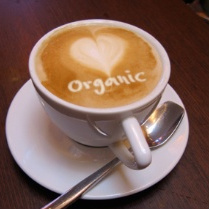
By What is organic coffee? Why would you buy organic coffee? Does it really matter? Is coffee good for you or bad for you? These are some of the things we will take a look at in this post.
Often we only hear about how coffee is bad for us, regardless of whether it is organic or not. Some might even say, “If coffee is bad for me anyway, why would I even bother to buy organic? While I’m certainly no doctor, there’s a principle that generally holds true: Too much of a good thing can be bad. Certainly research suggests that there are many health benefits of coffee. We will take a look at just a few of those before moving on to the subject of organic coffee.
Health Benefits of Drinking Coffee
While there are certainly other health benefits, WebMD list these benefits of drinking coffee:
- Decreased risk of type 2 diabetes (oddly enough, the more the better for this – so they say), colon cancer, Parkinson’s disease, cavities, and gallstones
- It can also increase your mood and help with headaches.
- “Overall, the research shows that coffee is far more healthful than it is harmful,” says Tomas DePaulis, PhD, research scientist at Vanderbilt University’s Institute for Coffee Studies.
- I’m sure Dr. Nicole could list some more for us, and she even gives us this great latte recipe: Perfect Dairy Free Latte, so there must be something good about coffee!
What is Organic Coffee?
As you would likely expect, organic coffee is coffee that is grown and processed without the use of artificial fertilizers, pesticides, herbicides or fungicides. Read on to learn the details.
Why Buy Organic Coffee? What are the Benefits?
1. Environmental benefits:
The agricultural techniques used to grow organic coffee need to work with the coffee plant’s natural preferences. Since coffee plants naturally love shade often organic coffee is shade grown and bird friendly. What does that mean exactly?
Shade grown and bird friendly coffee is, as you would expect, grown in the shade. Organic bird friendly coffee is grown under a canopy of rainforest trees. In these trees are numerous varieties of birds that feed off the insects under the canopy so there is not as great of a need for insecticides. Also, the tree roots prevent erosion and leaves from the trees help provide natural fertilizer so there is not a need for chemical fertilizer. In bird friendly coffee growing environments nature remains and the earth unharmed. The main problem with this process is that the natural process takes longer for the bean to mature than the processes which use chemicals.
2. Health benefits:
Coffee farms which use chemicals in the farming process do harvest more beans, but the chemicals strip the beans on the plants of many of their natural antioxidants and health benefits. Chemicals also strip the soil of its nutrients so there are less nutrients going into the plant and thus the bean. So if you want the real health benefits of coffee organic is the way to go. Plus, it helps take away the guilt! Go ahead and enjoy the benefits (in moderation of course).
3. Taste benefits:
If you’ve never had a cup of organic coffee, boy, are you in for a treat! Chemicals not only wash away the nutrients, but they also deplete the tastes. Coffee beans in an organic natural environment mature slowly allowing the taste to fully develop. The result is a rich smooth coffee. And yes, the smell is out of this world!
Top 3 Organic Coffee Favorites:
Dr. Nicole asked me to share my favorite organic coffees from my coffee shop. So I’ll end with my top 3 and why they are my favorites:
Organic Peruvian Decaf. This was the first Raven’s Brew Coffee© I ever tasted. It is very very smooth with just the right amount of sweetness and chocolate. I instantly became a Raven’s Brew organic coffee drinker because of my first sip of this one.
Organic Nayarit Decaf. This soon became my favorite decaf variety. Again, very smooth - silky like feel in the mouth. Hints of toffee with a light citric taste.
Organic Mahogany Sweets. Very smooth, sweet and chocolaty. (In my opinion, chocolate goes with just about everything.) Its description is “certified organic bliss.” I couldn’t say it any better.
Jennifer regularly blogs at Principles for Peace. The focus of her site is on inner peace and it is set in a bookstore/coffee shop environment. There you will find regular posts about obtaining inner peace, books recommended for inner peace and her coffee shop. Don’t forget to subscribe to her posts once you get there.
Check out these other great reads by Jennifer Abbott: “A Simple Formula with a Big Life Impact”, “How to Stop Negative Thinking”, “The Art of Peaceful Bill Paying”
©KitchenTableMedicine.com, LLC ™Fitness: How to Get Motivated!
October 27, 2008 by Dr. Nicole Sundene
Filed under Exercise, Kitchen Sink, Motivation
 Do you ever fall off the wagon with your exercise routine?
Do you feel like you should be exercising but just don’t have the motivation to get started? If so-this post is for you. I chose one of the most MOTIVATING people in fitness to interview, Kelly Olexa the author of “Aim High”.
The following are Kelly’s best tips on starting a new fitness program, staying motivated with your current fitness program, as well as her best exercise tips and tricks!
I hope Kelly’s infectious enthusiasm will be the cure for stagnation across the nation. Read this and then GET MOVING PEOPLE!
Kelly, what are the best ways to motivate someone in to starting a new exercise routine?
To motivate someone to start a new exercise routine, it is critical to first create the right mindset and establish your goal. To do this, one can consider three questions:
#1 If I knew I could not fail, what would I change about my body?
#2 Doing what I am currently doing (eating the way I do, exercising the way I do), will I achieve that goal?
#3 If not, am I willing to do whatever it takes to reach that goal, knowing that if I do the work, I WILL SUCCEED? Once you have that mindset, once you see what you really want, then you develop an Action Plan that maps out how you will achieve the desired results. Taking that “Big Hairy Audacious Goal” and breaking it down into “bite-sized” pieces can be very motivating in itself – because it is easier to see yourself walking down the block first, as opposed to running a marathon. BELIEF in yourself and your capability to achieve your goals is likely the most critical predictor of success.
What keeps you motivated to exercise?
Continually keeping my eye on my goal is what keeps me motivated. To do that, I must continually “feed my brain” with reminders of my goal; whether I focus on pictures of a physique I aspire to, stay actively engaged with other like-minded individuals, read motivating books, watch inspiring movies, etc. If you don’t continually re-focus on your vision, you can lose sight of the goal altogether.
When did you become interested in fitness?
I honestly first became interested in fitness after seeing the movie “Truth or Dare” with Madonna. Seeing her chiseled physique, I knew that THAT was what I wanted to achieve.
Describe your typical work out week:
It has been a continual evolution, but presently I train 6x a week, about 2 hours a day. I weight train first for an hour followed by cardio for fat loss. The cardio is alternated by HIIT one day, then slower steady cardio the next and so on.
What are the 5 simplest fitness tips for busy people to work in to their day:
In this day and age, we are ALL busy. Whether you work or not, have kids or not – that is irrelevant. These are FACTORS to consider, yes, but not EXCUSES to bail out. There is a wealth of information available and myriad different workout programs anyone can follow. They do NOT require a huge investment in time. If you have DESIRE, DEDICATION AND FOCUS, you can do it. So, my 5 tips for busy people:
#1 Set aside one day a week to pre-cook healthy food. Make enough for a week and store in containers for easy packing. PACK YOUR LUNCH. This will save you time and money.
#2 If at all possible, squeeze in your workout in the morning or on your lunch break. It is very easy to be run down and tired at the end of the day. I’ve switched my routine to lunchtime workouts and it made a huge difference!
#3 Squeeze in activity everywhere; take the stairs, park your car farther out, take 4 10-minute breaks a day and do some simple bodyweight moves in your office. It’s easy and it all adds up!
#4 Drink water all day. As you chug the water, you will FEEL healthier and you’ll be WALKING to the restroom more!!
#5 If you watch TV EVER, that is time you could dedicate to working out. If you really want to watch TV and haven’t worked out, do some situps/pushups during the commercials.
What motivated you to start your fitness blog, “Aim High”?
I had been working out on my own and wanted to take things to the next level. I’d been reading other fitness blogs and found myself learning much from them. But mostly, I started my blog for ACCOUNTABILITY. I thought, even if just my good friend Sherry is reading this, who cares? The “world” can see that I am saying this is what I am aiming for, and that accountability is a HUGE HELP!!
If you had only 20 minutes to exercise every day…what would you do?
This is easy. I would do a Circuit Style workout (like Red Carpet Ready or Turbulence Training) which combines weight training and, because you move so fast and don’t stop, you elevate the heart rate and get in a great cardio workout also!
What is your best tip for staying motivated with your exercise routine? Accountability & Support.
For me, when I started my blog, it opened up a whole new world of like minded friends and a SUPPORT network of men and women that constantly encourage me and build me up. A MUST HAVE!!!!
Thanks for your wonderful tips Kelly! If you would like to contact Kelly for private coaching or follow Kelly’s day to day work out routine and diet to keep motivated simply visit her at KellyOlexa.com.
Read more exercise articles.
©KitchenTableMedicine.com, LLC ™The Raw Foods Diet
October 27, 2008 by Dr. Nicole Sundene
Filed under Anti-Aging, Anti-Inflammatory, Diet Tips, Diets, Digestion, Fruits and Veggies, Raw Foods Diet, Superfoods, Weight Loss, Wheat Free/Gluten Free, Whole Foods Diet
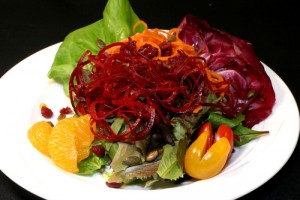 Ever wonder what is going on with this new “Raw Food’s Diet” everyone is talking about?
Well actually the diet isn’t all that “new” it is simply a snapshot of the way our ancestors ate before the advent of factory refined foods.
Don’t worry you don’t have to be a vegetarian to benefit from raw foods eating, raw foods can and SHOULD be enjoyed by EVERYONE! And…no this is not about gnawing on a nasty raw piece of chicken or steak. I do NOT recommend the consumption of raw meats. Instead enjoy more raw fruits and vegetables fresh picked and full of nature’s abundant energy. A raw foods diet can also be done as a quick detox if you are feeling sluggish and need an easy “pick me up”.
You don’t have to go 100% raw either, you can benefit from this diet simply by eating less cooked “dead” foods and more fresh foods that are full of life.
To help you get the basics down I interviewed the mother of raw foods eating herself…Earth Mother, the author of “In the Raw”.
What is “Raw Food” eating?
Ask 10 different people that question, Doc, and you’ll likely get 10 different responses. So, I’ll tell you what “raw food eating” is for me: eating food in its natural state, not refined, not processed. That means, I consume a primarily plant-based diet, consisting of fresh fruits, vegetables, nuts, seeds and sprouts.
Do you realize that we are the only animal on the planet that cooks its food? Strange, huh? We are living beings, yet we consume food that is dead, or cooked. Nutrients and enzymes are heat sensitive and destroyed at temperatures above 118 degrees. So, 85-90% of my plant-based diet is uncooked, or raw. By choosing to eat this way, I am infusing my body with live enzymes.
What made you decide to go raw?
The short answer? I was sick and tired of feeling sick and tired, all the time.
While at the local library, a book on the “New Arrivals” shelf jumped out at me: Crazy, Sexy Cancer by Kris Carr. What possessed me to check that book out, I’ll never know, but I am so glad I did. Kris’ story of being diagnosed with an extremely rare, incurable cancer and her journey toward health and healing is so inspirational. A big part of her healing journey has been adopting a raw foods lifestyle. The back of the book is loaded with resources and I started checking out websites and other books. The more I learned about eating raw, living food, the more sold on the idea I became. It was when I read The Raw Food Detox Diet by Natalia Rose that I thought, “I can do this!”
What were the biggest challenges of adopting the raw foods diet?
It was a big change for me. BIG. I grew up in a Hungarian household, where I was weaned on chicken paprikash and stuffed cabbage. Vegetables were potatoes and corn. Not too many salads, because Dad thought “they taste green.” As I grew into an adult and began living on my own, I couldn’t be bothered with cooking. Convenience was key — get more, faster. So, I ate food in packages and racked up frequent flyer miles at the drive-thru windows. I thought the four food groups were Starbucks, cheeseburgers, fries and milkshakes.
There was the whole emotional component around food too. I’ve had to change my relationship to food. I used to live to eat. Now, I’m learning to eat to live.
What changes have you noticed in your health since switching to a raw foods lifestyle?
I’m really glad you said “lifestyle.” Diet implies something you start and then stop when you reach your goal (or fizzle out). Lifestyle, on the other hand, is the way in which someone chooses to live and reflects their beliefs and values.
The changes to my health have been amazing. Gone are the debilitating headaches, the fire-breathing dragon heartburn, the constant fatigue, the edema, the chronic depression, the joint pain…oh, and 62 pounds! My energy level is through the roof. I sleep like a baby at night. My skin is smooth, clear and radiant.
I have a mental clarity today that I have never experienced in my life. I don’t quite know how to describe it, but it feels like I have broken a long-term drug addiction. It feels almost like I was walking around before under the constant influence of alcohol, and then suddenly becoming alcohol-free. The thing is, I had already been sober for 18 years!
Who should NOT be on a raw foods diet?
Can’t think of a single person who would not benefit from incorporating more raw, living foods into their diet. But, if you do not want to feel better, strengthen your immune system, reverse the effects of aging, stop counting calories, fat grams and carbs forever, then by all means, do not eat a diet high in raw plant foods.
***Dr. Nicole pops in and says: Pregnant women and rapidly growing children should work with their doctor before continuing a strictly raw foods diet to ensure that the required amounts of iron, B12, protein, zinc, and omega -3 oils are attained. Also people with a history of disordered eating should be cautious before implementing any restrictive diet plan.
Who should benefit from a raw foods diet?
Everyone!
People have reversed heart disease, diabetes, high blood pressure, obesity, cancer, fibromyalgia, autism, depression, arthritis, and a host of other illnesses by consuming a raw, vegan diet. And the thing is, you will begin to feel the benefits almost instantly.
Really. Look, we live in a society that craves the quick fix and wants instant gratification. When you start to feel and look so much more healthy and vibrant, it’s a great motivating factor. Start where you are. Begin now.
Intimidated? Natalia Rose lays out a simple, safe program that anyone can follow in “The Raw Food Detox Diet”. It doesn’t have to be traumatic. You don’t have to change your lifelong eating habits overnight and go 100% raw or vegan tomorrow.
Can you give us a snapshot of your diet for the past 24 hours?
Sure. Let’s look at yesterday.
- 1 quart fresh juice (kale, cucumber, sweet pea sprouts, apple, ginger)
- 2 bananas
- 1/2 cantaloupe
- large salad w/raw ranch dressing (mixed greens, yellow bell pepper, cherry tomato, red onion, cucumber, avocado, dried cranberries, spicy sprouts)
- raw harvest butternut soup
- 1 quart fresh juice (purple cabbage, carrot, apple)
- Asian salad w/carrot-ginger dressing (baby romaine, baby bok choy, sugar snap peas,mung bean sprouts, fresh basil and cilantro)
- Pad Thai (purple cabbage, carrot, zucchini, young coconut, raw cashews) w/raw “peanut” sauce, served over seaweed noodles
- 2 dates
Please share your favorite recipe.
Oh gosh, only one? Keep it simple is my motto, so here’s a super easy and super delicious “pasta” dish.
Zucchini Fettuccine with Sesame Mango Sauce
- 2 zucchini
- 4 mango diced
- 1 lemon juiced
- 2 Tbsp raw tahini
- 1/4 C water
- chopped mint leaves for garnish
- black sesame seeds for garnish
Spiralize the zucchini into fettuccine noodles, using a spiral slicer or a regular vegetable peeler. To make the sauce: blend mangoes, tahini, water, and lemon juice in blender until smooth. Top the zucchini noodles with sauce and garnish with chopped mint leaves and sesame seeds.
How can people learn more about The Raw Foods Diet?
Enroll in the University of Google and go wild! Just doing a search on “raw food diet” ought to keep you busy for a while. Visit your local library and start reading. Besides Kris and Natalia’s books, I’d recommend “Rawsome: Maximizing Health, Energy and Culinary Delight With The Raw Food Diet” by Brigitte Mars. “Green for Life” by Victoria Boutenko is another great place to start.
I think besides educating themselves, one of the most important things a person who is transitioning to a raw foods diet can do is to connect with other individuals who are living this lifestyle. A wonderful cyber community of raw foodies that I belong to is Raw Fu. You’ll find loads of support from folks who have been eating this way for years and years, as well as newbies. There’s an upcoming Holliday Mini Challenge you can get involved in or sign up for the 100 Day RawFu Challenge that kicks off on January 1st!
To participate visit Raw Fu: http://www.rawfu.com/
What a great idea for detoxing after the holidays! Thanks for being a guest at my kitchen table Earth Mother! For more great tips and recipes ideas for eating raw please visit Earth Mother at: http://earthmother-intheraw.blogspot.com/.
More Raw Food Resources:“5 Simple Steps to Transition to a Raw Food Diet”, “Raw Food FAQ”, FREE Raw Food Weight Loss Report, Delicious, Simple Raw Food Recipes and Pictures
©KitchenTableMedicine.com, LLC ™Editorial Note: The Kitchen Table is Popping!
October 24, 2008 by Dr. Nicole Sundene
Filed under Kitchen Sink
 Just wanted to “pop” in and give everyone an update about the latest with Kitchen Table Medicine.
We are now officially an online magazine, so please stop by the home page and check out the beautiful new magazine theme courtesy of my dear friend Chris Ruddlesen. Also visit the newly updated authors page to see all the fresh holistic perspectives that will be leading future mind/body/spirit discussions at the kitchen table.
I remember back just a year ago when I set up the website I had about 6-10 lonely page views a day. I would wonder who these readers were…until I sadly realized they were just me making edits…  Back then I was writing my heart out and no one was even reading it! Now we have over 6000 to 10,000 daily page views AND 40,000 hits a day! The site has far surpassed my initial goals and I am absolutely delighted to see such an interest in naturopathic medicine.
Kitchen Table Medicine is now the 189,000th most popular site on the internet which may not be that impressive to you until you think of the BILLIONS of websites out there. We are also now in the top 0.19 percentile of the MOST POPULAR blogs in the world, and have consistently been featured as one of the most commonly read blogs at the #1 blogging network on the internet- BlogCatalog.com! Stanford University has also asked to feature our content at their preventative wellness site Wellsphere.com.
I am delighted to report that articles from Kitchen Table have been repeatedly featured on the front page of GLCzone.com the premier wellness site for health bloggers, and we have spent a great deal of time on the front page of Digg.com the #1 social news site on the internet.
Wow people really love our healthy news you can use! Thanks so much for all the Fan Mail 
As far as visitors go, I have learned that traffic on the internet is a lot like making popcorn. You have to be patient. Whether you are warming up your popcorn machine or turning on a brand new website you have to wait around a bit feeling hungry and hopeful for that corn to start popping. You get a few initial exciting “pops” here and there and continue to wait in anticipation. Eventually things really get popping and sometimes the bowl fills over!
Well the bowl has filled over three times now at Kitchen Table Medicine!
 What this means is that I have had to upgrade the website three times to manage all the traffic we have been getting. Even our fantastic GREEN host, Dreamhost is impressed! Our new GREEN host means that we are officially a green website!
Really it is unbelievable that just one popular article on olive oil actually shut my site down for over a week. I had no idea people loved olive oil so much! TWENTY THOUSAND PAGE VIEWS IN A DAY! WOW!
The now “popping” popularity of Kitchen Table has been an ongoing source of inspiration for me, and I really don’t think I have EVER worked so hard at anything in my entire life. Not even when I was working 100 hour weeks between Bastyr and Virgina Mason. I literally work until the wee hours of the night editing errors and answering questions. I am so glad to receive emails of thanks from readers hungry for this kind of information and grateful for the easy access to naturopathy online.
In the past year, I have learned a great deal about how the internet works, HTML code, graphic design, FTP, and webhosting—ultimately realizing that there is a great deal of complexity to online content publication. It really isn’t as simple as it looks.
Although there is the fantastic advantage to rapidly getting information to you, there is still a great deal of upkeep on the back end. But, I am learning and have actually helped a few friends launch their professional blogs, like my friend Dr. KC at Docinthebiz.com.
Right now I am still busily working to go through the site and fix errors that have resulted from the upgrades and correct the mistakes I made early on when posting articles. If you find any pages that look bad simply copy and paste the URL and email it to me or post it in a comment on this page. I always appreciate your feedback on this new project.
In the interim I have invited some very special expert guests to the kitchen table and I hope you will enjoy the wisdom they have to offer. Dr. Benjamin Lynch of HealtheGoods.com has volunteered to help me answer reader questions, and we will soon offer that feature again. His diverse expertise on Environmental Medicine should provide Kitchen Table readers with an enlightening GREEN perspective about their health.
Thanks for your patience, support, and encouragement!
Be Healthy & Enjoy Life,
Dr. Nicole
Special thanks to our sponsors: Crystal Cabinets, Task Lighting, and U-line for supporting my mission to makeover all the kitchens in America and make them WHOLE FOODS HEALTHY!
©KitchenTableMedicine.com, LLC ™Fueling for Fitness
October 24, 2008 by Dr. Nicole Sundene
Filed under Bonnie Pfiester, Exercise, Kitchen Sink, Sports Nutrition
 By Bonnie Pfiester, Fitness Trainer
Fueling up for fitness is the key to success.
Choosing the right fuel for a workout depends on the workout you’re fueling up for. It’s like fueling up a car. The fuel used for drag racing is totally different than fuel used for Nascar. Dragsters just need to get to the finish line as fast as possible, which is only about a thousand feet away. Nascar fuel needs to help you go fast, steady and strong so you can go the distance. In many ways the same principles apply to fitness.
Fueling up for fitness and weight loss can be very different. For instance, if you need to make it through an intense workout, like weight training or a boot camp style class, you’ll need something that can power you through your entire workout. Lifting a weight or powering a jump requires blood sugar readily available.
Unfortunately, if you choose the wrong fuel or don’t to fuel up at all you’ll end up broken down on the side of road for sure. Every time someone falls out in boot camp or weight training it’s because someone either didn’t’ eat - or didn’t eat right. A sugary Slim Fast drink or a 100 Calorie breakfast bar won’t last 15 minutes through intense training. That’s like putting dragster fuel in a Nascar. It’s simply not made to go the distance.
A dragster can go through more than twenty gallons of top fuel from warm-up to finish line. The same thing happens when you fuel up with high-processed foods or foods high in sugar– you simply burn through it too quickly. Once your body uses it all up, your blood sugar drops, leaving you dizzy, light-headed and often nauseous.
You need a fuel source that will help you go the distance. Low Glycemic foods like oatmeal, long grain rice, quinoa, squash, nuts and many vegetables take longer for the body to break down, releasing glucose more slowly and steadily. This means a steady and reliable energy source for your workout.
On the other hand, a fat-burning workout doesn’t require the same fuel source for energy. Of matter of fact, you want to force your body to use fat stores for energy instead of food. Since low-impact aerobics, jogging and walking don’t require instant power, you can wait for your body to make the blood sugar needed to keep you moving. Much like a hybrid, you can use stored up energy, or fat stores, for fuel.
When it comes to fueling up for fitness, choosing the right fuel for the right exercise is key to success. Now that you’re all fueled up, like Darrel Waltrip says, “Boogity, boogity, boogity! Let’s go racin’ boys!”
~Bonnie
 Bonnie Pfiester is a Personal Trainer, wife to the famous fitness trainer Steve Pfiester of the reality TV show “Fat March”, and owner of the women’s health club Longevity Fitness.
You can enjoy more of Bonnie’s fitness and beauty articles at www.BonniePfiester.com or here at the kitchen table by visiting the Bonnie Pfiester page.
You are invited to leave your fitness and sports nutrition questions in the comments below for Bonnie to briefly answer or write about in future articles.
©KitchenTableMedicine.com, LLC ™Squash: Autumn’s Cheapest Super Food
October 24, 2008 by Dr. Nicole Sundene
Filed under Diabetes, Diet Tips, Fruits and Veggies, Kitchen Sink, Preventative Medicine, Superfoods
 By Dr. Nicole Sundene
Right now squash is the HIT super food of the season.
Squash is not only a CHEAP food, it is also a highly nutritious lower glycemic complex source of carbohydrates that can be enjoyed by dieters and diabetics when paired with a lean protein source.
Whether you are growing pumpkins, butternut squash, or acorn squash in your garden you can easily turn any squash in to a nutritious soup to boost your immune system during the cold and flu months.
Because of the beautiful orange and yellow pigments, squash is a rich source of beta carotene and other important carotenoids that prevent cancer.
Growing your own food is not only rewarding, but also is a cost-effective way to provide your family with fresh organic produce.
Eating seasonal produce is a simple way to improve your health by increasing variety in your diet. Now is the time to pick up some squash at your local farmer’s market, or find it on sale at your super market.
Kitchen Tip: Steam squash till tender, then drizzle with olive oil and give a sprinkle of sea salt. You can also mash it up for a great healthy substitute to mashed potatoes. Try baking squash in the oven at 350F 20-40 minutes until done (recipe depends on how thickly you cube or slice the squash). You can also take cubed cooked squash and blend with coconut milk to make a delicious anti-viral soup recipe!
Please feel free to share your favorite squash recipe in the comments section. Foodies are always invited to leave links to their squash recipes on this page for all to enjoy.
Happy Healthy Autumn Everyone!
~Dr. Nicole
Naturopathic Physician
©KitchenTableMedicine.com, LLC ™Organic vs Commercially Farmed Food
October 14, 2008 by Dr. Nicole Sundene
Filed under Diet Tips, Fruits and Veggies, Kitchen Sink, Whole Foods Diet
 By Stephen Cox
A while back here in Australia there was a sudden storm of information in the media regarding studies into the differences, if any, between organic food and “regular” commercially farmed food.
At the time I was unaware, but later I was informed by my mother, who is a manager in a major supermarket chain here in Australia, that the release of the research findings and the media interest coincided with the major supermarkets testing consumers response to new organic products in their stores.
The results of the studies showed that there was no additional nutritional value in the more expensive organic produce. However, I have since learned that there are a number of rather underhand tricks so-called scientific studies in this area use to produce the results they want. For starters I would always advise caution regarding accepting the conclusions of any scientific study until you have ascertained some key information for yourself first.
The first question to ask is who paid for the research to be undertaken? Scientific research is big business and costly to undertake. Often the people paying the bills have vested interests and many things are open to manipulation so that desired results can be achieved. Imagine if your boss gave you hundreds of thousands of dollars for a project and you produced the exact opposite results he or she wanted. Chances are you wouldn’t have a job for long much less a successful career.
The second key point when it comes to accepting the findings of research is to ensure you take a close look at exactly what the process the researchers undertook to produce their results was. You will also want to take a look at the actual results pre the drawing of final conclusions by the researchers. I’m amazed at how often researchers make seemingly discontinuous leaps in their conclusions that do not appear to be supported by the results of their own study.
If all that seems a bit like too much effort then let me break down some of the things researchers have done to skew the results of their organic vs. commercially farmed produce studies. A number of years ago there were only a handful of organizations certifying organic producers. If you are going to pay for organic produce you need to ensure it is certified by an organization that requires stringent audits and at least a three year transition period during which only organic farming methods are used. This ensures any lingering residues from past farming practices are no longer present.
In the last couple of years organic certification bodies have sprung up all over the place. Some are little more then websites that require the farmer or company pay a fee before they then send out an organic certification. Such certifications are little more then a bad joke compared to legitimate organic certifiers who require rigorous on site audits and a transition period of three or more years before organic certification is awarded.
The end result is a situation where a large farming corporation or conglomerate of commercial farmers purchases a small test farm from some broke small time farmer. Then they buy a bogus organic certification for the farm, grow produce that by any decent standard isn’t organic and send that produce off to the researchers who are undertaking a study sponsored by that very same corporation. The results of the study are rather unsurprisingly that “organic” produce is no different to regular commercially farmed produce. In reality of course the results are completely bogus.
Other studies have made use of real organic food but transported it thousands of miles to research facilities at which time the quality of the food had degraded sufficiently for it to be declared no different to fresh food of the regular commercially farmed variety. Anyone with a modicum of intelligence could have predicted such an outcome given the facts.
In the second part of this article coming soon we will take a look at what factors actually do play a role in the nutritional and ultimate health value of your fruit, vegetables and animal products. We’ll examine some commercial farming practices and I’ll introduce what I feel is a very important idea – that for us to be healthy the food we eat, be it animal or vegetable, must itself also be healthy.
For more great articles by Stephen Cox you can visit BalancedExistence.com. Here are a few of my favorite must reads: “Juice Causes Diabetes”, “Are You Becoming Dumber?”, “How to Overcome Daily Fatigue and Tiredness”.
©KitchenTableMedicine.com, LLC ™My Favorite Health Bloggers
October 11, 2008 by Dr. Nicole Sundene
Filed under Kitchen Sink
 The following are all of my favorite websites and people that I have stumbled upon while navigating the “blogosphere”.
I am officially stamping them with the Dr. Nicole “Seal of Approval” for being 100% healthy and health promoting!!!
Kitchen Table Medicine is still under construction while we are working to handle the dramatic increase in traffic we have been experiencing since early summer.
For those of you that still want to be working on your health and wellness and can’t stand waiting for me any longer—I have compiled this list of all my favorite personal development and health bloggers. Please grab a cup of green tea and enjoy perusing these WONDERFUL sites full of fabulous and FREE information!
Big Congratulations to all the wonderful writers on this list:
Dr. KC’s Pschotherapy Blog at DocintheBiz.com
Ya-ttitude: Atttitude for the 21st Century!
The Discomfort Zone: A Life Coach’s Blog by Life Coach Tim Brownson
Miss Matchmaker.net: Advice for healthy relationships!
Success Soul By Shilpan
Zenplease
Dr. Cason: The Pediatrician Next Door!
Mindset Mastery By Sean Rasmussen
Creative Journey Cafe
Healthy Living Lounge By Carole Fogarty
Rheumatoid Arthritis Research News
Herbal News Daily
Diabetes Diet News
Thanks for your patience while we are under construction! We will return to our regularly scheduled nagging
er …health coaching schedule shortly!
Feel free to nominate a site, or ask to be added to this list. Simply add us to your blog roll, or leave a comment on this thread, and as time permits I will check out your site. If you pass the test for being 100% healthy and health promoting (no spammers please) then you will be given our seal of approval!
~Dr. Nicole
The Secret Pleasures of Menopause
October 7, 2008 by Dr. Nicole Sundene
Filed under Kitchen Sink, Menopause
 Oprah’s favorite OB/Gyn is at it again! Dr. Christiane Northrup’s latest book on menopause will be available on October 15th. I was excited to receive an early copy of the book, and think that its only flaw really is that it is directed JUST towards menopausal women.
Dr. Northrup’s self help tips are truly beneficial to women of all age groups, so why wait until menopause to find out these secrets?
Honestly, I wish I would have read this book ten years ago. “The Secret Pleasures of Menopause” is rich with advice that helps women embrace their femininity from a mind/body/spirit perspective.
The book is well rounded, full of positive affirmations, provides a vast array of diet and lifestyle tips, and explains how to optimize your body’s own production of nitric oxide, a biochemical made infamous by the Viagra industry.
Whether or not you choose to read the book, I hope all women can discover the most important concepts about menopause emphasized in this book:
- Menopause is a natural part of life, and not a curse.
- A comprehensive mind/body/spirit approach is the best way to keep your body balanced and healthy during this transition time.
- Healthy diet and lifestyle choices optimize the production of needed hormones and biochemicals.
~Dr. Nicole Sundene
Purchase The Secret Pleasures of Menopause through Amazon.
Vegetarian Lunches and Snacks for Children
September 21, 2008 by Dr. Nicole Sundene
Filed under Guest Posts, Pediatrics, Vegetarian
 I interviewed my friend Heidi, the author of Healthnut Mom Wannabee for some ideas of what vegetarian items she packs in her children’s lunches.
Be sure to try these new lunch ideas at home first before leaving your kids stranded in the cafeteria with some “freaky lunch” that other kids may make fun of as discussed in my article “55 Healthy School Lunch Ideas”.
For the first few weeks of school, be sure to pack all their most familiar and favorite foods before making any major changes.
Heidi, what are your ultimate goals with a vegetarian lunch menu?
Thank you so much for asking me about my kids healthy lunches and snacks. Both of my daughters (2 and 5) are very particular about what they eat so sometimes I have to be creative and convince them that blueberries are just as delicious as candy.
Both of my daughters are vegetarians and I do try to buy most everything that I can afford organic for them as I read and believe that since children have faster metabolisms, and less varied diets they are more prone to damage. I do my best but there are days when despite my best efforts they want Doritos.
Heidi, what are your girls’ favorite vegetarian lunches?
- Whole wheat tortilla with vegetarian refried beans, organic cheese and salsa-quick, easy and delicious.
- Peanut butter and jelly on whole wheat bread, Banana and organic cheese puffs (make sure to read the ingredients on the breads because some aren’t exactly as they read). I always make sure the jelly is 100% fruit and if possible organic.
- Hummus with pita bread, apple and a piece of organic cheese-simple and delicious!
- Vegetarian chili loaded with vegetables in a thermos, a bagel and her favorite fruit of the day-one of Ava’s favorite lunches.
- Vegetarian bologna,turkey or ham with a slice of organic cheese, lettuce and tomato on whole wheat bread, granola bar and blue corn tortilla chips.
- Vegetarian BLT on whole wheat bread with provolone cheese (morning star veggie bacon), dried fruit, spinach salad with nuts. To be fair, neither of the kids like the spinach salads so I am slowly trying to introduct them.
- Guacomole dip with blue corn tortilla chips,bottled natural fruit smoothie (can’t remember the name, and nuts.
Thanks so much Heidi, for stopping by the kitchen table to share that with us!
Remember that your children don’t need meat at every meal, they just need a balanced protein source such as beans and rice, beans and corn, or nuts and whole grains to ensure the full complex of essential amino acids needed to support growth.
Please leave any other suggestions or links to vegetarian school lunches in the comments sections for other parents to enjoy!
For more of Heidi’s great healthy eating tips, simply stop by her website at http://www.healthnutwannabeemom.blogspot.com
Resources: “Vegetarian Sources of Protein”, “The Top Five Nutrients Vegetarians Should Watch Out For”
Thanks for stopping by my kitchen table!
~Dr. Nicole Sundene