How To Choose A Healthy Sports Nutrition Bar
February 9, 2009 by Kitchen Table Medicine
Filed under Diet Tips, Fiber, Kitchen Sink, Protein, Sports Nutrition, Whole Foods Diet
 Finding a truly healthy nutrition bar can be tough as I noted in my article, “Zing Bars Awarded Best Nutrition Bar 2008.”
I interviewed the makers of Zing Bars, nutritionists Michael Kaplan, ND, Minh-Hai Tran, MS, RD and Sandi Kaplan, MS, RD to help us better understand the following qualities to look for in a healthy sports bar.
What qualities should people look for when purchasing a healthy sports bar?
100% Natural Ingredients: In our opinion, a bar does not need to be 100% organic to be a healthy choice. With the rising cost of food in general, organic ingredients can sometimes strain a food budget. We recommend comfortably settling for a 100% natural bar, free of colorings, preservatives and additives.
High quality protein: Not all protein sources are as efficiently utilized by the body. There are several measurements that seek to describe protein quality. One such measurement is a protein’s Biological Value (BV). The higher the Biological Value of the protein, the more nitrogen the body can absorb, use, and retain. As a result, proteins with the highest BV promote the most lean muscle gains.
Whey protein has the highest BV value, with a relative 104 rating. Egg protein is second with a relative 100 and milk proteins rank third as relative 91. Beef and soy protein have relative BV scores of 80 and 74 respectively. Rice protein scores even lower than soy protein on the BV spectrum. However, rice protein’s gluten free, relative hypoallergenic profile solidifies its usefulness as a protein source for those looking for a vegan alternative to soy protein.
 High quality fat from sources such as nuts and seeds. High quality fat is important for at least two reasons:
- Fat helps stabilize blood sugar: Nuts, when consumed with a meal or snack, significantly reduce the rate at which glucose from carbs enters the bloodstream. This means better blood sugar balance and control. Nuts are comprised predominantly of monounsaturated fats and are a rich source of phytosterols, magnesium and folic acid which are means they are cardioprotective (reduce the risk of cardiovascular disease).
- Fat helps with satiety: A meal or snack with a balanced amount of fat (with respect to carbs and protein) will help increase feelings of fullness and satiety. This can be very helpful in terms of portion control.
Fiber is a key player in any healthy food. Fiber increases satiety by adding bulk, helps to slow the absorption of glucose from the diet, sweeps away dietary cholesterol in the gut, helps to create a nourishing environment for beneficial gut bacteria and scrubs toxins from the digestive tract. This is just a partial list of the benefits of fiber.
We recommend 3 grams (or more) per bar. In our opinion, fiber really speaks to a particular food’s “Carbohydrate Quality.” We define Carb Quality as follows: First, 3+ grams of Fiber. Second, minimal use of sugar alcohols. Third, the use of low glycemic sweeteners, such as Agave nectar.
Low allergens: (see the next article in this series discussing common allergens found in sports bars - coming up soon!)
Authors: Michael Kaplan, ND, Minh-Hai Tran, MS, RD and Sandi Kaplan, MS, RD
Reference Citations:
1. Mozaffarian D, Pischon T, Hankinson SE, et al. Dietary intake of trans fatty acids and systemic inflammation in women. Am J Clin Nutr. 2004; 79:606-12.
2. Mozaffarian D, Katan MB, Ascherio A, Stampfer MJ, Willett WC. Trans fatty acids and cardiovascular disease. N Engl J Med. 2006; 354:1601-13.
3. Trans fats: The Story Behind the Label. Harvard Public Health Review. Spring 2006.
4. Freeman J, Hayes, C. Low Carbohydrate Food Facts & Fallacies. Diabetes Spectrum. 2004. 17:137-140.
5. Hartman E. High Fructose Corn Syrup: No so Sweet for the Planet. Washington Post. March 9, 2008. p. N02
6. Jenkins, D, Kendall, C, Josse A, et al. Almonds decrease post-prandial glycemia, insulinemia, and oxidative damage in healthy individuals. J Nutr 2006;136;2987-92.
7. L’Hocine L, Boye JI. Allergenicity and the soybean: new developments in identification of allergenic proteins, cross reactivities and hypoallergenization technologies. Crit Rev Food Sci Nut. 2007;47(2):127-43.
8. Stolzenberg-Solomon RZ, et al. Folate intake, alcohol use, and postmenopausal breast cancer risk in the Prostate, Lung, Colorectal, and Ovarian Cancer Screening Trial. Am J Clin Nutr. 2006 Apr;83(4):895-904.
9. Stranges S, et al. Effects of long-term selenium supplementation on the incidence of type 2 diabetes: a randomized trial. Ann Intern Med. 2007 Aug 21;147(4):217-23.
10. Ericson U et al. High folate intake is associated with lower breast cancer incidence in postmenopausal women in the Malmö Diet and Cancer cohort. Am J Clin Nutr. 2007 Aug;86(2):424-43.
11. Steinberg FM, Bearden MM, Keen CL. Cocoa and chocolate flavonoids: implications for cardiovascular health. J Am Diet Assoc. 2003 Feb; 103(2):215-23.
12. Champe PC, Harvey RA. Biochemistry 2nd edition. Philadelphia: J.B. Lippincott Company, 1994. 112, 152.
13. Oku T, Nakamura S. Threshold for transitory diarrhea induced by ingestion of xylitol and lactitol in young male and female adults. J Nutr Sci Vitaminol (Tokyo). 2007 Feb;53(1):13-20.
14. Farschi HR, et al. Beneficial metabolic effects of regular meal frequency on dietary thermogenesis, insulin sensitivity and fasting lipid profiles in healthy obese women. Am J Clin Nutr. 2005 Jan;81(1):16-24
Flatiron Grilled Asian Marinade Recipe
February 9, 2009 by Kitchen Table Medicine
Filed under Recipes
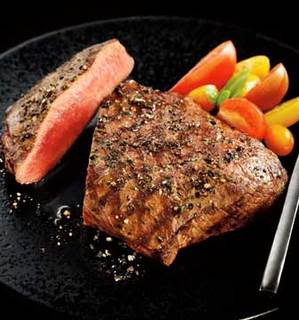 Get to the grill with this tasty recipe from LaCense Beef!
The flatiron is a great steak to grill. I like to grill over a very high heat, keep the meat rare on the inside and really enjoy the flavor of the beef with this touch of Asian flavoring.
My kids couldn’t get enough of it and clamored for more. The marinade can be used more than once before discarding. There is plenty of flavor packed in that liquid. Serve it draped over a pile of sautéed Chinese broccoli or spinach.
- 2 flatiron steaks thawed slowly in the refrigerator
- 6 scallions
- 1/3 c soy sauce
- 1/3 c water
- juice of 1 orange
- 1 T honey
- 1 clove garlic crushed and sliced
- 1/2” inch of ginger crushed and chopped
- 1/4 t chili flakes
- 1 star anise wheel crushed
Combine all the ingredients.
If the honey is too cold to dissolve, warm gently over the stove until dissolved. Do not cook. Place the steaks in the marinade and allow them to rest at room temperature for at least 1 hour and not more than 4 hours. Put the scallions in the marinade as well for about 1 hour. Grill over a hot fire searing the outside and maintaining a rare interior.
Grill the scallions as well after the steaks have cooked over a less intense heat. Let the meat rest before slicing. Slice and drape over greens that have been sautéed in olive oil with garlic and a bit of ginger. Salt to taste. Cut the scallions into 2 inch long sections and make a pile on top of the meat. Yum.
©KitchenTableMedicine.com, LLC ™What is Depression?
February 9, 2009 by Kitchen Table Medicine
Filed under Anxiety, Depression, Guest Posts, Kitchen Sink
“If I’m such a legend, why am I so lonely?” - Judy Garland
By KC Kelly, Ph.D., LMHC
 Everyone feels down and sad, probably more often than they would like. The stressors of everyday life in our busy, hectic world make feeling this way very common. If, however, you have feelings of hopelessness and helplessness more often than not, you do not know why you are feeling this way, and can not seem to pull yourself out of it to the point where it affects your everyday life, you may be suffering with clinical depression.
Depression is a serious medical condition that effects both the mind AND the body. Many of the symptoms of depression are mental, but because the mind and body are connected, many physical symptoms appear as well.
Depression can be all encompassing causing great lifestyle changes. A person suffering with depression may have difficulties at work, difficulties at school, difficulties with professional and person relationships, and may not even want to leave his or her bed. They have extremely low self esteem and think the worst of themselves in all aspects. They tend to isolate themselves from everyone and everything around them and may even feel as though there is no hope and no reason to live.
What Depression IS
- The leading cause of substance abuse (either drugs or alcohol) as well as suicide.
- A mental condition that can strike anyone of any age, race, gender, or ethnicity.
- A very treatable condition given the proper therapeutic intervention and/or medication.
What Depression IS NOT
- A condition to be taken lightly.
- A sign of personal weakness.
- The fault of the person suffering.
Symptoms of Depression Include
- Sadness, feeling low or blue, irritability.
- Feelings of hopelessness, helplessness, worthlessness.
- Difficulty concentrating.
- Changes in appetite including overeating or under eating.
- Difficulty sleeping.
- Feelings of fatigue.
- Persistent physical symptoms such as headaches, digestive difficulties, chronic pain.
- Thought of death or suicide.
- Suicidal attempts.
Statistical information reported on this page was obtained from The National Institute of Mental Health
If you think you may be suffering with any of these symptoms, or would just like to talk with a professional in a caring and completely confidential way, you can visit Dr. KC at www.DOCintheBiz.com where you will be able to email her for private and confidential help from your own home! You will never be made to leave your house or comfort zone.
Read more articles on depression
©KitchenTableMedicine.com, LLC ™Being Healed By Our Compulsions
January 31, 2009 by Kitchen Table Medicine
Filed under Counseling, Fear, Kitchen Sink, Life Coaching, Lifestyle Tips, Mary O'malley, Zen Thinking
 Author of The Gift of Our Compulsions: A Revolutionary Approach to Self-Acceptance and Healing
 and Belonging to Life: The Journey of Awakening
What would it be like if your compulsive behaviors were no longer problems that you need to get rid of? What would it be like if they became doorways into the clarity, peace and joy you long for instead? This is entirely possible.
It is possible not only to release yourself from your compulsive urges but also to become free from the core compulsion we all have, the compulsion to struggle with ourselves and with our lives. And we are masters at it. I love to say that we are like little old people endlessly trying to unravel a ball of yarn and all the while we are sitting in paradise.
Your compulsion, rather than being the enemy, can be a guide through the world of struggle and back into a deep and trust filled relationship with yourself and with your life!
It certainly happened for me that way and for many people I have worked with over the years. How did that happen? You may know my story about how I gained 97 pounds in a year and at the same time was washing a lot of that food down with alcohol and taking every kind of pill I could get my hands on.
I tried to stop drugging myself and tried every diet under the sun - only to have them all fail. Was that because I was a weak willed ninny? No! They didn’t work because it is a law of the psyche that what you resist you empower!
But gradually I was taught how to be curious about what I was experiencing rather than always trying to control or change it. And as I learned how to be curious about what was happening within me when I was compulsive, my compulsions calmed down. For it is another law of the psyche that what you embrace ceases to have power over you.
So let’s take a good look at how we have been with our compulsions and recognize that it doesn’t work. 95% of all weight that is lost in the US is gained back plus some within a year and a half. Why is that? Because what we resist we empower, and because how we try to control our compulsions doesn’t work - not in the long run.
There is another way to work with your compulsions, a way that takes you beyond struggle itself. It is what my work and my book, The Gift of Our Compulsions is about. And now I am going to do something that I have never done in these newsletters. I am going to tell you about a CD set I just completed.
I haven’t ever done this because these letters are not about promotion. But these CDs contain a truly life-changing message, a message I want you to hear so that you can move beyond the struggles inside yourself into the joy of truly being fully alive that is your birthright! The CD set is from a workshop I did in DC last spring called, “Being Healed by Our Compulsions,” and it is a window into the incredibly healing experience of moving beyond our core compulsion to struggle with life by being present for what is showing up in our lives.
If it doesn’t call to you, that’s fine, but I invite you to at least contemplate the radical notion that your compulsions are a gift from life to wake you up out of struggle. As Stephen Levine would say, “May you be so blessed to come across something you can’t control.”
Why would he say that? Because control is an endless game of the mind, a game that you will never (thankfully) ever win, and because who you are is so much bigger than the game of control. May we use our compulsions to take us beyond the struggling self so we can discover who we truly are, and in that discovery may our world be healed!
~Mary
 The Gift of Our Compulsions: A Revolutionary Approach to Self-Acceptance and Healing and Belonging to Life: The Journey of Awakening are both available through Amazon, and are highly recommended at the kitchen table.
Mary’s books are both endorsed by Eckhart Tolle who offered the phenomenally successful web class with Oprah on his book “A New Earth”. You can sign up for her monthly newsletters by going to the home page of her web site. Each month you will receive a letter containing insight and information on how to stay in touch with your peace and joy no matter what is happening in your life.
©KitchenTableMedicine.com, LLC ™Are There Poisons In Your Baby’s Food?
January 31, 2009 by Kitchen Table Medicine
Filed under Allergies, Breast Feeding, Cancer, Diet Tips, Kitchen Sink
 Whether you breast-feed or bottle-feed your baby, there may be harmful chemicals in the food you feed them. Many additives in the food you eat may be very dangerous to your health. And since what you eat, you feed to your baby when you breast-feed, the chemicals that are harmful to you are going to harm your baby.
Even products designed for infants and very young children may contain harmful additives. Take, for example, a popular electrolyte replacement beverage for infants. It contains artificial flavors (which may cause developmental problems and many are not adequately tested), acesulfame potassium (a carcinogen), various food colorings (many of which may be carcinogenic or not adequately tested).
It may also contain the artificial sweetener Aspartame, also known as Nutrasweet. Aspartame can cause birth defects, central nervous system disturbances, menstrual difficulties, brain damage in phenylketonurics, seizures, death and a long list of other reactions too numerous to mention. It may cause irreversible health damage over the long term.
Aspartame was approved and claimed safe by a specially appointed FDA Commissioner after his own Board of Inquiry that investigated aspartame claimed it unsafe. This FDA Commissioner later left the FDA to work for the drug company that produces aspartame.
Monosodium glutamate (MSG) and free glutamate are flavor enhancers considered safe by the FDA. MSG may cause a variety of symptoms, including headaches, itching, high blood pressure and allergic reactions. Free glutamate, the active ingredient in MSG, may cause dizziness, shortness of breath, headaches, drowsiness and even brain damage, especially in children.
Because of bad publicity, food manufacturers found ways to hide MSG in foods they produce. They list the ingredients that contain MSG but not the MSG itself. Or they use free glutamates instead of MSG.
For example, broth may be listed as an ingredient on a label. Broth may contain MSG, but the ingredients in the broth are not required to be listed on the label. Hydrolyzed soy protein, a common ingredient in tuna, is high in free glutamates, but does not contain MSG. The label can legally say no MSG.
Even if the label says “all natural ingredients” and “no preservatives,” the product could contain harmful additives. Almost all packaged foods ─ even so called “health foods” ─ have additives in them, and many are harmful or inadequately tested. The manufacturer hopes you’ll think these are healthy natural products, but if you read the list of ingredients, you’ll find ingredients that are not common food items. If you learn to interpret food labels, you’ll find that many of these ingredients are harmful or of questionable safety.
So, how do you know which foods are safe to eat? Dr. Christine Farlow, in her handy pocket-sized book, FOOD ADDITIVES: A Shopper’s Guide To What’s Safe & What’s Not, now in its 2004 revised edition, makes it easy to identify which additives are harmful and which are not. She classifies 800 commonly used food additives according to safety, whether they may cause allergic reactions and if they are Generally Recognized As Safe (GRAS) by the FDA.
In just seconds, the average person can find out if an additive in the food they’re buying is harmful to their health. It’s clear, concise and easy to use. Make this book your constant groc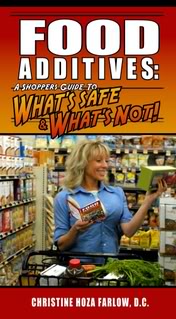 ery shopping companion and you’ll never again wonder about the safety of the ingredients listed on the package. You’ll know.
Dr. Christine H. Farlow, D.C. is a chiropractor, nutritionist and author. She has helped thousands improve their health through nutrition. For more information on food additives and healthy eating, visit http://www.healthyeatingadvisor.com or contact Dr. Farlow.
©KitchenTableMedicine.com, LLC ™Rock It - Pilgrim Style
January 30, 2009 by Kitchen Table Medicine
Filed under Bonnie Pfiester, Diet Tips, Kitchen Sink
 By Bonnie Pfiester Fitness Trainer
The Pilgrims were on a high-protein, low-carb diet
In 1621, the Plymouth colonists and Wampanoag Indians shared an autumn harvest feast known as one of the first Thanksgiving celebrations. I’ve often wondered what was on their menu back then. Something tells me it wasn’t high-calorie stuffing and pumpkin pie.
From what I understand, a person’s social standing determined the food they ate. The best food was placed closest to the most important people at the table. Instead of sampling everything, people just ate what was next to them.
Although the traditional Thanksgiving meal typically includes a big turkey or ham, we eat more side dishes than meat. The seventeenth century meal would have included a lot more protein from meats like deer and wild fowl.
Unlike today’s menu where we have loads of vegetable dishes, veggies weren’t always available to the colonists. Instead of high-calorie casseroles, the side dishes were either fresh or dried, like Indian corn. Since they had no refrigeration, they couldn’t have made my grandmother’s congealed salad either.
Pies were not an option since ovens weren’t even invented. That means no fancy bread or cakes either. As a matter of fact, although the Pilgrims did bring sugar on the Mayflower, the sugar supply had dwindled by that time so it was very unlikely there were many sweets at all.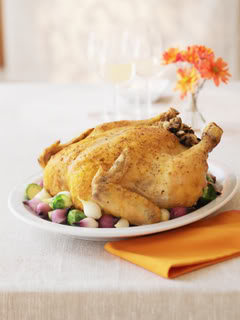
The colonists cooked more like I do – they used a lot of spices and didn’t use measuring cups. The pilgrims improvised with a lot cinnamon, ginger, nutmeg, pepper, and dried fruit in sauces for meats. Maybe that’s where we got the idea to make cranberry sauce.
The big meal was typically eaten at our lunchtime, which they called “noonmeat”. Their supper was a much smaller meal, which is definitely better for the waistline. By eating during the day, the colonists had more time to burn off the extra calories.
Finally, one thing we often forget is that the colonists were more active than we are today. Days consisted of hard labor for all the men, women and children. While the boys were building houses, gathering crops, collecting firewood and hunting food, women were churning butter, making candles, milking goats, washing clothes and cooking.
The colonists didn’t gather their food up in less than one hour at the grocery store. Resting simply wasn’t an option. Preparing the food for the celebration was hard work. No wonder they celebrated when they finally got to eat what they had worked so hard for.
~Bonnie
 Bonnie Pfiester is a Personal Trainer, wife to the famous fitness trainer Steve Pfiester of the reality TV show “Fat March”, and owner of the women’s health club Longevity Fitness.
You can enjoy more of Bonnie’s fitness and beauty articles at www.BonniePfiester.com or here at the kitchen table by visiting the Bonnie Pfiester page.
You are invited to leave your fitness and sports nutrition questions in the comments below for Bonnie to briefly answer or write about in future articles.
©KitchenTableMedicine.com, LLC ™Corn Syrup, Is it Really Just Like Sugar?
January 30, 2009 by Kitchen Table Medicine
Filed under Diabetes, Diet Tips, Dr. Scott Olson, Guest Posts, High Blood Pressure, Kitchen Sink, Sugar, Weight Gain
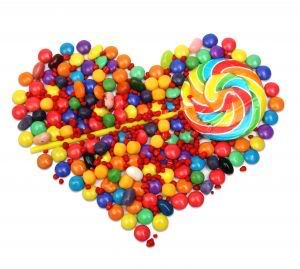 The Corn Industry is spending massive amounts of advertising dollars trying to convince us that high-fructose-corn syrup is just as “good for you” as sugar. But does it really matter? Let’s talk to Dr. Scott Olsen about the differences between sugar and high-fructose-corn-syrup.
In your medical opinion…what is worse: Sugar or high fructose corn syrup?
Dr. Olsen: This is a little like asking if you would rather be shot or stabbed: both are bad. There is a lot of stir in the media lately about high fructose corn syrup and how it is different than sugar and the research on corn syrup does show it behaves differently in our bodies.
What you need to know about fructose is that the body can’t use it, so whenever you consume fructose, the body has two choices. The first is that it can convert the fructose into glucose and then the body can use the glucose to power all its energy needs. The second choice is that the body can choose to store the fructose as fat.
There is some evidence that the body finds it easier to make that second choice: turning the fructose into fat. (11) Since our consumption of high fructose corn syrup has increased dramatically in the last few years along with the rate of obesity, it makes us wonder if fructose is to blame.
 FRUCTOSE ALSO:
- Creates harmful proteins, called glycated proteins, much easier than glucose.(12)
- Leads to insulin insensitivity (and, therefore: diabetes and obesity as well).(13)
- Contributes to hypertension (high blood pressure).(14)
While avoiding both sugar and high fructose corn syrup is probably your best health choice, keeping high fructose corn syrup out of your diet is the next best step.
Notes:
11. Bray GA, Nielsen SJ, Popkin BM: Consumption of high-fructose corn syrup in beverages may play a role in the epidemic of obesity. Am J Clin Nutr. 2004 Apr;79(4):537-43.
12. Colaco CA. Sugar and coronary heart disease, a molecular explanation. J R Soc Med. 1993 Apr;86(4):243.
13. Miller A, Adeli K. Dietary fructose and the metabolic syndrome. Curr Opin Gastroenterol. 2008 Mar;24(2):204-9.
14. Johnson RJ, Segal MS, Sautin Y, et al: Potential role of sugar (fructose) in the epidemic of hypertension, obesity and the metabolic syndrome, diabetes, kidney disease, and cardiovascular disease. Am J Clin Nutr. 2007 Oct;86(4):899-906.
Have a Fabulous Super Bowl Party With Mouth-Watering Ribs
January 30, 2009 by Kitchen Table Medicine
Filed under Recipes
Are you having a Super Bowl party, but want to try something besides the same-old, same-old chicken wings?
Try this recipe from La Cense Beef and treat your guests to some mouth-watering short ribs. Want your feast to be even better? Make sure you use grass-fed beef!
Beef Short Ribs with Tomatoes Smoked Peppers and Oregano
2lbs bone in short ribs salted overnight
1 large onion
6 garlic cloves
3 large tomatoes cut in chunks
4 sprigs of oregano or 2 t. dried
1-2 canned chipotle peppers in adobo sauce (use 2 if you really like a kick)
- In a large cast iron pot or casserole, heat some olive oil and brown the short ribs on all sides.
- Remove the meat.
- Add more oil if necessary and sauté the onions and garlic.
- When softened, add the tomatoes. They will give off some juice.
- Cook off some of that water then add the oregano and the chipotles. Salt the stew lightly. Add the meat back into the pot.
- Cover and simmer for about 2 hours either on top of the stove on a low heat or in the oven at 325. It should be loose when you pass a knife through it. Remove the meat. Skim off any fat that is on top of the sauce and reduce further if necessary. It should be a chunky consistency. Serve with soft polenta or mashed potatoes laying the meat down on the starch and then spooning all the sauce over everything.
Enjoy!
©KitchenTableMedicine.com, LLC ™Top 9 Cancer-Causing Ingredients To Avoid
January 30, 2009 by Kitchen Table Medicine
Filed under Cancer, Diet Tips, Kitchen Sink

Do you read the ingredients on the label of every item you put in your grocery cart?
Or do you just read what’s jumps out at you on the package? If you’re not reading the ingredients in the tiny print, you’re probably eating additives that are dangerous to your health, chemicals that cause cancer.
You see, the FDA allows manufacturers to add small amounts of cancer-causing substances to the food you eat. So, not only are many of our foods not healthy, they’re unsafe.
Here are some cancer-causing chemicals you’re going to want to watch out for and keep out of the food you eat:
- Acesulfame-K, also known as Acesulfame-potassium or “Sunnette” is an artificial sweetener. It has not been adequately tested for human consumption. The FDA approved this additive even though the tests done to determine it’s safety did not meet the FDA standards and caused cancer in lab animals, which increases the probability that it will also cause cancer in humans.
- Artificial colors, or FD&C colors, are mostly are derived from coal tar, which is a carcinogen. Over the years, many FD&C colors have been banned because of their harmful effects. And it is likely that more will be banned in the future. Some of the worst FD&C colors include: Green #3, Blue #1, Blue #2 and Yellow #6 which cause allergic reactions and cancer in lab animals. Red #3 is a carcinogen, which may interfere with nerve transmission in the brain and causes genetic damage. It is banned in cosmetics, but allowed in food, and it’s especially harmful to children.Yellow #5 causes allergic reactions in those sensitive to aspirin. It may be life threatening. Citrus red #2 is a known carcinogen. Its only allowed use is to color orange skins. So, If you use orange zest in some of your recipes, you may be ingesting carcinogens. Any color with “lake” after it means that aluminum has been added to the color to make it insoluble.
- BHA & BHT are widely used as preservatives, stabilizers and antioxidants. BHA is known to cause cancer in humans. Both BHA and BHT are toxic to the liver and kidneys. BHT may react with other ingested substances to cause the formation of carcinogens. BHT is banned in England.
- Potassium bromate is used to treat flour to give bread and baked goods a sponge-like quality. It is probably not used in California because it might require a cancer warning on the label. Outside of California, “unbromated” breads do not contain potassium bromate. It is also used in toothpaste, mouth washes and gargles. It is a carcinogen, mutagen and highly toxic. It is banned worldwide, except in the U.S. and Japan .
- Carrageenan is a seaweed derivative used in a wide variety of foods and cosmetics. In its native form, it has not been classified as a carcinogen, but in it’s degraded or broken down form it has been classified as a possible human carcinogen by the International Agency for Research on Cancer (IARC). Joanne Tobacman, M.D., University of Iowa assistant professor of clinical internal medicine, and researcher on carrageenan, said “There seems to be enough evidence associating carrageenan with significant gastrointestinal lesions, including malignancies, to avoid ingesting it.” According to Dr. Tobacman, the native carrageenan, after being subjected to stomach acids may be broken down into the degraded form and be a cancer risk. And even if it wasn’t, carrageenan cannot be identified as native or degraded on food labels, so there is no way of knowing if you are ingesting carrageenan, the carcinogen or not.
- Nitrates and nitrites are found primarily in processed meats. They combine with stomach acids and chemicals in foods to form nitrosamines, which are powerful carcinogens.
- Olestra has not been shown to cause cancer. However, it robs the body of carotenoids, which are known to have a protective effect against cancer. Studies have shown a 40-50% drop in blood carotenoids after consuming only 3-8 grams of olestra in a day, equivalent to 6-16 chips. It also may causes severe gastrointestinal cramping and diarrhea, which may last for extended periods of time.
- Propyl gallate is used as an antioxidant in fats, oils, candy and a variety of processed foods. It is a suspected carcinogen and is known to cause kidney, liver and gastrointestinal problems. It can cause allergic reactions in those with asthma and sensitivity to aspirin. It has not been adequately tested.
- Saccharin, or Sweet ‘N Low, is an artificial sweetener that is known to cause cancer. Because of pressure from the food industry, in 2000, saccharin was removed from the list of cancer-causing chemicals, in spite of the fact that studies still show that it causes cancer in lab animals.
So, how do you know which additives are really safe to eat? Dr. Christine Farlow, in her handy pocket-sized book, FOOD ADDITIVES: A Shopper’s Guide To What’s Safe & What’s Not, now in its 2004 revised edition, makes it easy to identify which additives are harmful and which are not. She classifies 800 commonly used food additives according to safety, whether they may cause allergic reactions and if they are Generally Recognized As Safe (GRAS) by the FDA.
In just seconds, the average person can find out if an additive in the food they’re buying is harmful to their health. It’s clear, concise and easy to use. Make this book your constant grocery shopping companion and you’ll never again wonder about the safety of the ingredients listed on the package. You’ll know.
Dr. Christine H. Farlow, D.C. is a chiropractor, nutritionist and author. She has helped thousands improve their health through nutrition. For more information on food additives and healthy eating, visit http://www.healthyeatingadvisor.com or contact Dr. Farlow.
©KitchenTableMedicine.com, LLC ™How to Eat Healthy While Traveling
January 19, 2009 by Kitchen Table Medicine
Filed under Diet Tips, Kitchen Sink, Weight Loss
By Bonnie Pfiester, Fitness Trainer 
Traveling is a dieter’s nightmare.
Traveling can destroy a diet if your not careful.
Traveling can be tough for dieters. Convenience store junk food, the infamous airline snack box and combo meals all add up to a diet disaster.
There is something about traveling that makes us think we’re hungry. Let’s start with road trips. I don’t know about you, but Steve and I have the worst snack attacks when driving long distances. Although the need to feed mostly stems from boredom, the million billboards showcasing juicy hamburgers don’t help either.
Once a billboard convinces you to stop and eat, you find yourself driving down an unknown road with restaurant after restaurant calling your name. Taco Bell, McDonald’s, Denny’s, Dairy Queen, Applebees – they all have a special, or menu item, to capture your attention.
Once you decide where to eat you, have to battle the menu. No matter how many times I’ve been to a restaurant, and even if I know what I should order, I still feel the need to read the entire menu. What in the world am I thinking? I’m just welcoming temptation. Before you know it, I’ve justified why I can afford to eat a Hamburger and fries.
If you are not traveling on the ground you have a different set of problems. Opposite of having too many choices, airline passengers have very few food choices. You’re trapped 35,000 feet in the air when a stewardess offers you an unappealing selection of nuts, cookies, crackers and cheese surprise. While first classers eat their high-calorie mystery meal, coach passengers get a sorry selection of the most boring sandwiches, bagels or salads they’ve ever wasted calories on.
In any case, the answer to the dieter’s traveling blues is planning ahead. You’ll pack your toothbrush so why not pack your food? It’s not like you don’t know you’re going to be stuck in a car or plane for several hours.
First, pack healthy snacks like pretzels, whole fruit, veggies, yogurt, cheese sticks, beef jerky, lunch meat, nuts, rice cakes or protein bars to prevent you from getting hungry and making poor choices. Second, learn to say no – plain and simple. Third, keep a calorie book on you. It’s much easier to cheat when you don’t know what you are eating. Lastly, bring other things to entertain you besides food, like a good book or magazine.
Traveling will always be tough for dieters, but with a little planning you can beat the need to feed.
~Bonnie
Bonnie Pfiester is a Personal Trainer, wife to the famous fitness trainer Steve Pfiester of the reality TV show “Fat March”, and owner of the women’s health club Longevity Fitness.
You can enjoy more of Bonnie’s fitness and beauty articles at www.BonniePfiester.com or here at the kitchen table by visiting the Bonnie Pfiester page.
You are invited to leave your fitness and sports nutrition questions in the comments below for Bonnie to briefly answer or write about in future articles.
©KitchenTableMedicine.com, LLC ™Aura Cacia Massage Products
January 8, 2009 by Kitchen Table Medicine
Filed under Beauty, Dry Skin, Kat Lee, Kitchen Sink
by Kat Lee
 Aura Cacia makes so many different “flavors”, I’m going to have to focus on just one, or this review would be twenty pages! While picking a favorite is difficult, I have to say that my favorite massage product is the Lavender massage cream.
The scent is sufficiently strong, but not cloying; the cream is thick enough not to run everywhere, but not so thick that it is sticky. In a word: perfect.
It is great for massage, but also perfect for moisturizing your whole body after a shower. Just apply everywhere while your skin is still wet. Lightly pat yourself dry, and your skin will be baby smooth. It’s so gentle that I can use it on my kids as well. My older son has issues with dry, sensitive skin, and generally develops a rash if I try to use any kind of scented product.
When I used the lavender cream, it moisturized his skin very well. Not only did he NOT develop a rash - it has begun helping to eliminate the perpetual “dry-skin” rash he has on his stomach during the winter.
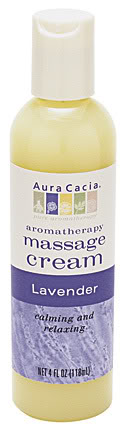 However, to those who have a soy allergy, I must post a warning. This product does contain soy in the form of GLYCINE SOJA (SOYBEAN) WAX. Dr. Sundene stresses the importance of knowing all of the different names for the item to which you are allergic, and this only underscores that fact.
Luckily, having also used the Lavender Harvest massage oil, I can say that it is a perfectly acceptable substitution. The only real difference that I noticed was that the oil is, of course, a bit runny and more difficult to apply to wiggly children. However, if you’re applying it to yourself or another adult, you should be just fine.
I’ve included ingredient lists below for both products, linking many of the ingredients to their respective pages at the Environmental Working Group’s Skin Deep Database. As you can see, the ingredients all rate very low on the toxicity meter — which is good!
Lavender Massage Cream Ingredients:
VITIS VINIFERA (GRAPE) SEED OIL, PRUNUS ARMENIACA (APRICOT) KERNEL OIL, PRUNUS AMYGDALUS DULCIS (SWEET ALMOND) OIL, COCOS NUCIFERA (COCONUT) OIL, SIMMONDSIA CHINENSIS (JOJOBA) OIL, GLYCINE SOJA (SOYBEAN) WAX, BUTYROSPERMUM PARKII (SHEA) BUTTER, EUPHORBIA CERIFERA (CANDELILLA) WAX, COPERNICIA CERIFERA(CARNAUBA) WAX, TOCOPHERYL ACETATE (VITAMIN E), LAVANDULA ANGUSTIFOLIA (LAVENDER) OIL, LAVANDULA X INTERMEDIA (LAVANDIN) OIL, LAVANDULA LATIFOLIA (SPIKE LAVENDER) OIL.
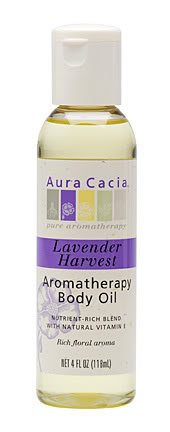 Lavender Harvest Massage Oil Ingredients:
VITIS VINIFERA (GRAPE) SEED OIL, PRUNUS ARMENIACA (APRICOT) KERNEL OIL, PRUNUS AMYGDALUS DULCIS (SWEET ALMOND) OIL, LAVANDULA ANGUSTIFOLIA (LAVENDER) OIL, LAVANDULA X INTERMEDIA (LAVANDIN) OIL, LAVANDULA LATIFOLIA (SPIKE LAVENDER) OIL, TOCOPHERYL ACETATE (VITAMIN E).
©KitchenTableMedicine.com, LLC ™Truvia - The Sweet Taste of Sugar-Free
January 8, 2009 by Kitchen Table Medicine
Filed under Kat Lee, Kitchen Sink, Sugar Substitutes
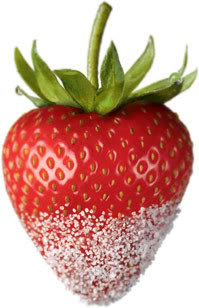 I tend to shy away from artificial sweeteners because of the undeniably harmful side-effects they all seem to carry. Even Splenda - touted as “natural” - is nothing more than chlorinated sugar.
I prefer not to ingest chlorine, thank you very much. (And before anyone steps up with the fact that tap water contains chlorine, let me assure you that I’ve taken care of that via my whole house filtration system.)
Chlorine levels commonly found in drinking water have now been linked to certain instances of cancer, which is why I try to avoid drinking it. So I would honestly prefer not to sweeten my food with it.
The only real alternative to artificial sweeteners has been Stevia, which has no side-effects and has been in existence years with no reported problems. My only issue with Stevia is that it tastes “okay”, but not fantastic. So when I heard about a new company, Truvia, who claimed to have produced a more “sugar-like” stevia, I was interested!
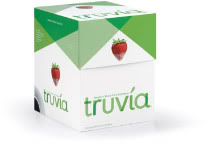 The Truvia company has discovered a way to isolate and extract the best tasting part of the leaf, and turn it into a calorie-free sweetener that is chemical-free. I’ve used it sprinkled over fruit and in my oatmeal and thought it tasted exactly like sugar.
When I tried it in my coffee, it was good, but the aftertaste was almost minty - which was not bad, just odd. (I’ll admit that I put way to much sugar in my coffee - so that may be the issue!)
At any rate, this is the ONLY artificial sweetener that actually tastes like sugar, and isn’t laden with chemicals. That makes it a one of a kind product for those looking for a calorie free way to get their sugar fix.
Here’s a recipe using Truvia courtesy of Truvia.com:
Pineapple Orange Banana Frostie
Ingredients
1 cup nonfat plain yogurt
½ cup pineapple juice
1 banana
1 cup orange juice
1 cup ice
8 packets Truvia™ natural sweetener
Procedure
Add all ingredients to blender
2. Blend on high until smooth
3. Enjoy
Natural Alternative to Toxic Anti-Bacterial Products
December 31, 2008 by Kitchen Table Medicine
Filed under Best, Kat Lee, Kitchen Sink
 Using anti-bacterial products such as hand sanitizers and soaps containing harmful ingredients (like triclosan) has become commonplace in our world today. As a result we’ve seen bacteria become stronger and more resistant to antibiotic treatment.
The founders of the Clean Well company began looking for an all natural way to kill germs, and found that there are several naturally occurring oils that have antimicrobial properties. After much research and development, they were able to patent a substance they call “ingenium”, a formula of natural oils - mainly thymus, or thyme - that has been FDA approved to kill MRSA (staph), E.Coli, and Salmonella.
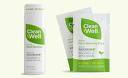 They’ve used ingenium to produce both an anti-bacterial soap, as well as an alcohol-free hand sanitizer. Now I don’t have to spray alcohol on my hands during this time of year when they’re so dry already! The hand sanitizer has such a nice citrus scent, and comes in a spray bottle as well as convenient wipes. Their site includes a handy store-finder so you can stock up!
I had pretty much sworn off sanitizers or anti-bacterial anything until I read about Clean Well. They have used the resources existing in nature to battle germs — and won. Visit the Clean Well website to learn about the sustainability of their products - this truly is a “green” company that any environmentally conscious person can stand behind.
©KitchenTableMedicine.com, LLC ™All Natural Deodorant Options
December 31, 2008 by Kitchen Table Medicine
Filed under Kat Lee, Kitchen Sink, Reader Questions
 I don’t know about you, but I am extremely picky when it comes to my deodorant. I enjoy smelling nice, and I’m sure everyone around me appreciates it too… When I first became aware of all the hazards associated with traditional deodorant sticks, I was at a loss as to what to do. Now, after trying numerous all natural deodorants - I’ll pass on my experience and (hopefully) save you some time and trouble!
Tom’s of Maine Long Lasting Care Deodorant Stick
I have to say that Tom does a great job producing a nice smelling deodorant stick that does not include aluminum or any other objectionable ingredients. Unfortunately, it didn’t last past lunchtime for me. I’ll admit I can be pretty hard on deodorants, and I do know some people who love it.
Pros:
- Aluminum Free
- Chemical Free
- Full ingredient disclosure on the website
- Nice fragrances to choose from
Cons:
- Decidedly NOT long-lasting, sorry Tom
Crystal Body Deodorant Salt Stick
This is basically a giant piece of salt (odd, I know) that helps eliminate odors. To use, you simply moisten the salt stick, apply like regular deodorant, pat the stick dry and put away. This deodorant kept me daisy fresh all day. Thumbs up!
Pros:
- Aluminum Free
- Paraben Free
- All natural (it’s salt - doesn’t get much more natural than that)
- Worked extremely well
Cons:
- You have to moisten the stick with every use
- You have to dry the stick with every use (sorry, maybe I’m lazy)
- Eventually, bits of the stick start to flake off and this can create some sharp spots - not good when we’re applying something to such a sensitive area.
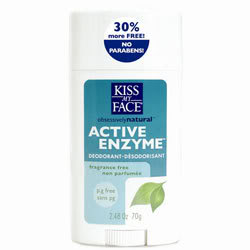 Kiss My Face Active Enzyme Deodorant Stick
This product went on very smooth, and was completely fragrance free (which I liked). However, it does come in a few different scents if you want something that smells pretty. Unfortunately for me, it didn’t last as long as I had hoped. It did outperform Tom’s, but didn’t last all day. Again, I do know people who love this stuff, so I’m sure it has something to do with individual body chemistry.
Pros:
- Aluminum Free
- Paraben Free
- Includes Kaolin Clay, a potent toxin absorber
- Very smooth and not “wet”
Cons:
- The only con is that it didn’t last all day for me
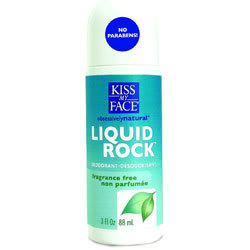
Kiss My Face Liquid Rock Deodorant
This one by Kiss My Face was also fragrance free, but comes in a variety of scents. This is essentially the same as the Crystal Stick above, but in a roll on format that contains liquid inside. The plus here is that there is no “wetting” and “drying” involved. It’s just like any other roll-on deodorant. It also performed just as well as the salt stick - lasting all day even in the unseasonably warm weather we’ve had recently.
Pros:
- Aluminum Free
- Paraben Free
- Chemical Free
- Convenient Roll On
- Lasts All Day
 Cons:
Cons:
- I’ve tried to think of at least one con - but I can’t. There you have it.
Due to the lack of “con’s” - I’m awarding this one with my seal of approval!
-Kat
©KitchenTableMedicine.com, LLC ™Kiss My Face Fragrance Free Lotions
December 31, 2008 by Kitchen Table Medicine
Filed under Best, Dry Skin, Kat Lee, Kitchen Sink, Olive Oil
by Kat Lee
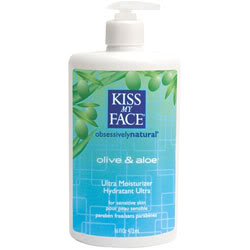
Kiss My Face Olive and Aloe
My hands are not normally very dry, for which I am thankful; but when winter hits, my hands get dry and start to itch. And of course, every year, I scratch them. I know I shouldn’t but I do. Then, when I decide to put on some lotion, what happens? They BURN! Like fire. And brimstone (whatever that is).
I’ve tried unscented lotions before but for some reason, they still burn (and the lotion still smells). My husband already deals with dry skin, so in the winter it’s even worse. He just deals with the fact that most lotions will burn. I said “most”, because I’ve found one lotion that does not.
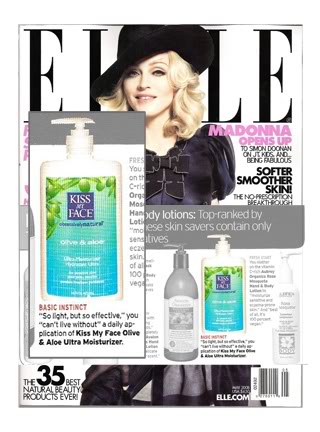 Kiss My Face makes a fragrance-free lotion called Olive and Aloe that I have found works fabulously. Featured in Elle Magazine in May 2008, the main ingredients are… (drumroll please)… olive oil and aloe vera. I’ll bet you wouldn’t have guess that, eh? All kidding aside, olive oil and aloe vera are two very soothing emollients that make this lotion an absolute dream for wintertime. The lotion also contains lavender and chamomile, both known for calming the skin. And while it does contain these oils, you cannot smell them at all; it is very literally “fragrance free”.
- Aqua, Stearic Acid, Isopropyl Palmitate, Vegetable Glycerin, Cetyl Alcohol, Sodium Borate, Aloe Barbadensis (Leaf Juice), Olea Europaea (Olive Fruit Oil), Avena Sativa (Oat Protein), Butyrospermum Parkii (Shea Butter), Helianthus Annuus (Sunflower Seed Oil), Lavandula Angustifolia (Lavender) Extract, Chamomilla Recutita (Matricaria Flower Extract), Foeniculum Vulgare (Fennel Extract), Sambucus Nigra (Elder Flower Extract), Calendula Officinalis (Flower Extract), Citrus Aurantium Dulcis (Orange Flower Extract), Salvia Officinalis (Sage Leaf Extract), Achillea Millefolium (Yarrow) Extract, Prunus Amygdalus Dulcis (Sweet Almond Oil), Xanthan Gum, Retinyl Palmitate (Vitamin A Palmitate), Tocopheryl Acetate (Vitamin E Acetate), Allantoin, Lecithin, Cetyl Esters, Polysorbate 80, Squalane*, Titanium Dioxide, Trisodium EDTA, 1,2 Hexanediol (and) Caprylyl Glycol, Phenoxyethanol, Sorbic Acid, Citrus Aurantium Dulcis (Orange Peel Oil), Citrus Nobilis (Mandarin Orange Peel Oil), Citrus Medica Limonum (Lemon Peel Oil), Citrus Grandis (Grapefruit Peel Oil), Evernia Prunastri (Oakmoss Extract), Viola Odorata (Flower Extract)
*Olive derived
Aura Cacia’s Lavender Harvest, Mommy’s Secret Weapon
December 17, 2008 by Kitchen Table Medicine
Filed under Herbal Medicine, Kat Lee, Kitchen Sink, Pediatrics, Sleep
 By Kat Lee
I have friends whose children drop off to sleep peacefully, alone, and fast; and I must confess that I secretly hate them. Okay, hate is not really the right word, but I seriously envy them.
My children require ninja mommy skills when bedtime arrives. If your children are like this, then you totally know what I mean by that.
You carefully arrange everything: mood, lighting, temperature. Then, you must sit nearby (or completely underneath and entangled between) your children until they become unconscious.
Now comes the tricky part – extricating yourself from this situation so that you can watch Heroes. You slowly twist and pull and wrangle yourself free from the children, then quietly tiptoe out of the room like a midnight assassin.
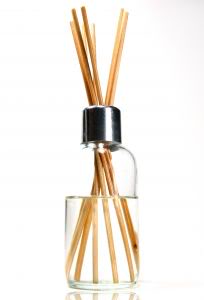
Sound familiar? If so, then I have just discovered a secret weapon that you may be interested in: Aura Cacia’s Lavender Harvest essential oil. The other night I placed one of their neat pocket diffusers (full of lavender) into the kids’ bedroom a bit before bedtime.
They lay down, as usual, and I sat nearby (not even an arm around them!) to see what would happen. They chatted a bit, then quieted down… then they fell asleep. I tiptoed out of the room in utter amazement. Who knew something as simple as lavender could be so effective?
I can assure you that this ninja mommy will never be caught without a supply of lavender oil again. That and Benadryl (just kidding).
©KitchenTableMedicine.com, LLC ™55 Healthy & Cheap School Lunch Ideas
September 21, 2008 by Kitchen Table Medicine
Filed under American Sickcare System, Attention Deficit Disorder, Diet Tips, Kitchen Sink, Pediatrics
 I smelled it in the air the other night.
That first cold crisp taste of autumn after a hot summer day.
That nervous tension quivering around me.
That bustling sensation in the air that can only be caused by millions of children and parents simultaneously scrambling to gather last minute glue sticks, scissors, trapper keepers, and lunch boxes.
What will I wear?
Who will I sit next to on the bus?
What will my schedule be like?
Will I be able to find my classroom?
Will my friends have my same lunch schedule?
Are those big bullies going to be there?
I hope I like my teacher!
Oh my gosh I feel SO STRESSED!
What is that?
Oh, wait. That’s right. I don’t have to go back to school anymore. I guess I can just relax. I can hold off on trapper keeper shopping for now.
Phwew!
Back to school time, can be quite stressful for children as they adjust to a new schedule, new teacher, or new school. Keeping the home schedule consistent is prudent during this time. You can also ease the stress by packing them a healthy lunch from home.
A home-made lunch ensures your child is properly nourished to cope with these new stressors, while also providing a bit of the comforts of home. I still remember hanging up my lunch bag in the coat room, a cozy symbol of comfort, waiting there for me if I needed it.
The key ingredients to a successful school lunch are protein and fiber. They will serve to keep your child’s concentration up, and stress levels down, as explained in my article What to Eat for Better Concentration. Also, parents really need to understand that most lunch meats are processed with sodium nitrites that are implicated in increasing rates of childhood cancers as discussed in my article Hot Dogs: Foe of Kitchen Table.
Be sure to try these new lunch ideas at home first before leaving your kids stranded in the cafeteria with some freaky lunch that other kids may make fun of. For the first few weeks of school, pack all their most familiar and favorite foods before making any major changes.
I have collaborated with my sister, a teacher and mom, and my friend Heidi the author of “Healthnut Mom Wannabe” to develop this simple list of whole foods lunch menu items that most kids will eat.
Here is the list of healthy whole foods lunch ideas to feed your children:
- Leftovers from last night’s dinner can be quickly packed in a thermos. Fill the thermos first with hot water to ensure the meal stays warm through lunch time. Here are some favorites to try:
- Spaghetti.
- Your family’s favorite casserole.
- Salmon, veggies, and brown rice.
- Chicken, veggies, and brown rice.
- Chili and rice or whole grain crackers.
- Stir-fry and brown rice.
- Soup in a thermos with whole grain crackers. Kids especially love:
- Chicken noodle soup.
- Vegetable soup.
- Minestrone soup.
- Tomato soup.
- Yogurt, fruit, granola, and nuts.
- Cottage cheese and fruit.
- Chicken and bean burrito on a whole grain tortilla.
- Pita bread stuffed with hummus, sprouts, and tomato.
- Guacamole and blue corn chips.
- Turkey sandwich on whole grain bread.
- Vegetarian BLT sandwich (use veggie bacon).
- Almond butter, bananas, and a dash of honey on whole wheat bread.
- Veggie burger.
- Whole grain bagel and cream cheese.
- Vegetables should always be included. Here are a few favorites:
- Carrot sticks.
- Celery (add almond butter, or cream cheese, and raisins).
- Snap peas.
- Edamame (soy beans).
- Broccoli and ranch to dip it in.
- Sprouts can be added to sandwiches.
- Smear avocados on sandwiches for essential fats.
- Red pepper slices.
- Cucumbers.
- Whole grain crackers are a great source of protein and fiber. Pair them with:
- White cheese or cream cheese (yellow cheese is high in saturated fat).
- Hard boiled eggs.
- Nitrite free lunch meat.
- Hummus.
- Nut butters like cashew and almond butter. (Peanuts are highly allergenic, try to rotate your nut butters to prevent allergy).
- Nuts are an excellent source of protein, fiber, and fat. Try to do raw nuts if possible:
- Cashews.
- Almonds.
- Pistachios.
- Mixed nuts.
- Trail Mix.
- Fruit is always a school lunch favorite. Here are a few that pack well:
- Apples.
- Oranges.
- Peaches.
- Pears.
- Cantaloupe.
- Honeydew.
- Bananas.
- Raisins.
- Dried blueberries, apricots, pineapple rings, or other favorite dried fruit.
- Water, rice milk, soy milk, or 2% cow milk. Kids don’t need juice!
Please do add your favorite healthy lunch ideas to the comments section, for all to enjoy!
Remember, if you don’t want your child to become yet another American diabetes and obesity statistic, it is imperative that you gradually switch your family to a “Whole Foods Diet”. Develop healthy habits in your children NOW to prevent disease.
Don’t let the media pressure you in to buying unhealthy junk “designed for children”. Put an end to those crummy cheese and cracker processed “Junkables” that are so tempting to send your kids off with. The reality though is that most processed meals intended for children are exactly what are causing the childhood obesity epidemic in America.
Thanks for stopping by my kitchen table, please share these simple lunch ideas with any other parents that will benefit!
~Dr. Nicole Sundene
©KitchenTableMedicine.com, LLC ™Zen Please? 20 Things to do on Your Day Off
September 12, 2008 by Kitchen Table Medicine
Filed under Kitchen Sink, Lifestyle Tips, Stress, Zen Thinking
 Hope you all have a great weekend!
The author of ZenPlease has offered some fun ideas for what we can all do with our time off…
1. Head to your local video store and get a movie that fits your genre. Comedy is the remedy; no matter who you are, you’ll enjoy a good laugh!
2. Play some sports! Go swimming or go for a jog. This is the time to work out and sweat it all out.
3. Take a stroll in the park and walk your dog (or your neighbor’s).
4. Read a book, something that will keep you engrossed and guessing – suspenseful plots!
5. Curl up in bed and sleep in, the world does not need you today.
6. Learn how to cook a new dish. It’s going to be fun!
7. Practice Yoga. It relaxes your body, mind and soul.
8. Go window shopping. Take slow strides and just watch everything and anything.
9. Visit a zoo, an art gallery or a museum, these places are really eye opening! Even if you’ve visited before!
10. Call up your long lost friends and ask them out for lunch or dinner, catch up with them since you have the time!
11. Go ice-skating! If you’re a beginner, you’re bound to fall. But who cares?
12. For non-golfers, head towards the nearest driving range and swing at them golf balls.
13. Play some Sudoku or Crosswords, challenge yourself and see how hard it is for you.
14. Go bowling and just smack it! It doesn’t matter if the bowling ball goes down the drain!
15. Find some place peaceful and secluded and watch both the sunrise and sunset of that day! If you can’t find a nice spot, the roof is always a good option.
16. Go scuba diving, the experience of swimming with fishes is really nice. Carefree.
17. Ride a rollercoaster and scream your lungs out! The first ride is something you’ll remember for life!
18. Take random photos. Just pick up your camera and start clicking but make sure you take pictures of the outdoor!
19. Treat yourself to a health spa. Extremely stress relieving…
20. Look around you and see what’s happening in your community. Join a club or an event and try new things!
For the enthusiastic but constantly held down individuals, this is the time for you step up and try new things! Take a walk on the wild side! And as for those who would rather play it safe and take each day as it comes, today is the day you give yourself a chance to let go!
No matter what you do, as long it is comfortable for you, it will be enjoyable. Do it with the ones you love and it’ll be even more exciting! Have fun!
For more great tips on reducing stress and enjoying life, stop by Zenplease.com.
©KitchenTableMedicine.com, LLC ™Is Food a Bad “Ex-Lover”?
September 6, 2008 by Kitchen Table Medicine
Filed under Bonnie Pfiester, Discipline, Kitchen Sink, Weight Loss
 By Bonnie Pfiester, fitness trainer, and wife of fitness trainer Steve Pfiester, trainer for the reality tv show “Fat March”.
Obesity is so much more than a physical condition.
There are reasons people are overweight, many of which are purely psychological. This became extremely apparent on “Fat March”.
As Steve spent countless hours with the marchers, they had plenty of time to really search their heart for answers. Loralie’s description of her relationship with food was probably the most profound.
“Steve” Loralie said, “Food is like an ex-lover that is just no good for me. Not just any ex, but a really sexy ex. When I think about him (food) all I remember are the good times. I forget how much pain and guilt he would cause. And after an incredible night together full of passion he just leaves you crying on the living room floor in the fetal position full of guilt” “And yet, late at night… I still want him so, so bad”.
Like a real relationship, people often feel trapped in their overweight body. They feel they have no way out and no hope. Many times, like an unhealthy relationship, it just takes support and guidance. Without help it is easy to just give up and give in to simple pleasures that leave you “crying on the living room floor in the fetal position full of guilt”.
Also similar to unhealthy relationship, people can lose self-worth. Food, like an abusive husband, puts you down every time you indulge. Fat can make you feel unworthy and unattractive. Before you know it, you are just trying to accept things the way they are, only to live in a lifestyle that continues to make you miserable.
There is a way out and it starts with making a change. People often fear change because they fear failure. Women may stay in an abusive relationship because they fear failing. Whether it’s the fear of being alone or not being loved again, the fear of the unknown often keeps people in the known, no matter how bad it is.
There is nothing to fear, health and fitness is not a mystery. Fitness loves you more than any great tasting food. It doesn’t lie, it takes care of you, it rewards you - it is tried and true. You are absolutely no exception. It may take time, but most great things take time. The one thing I know for sure is nothing will change without making a change.
~Bonnie
Bonnie Pfiester is a Personal Trainer and owner of the health club Longevity Fitness. You can enjoy more of Bonnie’s fitness and beauty articles at www.BonniePfiester.com .
You are invited to leave your fitness and sports nutrition questions in the comments below for Bonnie to briefly answer or write about in future articles.
Dr. Jody Stanislaw, Naturopathic Physician
August 19, 2008 by Kitchen Table Medicine
Filed under Dr. Jody Stanislaw, Guest Posts, Kitchen Sink
Meet Dr. Jody Stanislaw a new author at the Kitchen Table!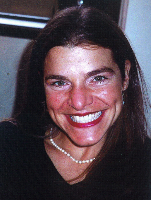 You may follow her column by clicking here.
Dr. Jody Stanislaw is a Naturopathic Physician, receiving her doctorate degree from Bastyr University. Located in Seattle, Bastyr is the most acclaimed of the four accredited natural health medical schools in America, where physicians are trained to heal disease via natural and complementary treatments.
As the diabetes columnist for KitchenTableMedicine.com, her expertise in diabetes not only comes from her professional training but from her own personal experience as well. Having been diagnosed with Type 1 Diabetes at the age of seven, her passion towards improving the health and well-being of others stems from successfully overcoming her own challenges of living with this chronic disease.
Focusing on the best food choices for optimal health throughout her lifetime has given her expertise in good nutrition and in knowing the ideal foods for achieving balanced blood sugar levels. Yet spending so much time thinking about food led her to have unhealthy eating patterns during her childhood. As a result, she also has a passion for helping others heal from disordered eating patterns, which is common amongst both type 1 and type 2 diabetics.
One of her core beliefs in life is everything that happens in life is a teacher, always full of rich opportunities for personal growth. This empowering perspective is a key element present in all of her work and teachings.
She also enjoys helping others strengthen what she calls the Four Pillars of Health: nutritious food, adequate rest, regular movement, and a healthy spiritual and emotional life. Just as important as the sturdiness of each leg of a four legged table is for creating balance, if even one of these areas of life is weak or lacking, optimal health cannot exist. Each of these key areas is equally important for allowing a strong foundation for good health in one’s life.
And lastly, a bit about her background…Having grown up in the Northwest, she is an avid outdoor enthusiast. Hiking in the Cascades, snow skiing in the Rockies, water skiing, biking, and practicing yoga are the activities she enjoys the most for keeping her body fit. She also delights in continually expanding her mind regarding the myriad of ways humans can and do chose to live their lives, via visiting foreign cultures. She traveled throughout Europe while living in Italy in 1993, backpacked through Australia in 1997, and left her hometown of Seattle to work with patients from all over the world at a health resort in Thailand during 2008.
This latter experience led her to realize that when people are out of touch with what they love about life and are lacking experiencing joy on a regular basis, no herbs or supplements or food plan will succeed in achieving the optimal health they are truly looking for. This revelation inspired her to write a book to address this issue. It is a story that will act as a catalyst for helping readers become clear on what is holding them back from truly loving their life.
After writing for six months in Bali, Indonesia in 2009, she is now back in Seattle, finishing her book. Stay tuned to KitchenTableMedicine.com for the announcement of the publication of this wonderfully adventurous and inspiring story!
©KitchenTableMedicine.com, LLC ™