Grow an Organic Kid’s Garden
June 18, 2008 by Dr. Nicole Sundene
Filed under Fruits and Veggies, Gardening, Pediatrics
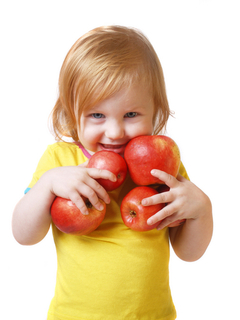 Teaching your kids to grow fruits and vegetables is easy.
In my article on “The Best Way to Get Your Kids to Eat More Vegetables” I discussed the importance of allowing kids to grow their own vegetables.
June is a great time to buy your kids some vegetable starts that will be sure to flourish when planted.
An organic patio garden or several patio gardens placed in key locations; are a great way to keep your kids busy while you are relaxing, working in the kitchen, or doing other outdoor tasks.
Why not put your kids to work and have them help put some food on the kitchen table for a change?
How to Make an Organic Kid’s Garden:
- Find a sunny location where plants are sure to grow.
- For EACH child, buy a large wooden barrel and fill with organic dirt. Don’t use pesticides as your kids will be digging around with their bare hands, and maybe even eating the dirt. Remember playing with dirt is half the fun of their garden. By using a large container, and organic fill dirt, you can easily control the quality of dirt that your children are playing in. Organic dirt is especially important for kids with skin problems, allergies, or asthma.
- Buy starts or sprout your own seeds indoors of tomatoes, green beans, carrots, zucchinis, squash, potatoes, strawberries, herbs and other simple plants that are easy to grow.
- Promote how much fun it is for them to get to water their garden each day! Find them a cute little child size’s watering can. Do watch out for over watering though!
- Make a big deal when they finally grow a vegetable and prepare a special meal with their fruits or veggies.
- Emphasize how delicious fresh tomatoes or strawberries are picked right off the vine!
- Have them weed their own garden each day and hand remove bugs, slugs, and snails.
- Use the opportunity of growing vegetables to teach your kids appreciation for all the work that goes in to producing food, in hopes that they will become less wasteful adults.
- Teach them the botany behind how plants grow, and briefly explain how the plants use energy from the sun to make sugar and chlorophyll.
- If you have more space you can create a larger organic garden for your kids!
For those with more space:
- Plant easy to grow produce for them to tend to like strawberries, blueberries, gooseberries, potatoes, carrots, and squash liberally. Make it their “summer project” to grow food for the family to enjoy.
- Build a Green Bean Teepee! Simply take green bean stakes and form them in to the shape of a teepee. Train the green beans to grow up the stakes and by August your kids will have a fun little fort to hide away in!
- Grow a whole apple orchard or plant other trees for them to play hide and go seek in.
- Build a green house for growing peppers, tomatoes, and herbs.
- Make an organic compost bin and teach them about composting and how worms digest plant materials to make dirt.
- Teach them the difference between a “weed and an herb”. Weeds are typically invasive plants. Herbs are “weeds” that have medicinal properties. Common herbs to learn about are dandelions, nettles, red clover, plantain, and cleavers. Honestly though, most weeds are simply herbs once you make friends with them.
Remember that if you have a garden of your own, avoid the use of heavy pesticides and go organic when at all possible. Organic dirt is vitally important for the kids and pets that actively play in your garden.
Thanks for stopping by my kitchen table!
~Dr. Nicole Sundene
Naturopathic Physician
 Dr. Nicole Sundene, NMD is a licensed Naturopathic Medical Doctor at Fountain Hills Naturopathic Medicine 16719 E Palisades Blvd, Suite 205, Fountain Hills, AZ 85268.
She believes we should utilize natural medicines to treat the root cause of disease rather than just treating symptoms, as symptoms are a message of imbalance sent from the body and will persist until they are properly addressed.
For appointments please visit http://FHnaturopathic.com for more information about Naturopathic Medicine services.
©KitchenTableMedicine.com, LLC ™
How to Make a Green Bean Teepee
June 18, 2008 by Dr. Nicole Sundene
Filed under Fruits and Veggies, Gardening, Pediatrics
 Green bean teepees make for a healthy hide out.
You can easily create a fun foliage fort for your kids or a secret meditation hideout for yourself by forming wooden stakes and strings in to a teepee shape and training the vines to run along them.
Who knows?
Maybe your kids will snack on a few beans while they are in there!
Yet another fun way to “Get more vegetables in to your kids diet” .
Green beans are full of fiber, protein, beta carotene, B-vitamins, calcium, and potassium.
Fresh picked green beans are a fabulous addition to your kitchen table. Fresh foods are full of more energy and vitamins than any foods found in your grocery store. Pick them immediately before serving, to taste and feel the difference.
Excess green beans can be frozen or pickled for future enjoyment. Simply spread out on cookie sheets and freeze before storing to prevent them from sticking together.
Have fun with vines like beans! Get creative. Why stop with a teepee? Perhaps you can make an entire gazebo!
Thanks for stopping by my kitchen table!
~Dr. Nicole Sundene
Naturopathic Physician
Dr. Nicole Sundene, NMD is a licensed Naturopathic Medical Doctor at Fountain Hills Naturopathic Medicine 16719 E Palisades Blvd, Suite 205, Fountain Hills, AZ 85268.She believes we should utilize natural medicines to treat the root cause of disease rather than just treating symptoms, as symptoms are a message of imbalance sent from the body and will persist until they are properly addressed.
For appointments please visit http://FHnaturopathic.com for more information about Naturopathic Medicine services.
©KitchenTableMedicine.com, LLC ™
What are You Doing to Keep Your Kids off Drugs?
June 5, 2008 by Dr. Nicole Sundene
Filed under American Sickcare System, Drug Abuse, Kitchen Sink, Pediatrics
 Before school gets out is the time to sit down with your kids and plan summer activities that keep them engaged, keep them motivated, keep them working hard and learning, and most importantly keep them off drugs.
What are you NOT doing to keep your kids off drugs?
You should NOT, in my medical opinion allow teenagers to have a free and open summer schedule.
I am not telling you all of this to frighten you, but to serve as a very important wake-up call as summer is right around the corner and “idle minds, idle hands, and idle teenagers are the devils playground.”
Or so the saying should really go… Read more
Dr. Nicole Sundene, NMD is a licensed Naturopathic Medical Doctor at Fountain Hills Naturopathic Medicine 16719 E Palisades Blvd, Suite 205, Fountain Hills, AZ 85268.She believes we should utilize natural medicines to treat the root cause of disease rather than just treating symptoms, as symptoms are a message of imbalance sent from the body and will persist until they are properly addressed.
For appointments please visit http://FHnaturopathic.com for more information about Naturopathic Medicine services.
©KitchenTableMedicine.com, LLC ™
Diaper Rash
February 21, 2008 by Kitchen Table Medicine
Filed under Kitchen Sink, Pediatrics, Yeast Infections
The four main causes of diaper rash: 
- CONTACT DERMATITIS
• Due to friction and trapped moisture
• Usually seen on the rounded skin surfaces sparing the skin folds where the diaper doesn’t touch
• Appears red and shiny
• Occasionally may be an allergic reaction to diapers and wipes
• Commonly occurs after 3 months - CANDIDAL INFECTIONS
• Intense “beefy” red rash with sharp borders and red “satellite” bumps beyond the borders
• Will be present within the skin folds
• Often baby will also have “thrush” – a whitish yeast infection in the mouth - ATOPIC DERMATITIS
• Usually not seen before 2 months of age
• The eruptions will ooze and crust
• May be dry, itchy patches on other parts of the body - SEBORRHEIC DERMATITIS
• May be seen as early as 3-4 weeks of age
• Rash begins in folds and extends towards rounded skin surfaces without sharp borders
• Appears as yellowish, greasy, scales and may also be seen on scalp (“cradle cap”), face and behind ears
MORE SERIOUS INFECTIONS – CONTACT DOCTOR IMMEDIATELY
- BACTERIAL INFECTION
• Most commonly Staph
• Appears as large fluid filled blisters that easily rupture showing a red base - SCALED SKIN SYNDROME
• Blood born illness
• May see skin rupture and peeling beginning under diaper area
• Quickly spreads and exfoliation occurs on entire body
GENERAL GUIDLINES
- Because moisture and friction cause or worsen all forms of diaper rash – keep area dry and free from occlusion.
- Change diapers more frequently and expose diapered area to air more often.
- Wash area with plain water, sterile saline, or chemical free wipes (calendula soap after bowel movement if necessary).
- Wash cloth diapers in mild/hypoallergenic soap.
- Avoid rubber pants.
- Avoid petroleum jelly, baby (talcum) powder, cornstarch, baking soda, and medicines containing “fluorinated corticosteroids” which have local side effects including skin atrophy.
TREATMENT
- Increase water intake if not breast feeding.
- Avoid food allergens and sugar in baby’s and nursing mother’s diet.
- Several times a day use a topical treatment that includes zinc oxide, or calendula.
- See your baby’s doctor if rash does not respond to above guidelines within one week
Resources
1. Dyson N.D., Linda. Pediatric Topics. 2001.
2. Dershewitz M.D. Ambulatory Pediatric Care 3rd Edition.
Dr. Nicole Sundene, NMD is a licensed Naturopathic Medical Doctor at Fountain Hills Naturopathic Medicine 16719 E Palisades Blvd, Suite 205, Fountain Hills, AZ 85268.She believes we should utilize natural medicines to treat the root cause of disease rather than just treating symptoms, as symptoms are a message of imbalance sent from the body and will persist until they are properly addressed.
For appointments please visit http://FHnaturopathic.com for more information about Naturopathic Medicine services.
©KitchenTableMedicine.com, LLC ™
BREASTFEEDING: Frequently Asked Questions
February 21, 2008 by Kitchen Table Medicine
Filed under Breast Feeding, Kitchen Sink, Pediatrics
 How do I get my baby to latch onto my breast?
Put baby to breast as soon as possible after the birth. Get into a comfortable, relaxed position. Place baby’s head in crook of your elbow. Bring baby to your breast with the baby’s face and body turned toward you. Tickle middle of baby’s lower lip, wait for him/her to open WIDE. Pull baby closer. Make sure that a large amount of the areola is drawn in the baby’s mouth and that the nipple is centered in the baby’s mouth. Babies take time to learn how to suckle. Be patient and call for breastfeeding support if you need it.
Is my baby getting enough milk?
After your milk comes in (usually 2-3 days after the birth) if your baby has at least 6 wet diapers and 1-5 bowel movements per day your baby is getting enough milk. Breastfed babies need to nurse often (usually 8-18 times per 24 hours). The more often you nurse, the more milk you produce. Nurse each breast at least 10 minutes per feeding as higher calorie milk comes toward the end of breastfeeding. Ask your doctor, midwife, or lactation consultant if you have questions.
Sore and cracked nipples
- Correct positioning (nipple centered and most of the areola in baby’s mouth) is the most
important way to prevent sore nipples. - Try a variety of nursing positions.
- When done nursing, break suction by inserting a finger in the baby’s mouth before taking baby off the breast.
- Offer the baby the least sore breast first as babies nurse more vigorously when very hungry.
- Use only water (no soap) to wash nipples.
- Express a few drops of breast milk and let it dry on nipples after nursing. Expose nipples to sun (avoiding sunburn) and air as much as possible.
- Apply cool, wet black tea bags to nipples between feedings for 10 minutes three times per day.
- If nipples are cracked, apply lanolin cream to nipples after feedings (unless allergic to wool)
- Call your provider if you have questions.
Sore, engorged breasts
- Nurse baby often to relieve breast fullness.
- Apply warm, moist cloths on your breasts or take warm shower
- Gently massage the breast.
- Express some breast milk before you breastfeed if baby is having difficulty latching on due to breast fullness.
Painful lumps in breast, blocked ducts
- Apply heat to breast.
- Nurse frequently especially on affected breast.
- Check baby’s positioning.
- Gently massage breast from lump toward nipple.
- Drink at least 2 quarts of water per day. Take vitamin C and Echinacea to support immune system to avoid breast infection.
- Castor oil pack to breasts can be helpful: Apply castor oil to breast. Cover with plastic wrap.
Apply warm, wet heat for 15-20 minutes. WASH CASTOR OIL OFF WITH BAKING SODA SOLUTION (1 tablespoon baking soda per cup warm water) AFTER TREATMENT SO THAT BABY DOES NOT CONSUME IT. - Get plenty of rest.
- Call your provider if develop a fever, redness of the breast, or have concerns.
Breast infection (Breast is red and sore. You may have chills, fever, and/or feel achy, etc.)
- CONTINUE NURSING.
- Nurse more frequently.
- The milk will not hurt your baby.
- Check baby’s positioning.
- Place warm, moist cloths on your breast.
- Rest in bed.
- Drink extra liquids.
- CALL YOUR HEALTH CARE PROVIDER.
Resources
“Breastfeeding”. La Leche League International.
“Breastfeeding Fact Sheet 5”. Seattle and King County Public Health Department.
“A Woman’s Guide to Breastfeeding”. American Academy of Pediatrics.
Dr. Nicole Sundene, NMD is a licensed Naturopathic Medical Doctor at Fountain Hills Naturopathic Medicine 16719 E Palisades Blvd, Suite 205, Fountain Hills, AZ 85268.She believes we should utilize natural medicines to treat the root cause of disease rather than just treating symptoms, as symptoms are a message of imbalance sent from the body and will persist until they are properly addressed.
For appointments please visit http://FHnaturopathic.com for more information about Naturopathic Medicine services.
©KitchenTableMedicine.com, LLC ™
Breastfeeding Support Services
February 21, 2008 by Kitchen Table Medicine
Filed under Breast Feeding, Kitchen Sink, Pediatrics, Pregnancy
 PHONE NUMBERS AND SERVICES
• Healthy Mothers, Healthy Babies: 1-800-322-2588 www.hmhbwa.org A non-profit organization with breastfeeding information, breast pump rental information and referrals to local lactation consultants.
• La Leche League 1-800-LA-LECHE www.lalecheleague.org
•24-hour hotline: 206-522-1336
• Evergreen Hospital Breastfeeding Center’s 24-hour help hotline: 425-899-3494
WEBSITES AND BOOKS
• Breastfeeding Fact Sheets by Seattle and King County Public Health department www.metrokc.gov/health/breastfeeding
• A Woman’s Guide to Breastfeeding by American Academy of Paediatrics www.aap.org
• Motherwear Inc. www.motherwear.com contributes free literature on breastfeeding and positive parenting.
• World Alliance for Breastfeeding Action (WABA) www.elogica.com.br/waba provides information on global standards for appropriate labor/employer practices concerning breastfeeding.
• HealthShare Lactation Service, Inc.www.hsls.com
• Information for employers about implementing a breastfeeding support program:
• Mason, D. Breastfeeding and the Working Mother. 1997. St. Martin’s Press.
• Huggins, K. The Nursing Mother’s Companion. Harvard Common Press, 1995
• Lowman, K. Of Cradles and Career: A Guide to Reshaping Your Job to Include a Baby in Your Life. 1985. La Leche League International. Franklin Park, IL.
BREASTPUMP INFORMATION
• Hollister, Inc.: 1-800-323-4046 www.hollister.com
• Medela, Inc.: 1-800-835-5968 www.medela.com
• White River Concepts, Inc.: 1-800-824-6351 www.whiteriver.com
Dr. Nicole Sundene, NMD is a licensed Naturopathic Medical Doctor at Fountain Hills Naturopathic Medicine 16719 E Palisades Blvd, Suite 205, Fountain Hills, AZ 85268.She believes we should utilize natural medicines to treat the root cause of disease rather than just treating symptoms, as symptoms are a message of imbalance sent from the body and will persist until they are properly addressed.
For appointments please visit http://FHnaturopathic.com for more information about Naturopathic Medicine services.
©KitchenTableMedicine.com, LLC ™
Breastfeeding Benefits
February 21, 2008 by Kitchen Table Medicine
Filed under Breast Feeding, Kitchen Sink, Pediatrics, Pregnancy
 The American Academy of Pediatrics recommends 6 months of exclusive breastfeeding (no formula or solid foods) and at least 1 year of breastfeeding.
BENEFITS FOR BABIES
- Antibodies are passed from the mother to the baby through breast milk, which provides increased immunity. Breastfed babies have lower rates of the following conditions compared to formula-fed babies: allergies, ear infections, respiratory tract infections, colic, diarrhea, bacterial sepsis, atopic skin disorders, Crohn’s disease, meningitis, ulcerative colitis, vomiting and autoimmune thyroid disease.
- Breast milk can prevent asthma. Use of milk, other than breast milk, prior to 4 months of age is associated with increased asthma incidence through 6 years of age.
- Breastfed babies have a better immune response to vaccinations than do formula-fed babies in general.
- Babies who are breastfed statistically have IQ’s 6-10 points higher and have better vision than formula fed babies.
- Breast milk nutrients change throughout the infant’s life to promote optimal brain and body development.
- Breastfeeding decreases infant morbidity and hospitalisation rates 10 fold, as well as decreasing the incidence of sudden infant death syndrome (SIDS).
- Human milk is protective against childhood obesity. Obese children have a high risk of the following conditions as adults: obesity, high blood pressure, cardiovascular disease, gout, etc.
- Increased mother-baby bonding.
BENEFITS FOR MOTHERS
- Nursing stimulates uterine contraction, which decreases postpartum bleeding.
- Breastfeeding reduces the risk of ovarian cancer and breast cancer.
- Breastfeeding builds bone strength reducing your risk of osteoporosis.
- Exclusive breastfeeding “on-demand” is a 98% effective form of birth control during the first 6 months postpartum if there is no return of menses during that time. Check with your doctor for more information.
- Breastfeeding delays the return of menses.
- Mothers return to pre-pregnancy weight faster.
- Increased mother-baby bonding.
- Breast milk does not need to be prepared, is always available, costs nothing, and is environmentally friendly. (Formula costs between $1300-$3300 during the first year of life.)
CONTRAINDICATIONS FOR BREASTFEEDING
- Certain drug use: check with a lactation consultant or your doctor if you are on prescription medications.
- Rare hereditary metabolic disorders (i.e. galactosemia)
- HIV/AIDS: unless living in a 3rd world country
- Other serious maternal or infant illness-refer to lactation consultant
Resources
1. Arora et al. “Major factors influencing breastfeeding rates: mother’s perception of father’s attitude and milk supply” Ped Nov 2000; 106: e67.
2. Oddy, W. “Breastfeeding and Asthma in Children” Adv Exp Med Bio 2000: 393-394.
3. von Kries, R. et al. “Does Breast-feeding Protect Against Childhood Obesity?” Adv Exp Med Bio 2000: 29-39.
4. Walker, M. “A fresh look at the risks of artificial infant feeding” J Hum Lact 1993; 9(2): 97-107.
5. “Breastfeeding Fact Sheet 1”. Seattle and King County Public Health Department.
6. “Consequences of Artificial Feeding”. Evergreen Hospital Medical Center, Basic Course for Lactation Specialists.
7. “Is DHA the secret of breast milk’s success?” Townsend Letter. Nov 1999. 196: 53.
8. “A Woman’s Guide to Breastfeeding”. American Academy of Pediatrics.
Dr. Nicole Sundene, NMD is a licensed Naturopathic Medical Doctor at Fountain Hills Naturopathic Medicine 16719 E Palisades Blvd, Suite 205, Fountain Hills, AZ 85268.She believes we should utilize natural medicines to treat the root cause of disease rather than just treating symptoms, as symptoms are a message of imbalance sent from the body and will persist until they are properly addressed.
For appointments please visit http://FHnaturopathic.com for more information about Naturopathic Medicine services.
©KitchenTableMedicine.com, LLC ™
Introduction to Solid Foods
January 16, 2008 by Kitchen Table Medicine
Filed under Pediatrics
The American Academy of Pediatrics recommends breast milk as the only source of nutrition for the first six months of an infant’s life. Breast milk contains antibodies that support immune function as well as optimal nutrient ratios, including iron that change as the child grows. Of course, the mother should be sure to continue eating a nutritionally adequate diet. Solid food introduction can begin around six to eight months of age. Signs that suggest that an infant may be ready for solid foods include cutting teeth, more frequent feedings while still seeming to be hungry, able to sit up, swallowing food instead of pushing it out with the tongue, pushing food away and showing great interest in foods that the family is eating.
Some research suggests that foods given too early can result in food allergies or intolerances. Prior to six months of age the baby’s digestive tract is not mature enough to fully digest most foods. Foods should be introduced one at a time allowing a full week before a new food is added. In the week following the introduction it is important to look for signs of food reaction, such as:
- Rash around the mouth or anus Diarrhea or mucous in stools
- Watery eyes Constipation
- Hyperactivity or lethargy Skin reactions (rash, itching, redness)
- Runny or stuffy nose Allergic shiners (dark circles under eyes)
- Ear infections Persistent cough/wheezing
- Change in personality/academics
- Sneezing
An allergic or intolerant reaction to food does not necessarily mean that your child will remain allergic or intolerant of that food. If any reactions occur in association to the introduction of a particular food, discontinue that food and reintroduce it again in 6 months.
GENERAL RECOMMENDATIONS
The mother should always nurse the infant first before offering a solid food. Offer whole foods in as close to natural state as possible (i.e. fresh fruits, vegetables and grains and mashing or grating them to avoid choking and to make them more easily digestible). You may offer food from your own diet as long as it is a single food, not combined with other ingredients, in order to isolate allergic reactions. Offer sippy-cups with water around 6 months just to introduce the idea and to encourage intake of fluids. One or two meals daily is sufficient for 6-7 month old infants. At about 9 months you may let your baby attempt to feed him/herself as part of their exploration. Avoid offering fruit juice or high carbohydrate drinks like rice milk as they are low in nutritional value and high in sugar.
This is a general guideline and individual nutritional advice should be sought from your physician.
Resources
• Bove ND, Mary. An Encyclopedia of Natural Healing for Children and Infants. Keats Publishing, CT. 1996.
• Dyson ND, Linda. Pediatric Topics.2001.
• Linton ND, Molly. Clinic Notes and Patient Handout. 1997.
• Mohrbacher, N. and Stock, J. The Breastfeeding Answer Book (revised). La Leche League International. Schaumburg, IL. 1997.
• Pressl, M. and Wall, G. Lactation Consultant Training Manual. Evergreen Hospital. 2000.
• Piscane, A. et al. “Iron Status in Breast-Fed Infants”. J Ped. 1995 Sep; 127 (3): 429-31.
• Walker, M. “A Fresh Look at the Risks of Artificial Infant Feeding”. Journal of Human Lactation. 1996. P. 9, 2, 97-107.
Revised 6/28/01 clinic/handouts/Introduction of Solid Foods
Dr. Nicole Sundene, NMD is a licensed Naturopathic Medical Doctor at Fountain Hills Naturopathic Medicine 16719 E Palisades Blvd, Suite 205, Fountain Hills, AZ 85268.She believes we should utilize natural medicines to treat the root cause of disease rather than just treating symptoms, as symptoms are a message of imbalance sent from the body and will persist until they are properly addressed.
For appointments please visit http://FHnaturopathic.com for more information about Naturopathic Medicine services.
©KitchenTableMedicine.com, LLC ™
Friendly Bacteria
January 11, 2008 by Kitchen Table Medicine
Filed under Acidophilus, Digestion, Pediatrics, Yeast Infections
 Lactobacillus bifidus is first introduced into the sterile intestines of the infant as a result of breastfeeding. Large numbers can soon be observed in the feces, of the baby. L. bulgarious is commonly used as a yogurt culture, but it is incapable of proliferating in the human gut. Other friendly bacteria may thrive unless broad-spectrum antibiotic drugs attack them. Additional beneficial lactobacillus strains include L. acidophilus, L. fermentum, L. casea, L. salivores, L. brevis and L. plantarum.
In addition to their usefulness in anti-yeast therapy, Lacto-bacilli strains have advantageous nutritional effects on vitamin and nutrient synthesis, cholesterol lowering effects, blood fat lowering benefits, and anti-viral activity. Lactobacillus supplementation or yogurt intake should always follow the use of broad-spectrum antibiotics to replace the friendly bacteria killed by the non-specific action of the drugs.
For infant thrush - treat the mother (especially if she is breast-feeding with oral supplements of L. bifidus. “Paint” the nipples before each infant feeding with a concentrated culture of L. bifidus.
For vaginitis - use implants of fresh (sugar free) yogurt in the vagina. (Be sure the diagnosis is yeast infection and not bacterial vaginitis)
For intestinal infections - eat one or more cups of yogurt three or four times daily or take L. acidophilus concentrates.
For milk - intolerant patient or those with outright milk allergies - an acceptable way to avoid adverse reactions is to introduce potent amounts of the L. acidophilus organisms in small increments, beginning with one-quarter teaspoonful of powder or liquid - or one acidophilus capsule - two or three times daily, or as directed by physician, into the gastrointestinal system.
Dr. Nicole Sundene, NMD is a licensed Naturopathic Medical Doctor at Fountain Hills Naturopathic Medicine 16719 E Palisades Blvd, Suite 205, Fountain Hills, AZ 85268.She believes we should utilize natural medicines to treat the root cause of disease rather than just treating symptoms, as symptoms are a message of imbalance sent from the body and will persist until they are properly addressed.
For appointments please visit http://FHnaturopathic.com for more information about Naturopathic Medicine services.
©KitchenTableMedicine.com, LLC ™
Cookbooks for Families and Children
January 10, 2008 by Kitchen Table Medicine
Filed under Cookbooks, Pediatrics
 Feeding the Young Athlete: Sports Nutrition Made Easier for Players and Parents, by Cynthia Lair and Scott Murdoch, PhD; Moon Smile Press, 2002
Feeding the Whole Family: Whole Foods Recipes for Babies, Young Children & Their Parents, by Cynthia Lair; Moon Smile Press 2nd Edition, 2002
Honest Pretzels: And 64 Other Amazing Recipes for Cooks Ages 8 & Up, by Mollie Katzen; Tricycle Pr, 1999
Pretend Soup and Other Real Recipes: A Cookbook for Pre-Schoolers & Up, by Mollie Katzen; Ten Speed Press, 1994
Dr. Nicole Sundene, NMD is a licensed Naturopathic Medical Doctor at Fountain Hills Naturopathic Medicine 16719 E Palisades Blvd, Suite 205, Fountain Hills, AZ 85268.She believes we should utilize natural medicines to treat the root cause of disease rather than just treating symptoms, as symptoms are a message of imbalance sent from the body and will persist until they are properly addressed.
For appointments please visit http://FHnaturopathic.com for more information about Naturopathic Medicine services.
©KitchenTableMedicine.com, LLC ™
Pediatric Allergy Prevention Recommendations
January 10, 2008 by Kitchen Table Medicine
Filed under Allergies, Pediatrics
Breastfeeding:
• Exclusively for at least 4 - 6 months, then weaning may begin
• Would be best if breastfeeding accompanied weaning diet through 12 months
Formula:
• Partially or extensively hydrolyzed are recommended
Weaning:
• Begin non-allergenic foods at 4 - 6 months
• Most vegetables and fruit (no citrus)
• Iron-fortified hydrolyzed rice cereal
• Introduce new food singly and observe for allergic reactions
Allergenic foods:
• Introduce biweekly at 12 months
• Cow’s milk, eggs, wheat, peanuts, soy, corn, citrus and fish
Lactating mom’s diet:
• If infant has allergic symptoms and the above precautions have been taken, remove allergens from mother’s diet and monitor infant’s symptoms
• Environmental allergy precautions should be taken
Dr. Nicole Sundene, NMD is a licensed Naturopathic Medical Doctor at Fountain Hills Naturopathic Medicine 16719 E Palisades Blvd, Suite 205, Fountain Hills, AZ 85268.She believes we should utilize natural medicines to treat the root cause of disease rather than just treating symptoms, as symptoms are a message of imbalance sent from the body and will persist until they are properly addressed.
For appointments please visit http://FHnaturopathic.com for more information about Naturopathic Medicine services.
©KitchenTableMedicine.com, LLC ™
Common Childhood Food Allergies
January 9, 2008 by Kitchen Table Medicine
Filed under Allergies, Pediatrics
 The most common childhood allergies are:
Cow Milk
Wheat
Egg
Corn
Symptoms can include:
Hives
Vomiting
Eczema
Diarrhea
Sneezing
Wheezing
Coughing
Swelling of throat
Nasal congestion
Anaphylactic shock
Abdominal pain
Reaction time:
Minutes
Days
Instructions for care givers other than the parents:
Provide a written statement notifying the caregiver of the allergy.
Include a specific list of foods the child should not eat or touch.
Submit a written policy of caregiver’s responsibilities in case of reactions:
Include specific instructions
Include phone numbers if guardian or doctor needs to be notified
Instructions for the parents:
Let the child take responsibility as much as possible.
Let them know they have an allergy
Help them to identify the foods they should avoid.
Teach them to tell caregivers that they have a food allergy.
Dr. Nicole Sundene, NMD is a licensed Naturopathic Medical Doctor at Fountain Hills Naturopathic Medicine 16719 E Palisades Blvd, Suite 205, Fountain Hills, AZ 85268.She believes we should utilize natural medicines to treat the root cause of disease rather than just treating symptoms, as symptoms are a message of imbalance sent from the body and will persist until they are properly addressed.
For appointments please visit http://FHnaturopathic.com for more information about Naturopathic Medicine services.
©KitchenTableMedicine.com, LLC ™