Autism: Gretchen Wilson & Sean Ashley’s Story
April 17, 2009 by Kitchen Table Medicine
Filed under Allergies, Autism, Guest Posts, Kitchen Sink
 By Gretchen Wilson
When my grandson was four years old, we went through a very difficult time. He is both autistic and blind, and I really thought placement in a foster home would help me to care for him and keep him safe while I dealt with a few situations. Unfortunately I was wrong. In foster care, he was neglected. He looked like a starving war orphan with a distended belly - he was chubby before.
So I took pictures, went to the judge, and he had Sean at the courthouse within two hours and I was able to take him home. The attorney advised me to put Sean in a state institution, stating that I was young and needed a life of my own. Sean’s case worker said that she was placing him in a state institution because he was a vegetable, that he did not talk, and threw fits. I told her “over my dead body”.
When Sean was small, he had tactile issues and ate mostly bread type foods. He now eats almost everything. He loves milk a lot, but would never drink water. I started mixing whole milk with water, just to get some water into him. Once, I accidentally bought 2% milk and he would not touch it, even with no water in it. He would make an angry sound and shove it away.
To help him with his memory skills, I would sing songs and then leave a blank for Sean to fill in. He knew every word I left blank!!! I also used a drum beat to modulate his language. I would put his hand over my mouth so that he could feel how I said the words.
In fact, he still loves to do that, even at 29 years old, especially when we are in the car. Sean has enough language now to let one know just about everything he wants and has a great memory. His mobility skills are great; it’s like he has a sensory antenna in his head.
I founded The Sean Ashley House in 1994 so that I could be assured that he would always have a happy, loving and safe environment, even when I could no longer care for him. He now thinks his last name is House. If someone says “Sean Ashley”, he adds the “House”.
When I founded the House, I made sure to offer the services that autistic children need. He now loves swimming, music, horse riding therapy, dancing, using the treadmill… and I could go on. He loves to go up and down my stairs, and the minute he gets into my car, he doesn’t stop saying “hamburger” until we finally stop to get one.
Now when I bring him home for weekends, after about 24 hours, he starts saying “Sean Ashley House.” This makes me feel so very good that he loves his home. I’m at peace now when I think about what will happen to him when I can’t take care of him any longer.
Everyone, even the court system and social workers, needs to be educated on autism!!!!
Related reading:
Autism Awareness Month
Autism: 10 Strategies for Implementing Diet Changes
The Autism Diet Connection
Autism: 10 Tips for Everyone
Autism: A Brain Under Attack
Read more stories in the Autism Category
 Dr. Nicole Sundene, NMD is a licensed Naturopathic Medical Doctor at Fountain Hills Naturopathic Medicine 16719 E Palisades Blvd, Suite 205, Fountain Hills, AZ 85268.
She believes we should utilize natural medicines to treat the root cause of disease rather than just treating symptoms, as symptoms are a message of imbalance sent from the body and will persist until they are properly addressed.
For appointments please visit http://FHnaturopathic.com for more information about Naturopathic Medicine services.
©KitchenTableMedicine.com, LLC ™
Autism: Seth’s Story
April 17, 2009 by Kitchen Table Medicine
Filed under Autism, Guest Posts, Kitchen Sink
My name is Kelly, and I am the very proud mom of a beautiful little boy named Seth. He is seven years old and has Autism.
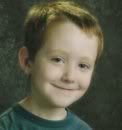 Back when I was pregnant with Seth, I never knew that Autism was becoming the most rapidly growing epidemic of our time. Back then, I’m sure it was still around 1 out of 500 or so. Did I ever think that I would be here today, fighting this battle? No, in fact, the only time I had ever heard of autism was when I saw a primetime movie about a young child with autism back in the 80’s. I never in my wildest dreams thought that I would be living out that movie myself. Never did I think I would be in the forefront, fighting for my son.
Firstly, I had a normal pregnancy! I was a single mom, but Seth’s dad and I made the decision to live together and raise Seth, even though we didn’t have a relationship anymore. It was a good decision.
Seth was no ordinary baby and he loved to be loved. I would sing to him or play music to him while giving him a bath. He loved to be held, he smiled, laughed, had the most beautiful blue eyes. We were so proud of him when he began walking on his own at 10 months old, speaking his first words, and reaching his milestones much earlier than normal.
Being good parents, we kept up with his physicals and vaccines. Around 18 months, things started to change. I really noticed big changes around age 2. He spoke, but made no sense; he had bowel issues, he flapped his hands, made us read the same book over and over, ran in circles. He would get up every morning, take the register off of the heating/air duct in the kitchen, stand INSIDE it, and proceed to take out everything and line it all up.
What’s more, he was sick constantly with fevers that seemed to come out of the blue. He developed pneumonia, his ears would drain, and he cried more than usual. Still, I had no idea this raging epidemic that was going on all around us had its latest victim right in front of my face. No clue that it could have been related to his last vaccination.
We moved to a larger house. My oldest son finally got his own room, and Seth got a yard! I thought it would be great! It gave Seth all the room he wanted. He became obsessed with trains. He still talked, but still didn’t make a lot of sense. He just wasn’t where he should be at three years old. It bothered me but his dad would say “oh, he’s just odd, he’ll grow out of it.” I actually remembered that TV movie from 25 years prior, and thought to myself, “Could my son ALSO have autism?” I didn’t want to think about it.
 When Seth was 3 1/2, his dad and I parted ways and I worried about the impact it would have on Seth, but he adjusted quite well. Not long after that, I met a wonderful man. From day one he was on the bandwagon with me. The first time he met Seth, he immediately knew something was amiss; did he have a delay? I said “No, but I think he may have Autism.” He BELIEVED me and encouraged me to have Seth checked. I actually had someone on my side.
When Seth was four, this boy who never said “I love you” walked up to me, put his arms around me and said, “Mommy, I love you.” I looked at Alan, tears in my eyes. This was the first time that my son had said this to me and I’ll never forget it. Alan looked at me and said “That was huge, and you KNOW he meant it.” Still, even with all of the signs, I didn’t have him checked. I should have taken that boy the next day, and the bottom line is that I didn’t. Denial still had its hold on me.
Fast forward a year to kindergarten. Seth had an EXTREMELY rough time adjusting to a new schedule. He cried every morning when I left him. His teacher would send notes home about the troubles he was having. What was I going to do? I knew what was wrong, but didn’t want to admit it to myself. My answer came during parent-teacher conferences about a month after school started.
We talked about Seth, I mean really talked. Then there came a point where I looked into her eyes and she didn’t have to say a thing, her silence said it all. Neither one of us could say the A word, but when I told her that I was going to take him to have him evaluated, she said to me in a very soft voice, “I think that’s a good idea.” I left that room with tears in my eyes for my child.
At his next physical, Seth was sick (once again.) When he had a fever, oddly, he was more coherent - almost normal. So during this visit, when I told his doctor that I thought Seth had Autism and I would like a referral, he looked at me like I was from Mars. He said: “Well, he’s acting fine NOW. Why do you think there’s something wrong with him?” I said “I didn’t say I thought there was something WRONG with him. I said that I think he may have Autism. He’s sick today! See him when he’s NOT sick!” He took my word for it, and referred us to a child psychologist.
This man was absolutely fantastic. He saw us within a week, observed Seth and worked with him. After five days of waiting, he told me what I knew in my heart all along. Seth had Autism. Funny thing is, he never said “I’m sorry, but…”
I like to describe his diagnosis like this: “Here is your son. I’m giving him an Autism Badge, NOT a label. Yes, he will always have it; however, great things lie in store not just for him but for YOU as well, depending on what you do. Now, here’s a sword, a shield, and a suit of armor, you go out of this office a Warrior Mother, go fight the monster and get your son! You make him the best thing he can be!”
ME? I know nothing, and I’m no fighter! Soon, Google became my best friend. I read a ton of books, joined a support group, and made a few friends. I learned to work WITH Seth, not against him, and learned to give him the strength he needs to just be Seth.
Since that day, Seth has blossomed. He still exhibits some signs of Autism, but for the most part he is so much better than he was last year at this time. My fears have been put to rest. This monster isn’t so scary, because a mother’s love for her child is the most powerful force in the universe. Autism may have won a couple of battles, but this mom has won the war.
Related reading:
Autism: 10 Strategies for Implementing Diet Changes
Dr. Nicole Sundene, NMD is a licensed Naturopathic Medical Doctor at Fountain Hills Naturopathic Medicine 16719 E Palisades Blvd, Suite 205, Fountain Hills, AZ 85268.She believes we should utilize natural medicines to treat the root cause of disease rather than just treating symptoms, as symptoms are a message of imbalance sent from the body and will persist until they are properly addressed.
For appointments please visit http://FHnaturopathic.com for more information about Naturopathic Medicine services.
©KitchenTableMedicine.com, LLC ™
Autism: 10 Tips for Everyone
March 19, 2009 by Dr. Nicole Sundene
Filed under Autism, Guest Posts, Kitchen Sink

You probably already know that autism is growing. A 6,000% increase, 1 in 150 children, 1 in 94 boys - the statistics are steadily rising.
This is a journey we are all on, even though many are not aware. There will be numerous benefits to more people consciously getting on board.
The journey is amazing. If you do not live it, you may not understand the benefits. Though it is not always easy, there are ways we all can pitch in and begin the shift towards reaping the blessings that flow from being touched by the life of someone with autism.
Do you know ways you can help? Live daily within the crux of the most extreme aspects of this condition and ideas begin to come clear. Here a few powerful suggestions that may surprise you…
1. Educate Yourself. Not via the news, magazines, TV specials, commercials, the doctors, the medical society or even the big autism organizations. Listen to the parents. Join groups on the internet. Read books about healing. Read books written by individuals with autism.
Most of the mainstream information and even “scientific studies” are biased and paid for to protect some financial interest. Jenny McCarthy said it best, “Our kids are our science!” Break out of the mob mentality, it’s getting us nowhere. Concerned about immunizations? There’s good reason. No matter how “safe” and “necessary” we are told they are, bottom line is parents would not have to sign away our children’s lives releasing responsibility for risks beforehand if that were true.
Learn from those experiencing and living with autism daily. They are the ones most highly motivated to finding answers. They are the ones who are no longer afraid of what this journey is revealing to the human race. They see ignorance and indifference as much more frightening.
2. De-Tox our Environment. Become more aware of the substances we saturate our air, land, skin, clothing, and other surrounding areas with daily. Start changing one thing at a time if you have to. How you clean your house. How you wash your clothes. How you take care of your yard.
How you eat. How you take care of yourself. Do you know what those chemicals and ingredients are? Me neither. Why do we trust the companies and/or government to make sure they are safe? Support the independent organizations that make factories clean up their act. Simplify by going back to the basics.
3. Adjust How You Think About Food. Real food is made by God, not made to last 20 years on a shelf and ready to eat in 2 micro-waved minutes. The more chemical and artificial ingredients it has, the less it can be called “food”. Yes, you can eat it without it killing you instantly.
Yes they will TELL you it’s “healthy.” We can’t blame food companies for wanting our business and trying to make life more convenient and easy for us. The companies are catering to our wants, so we have to start opening our eyes to what we are doing to ourselves by staying in the dark for the sake of cheap, quick, and easy. Real food taste way better and is ultimately more satisfying.
First change by acknowledging your addiction to the cleverly concocted taste combinations that are always conveniently accessible. It taste good, makes me feel good at the moment, quick and easy, but at what cost? Alcoholics and drug addicts have to make the same choice.
4. Take Responsibility for Your Health. Your doctor is not God. Your doctor can not possibly be responsible for the daily choices you make either. Your doctor is a human just like you. Your doctor went to school to learn how to prescribe “band-aides” in the form of drugs, for symptoms you are experiencing. YOU are responsible for learning about becoming healthier.
The human body, brain, and soul are miraculous, awe-inspiring creations! God has provided us with guidelines, resources, and free will.
Take responsibility for your own will, beliefs, and decisions you make about how to live. Businesses such as health care and the food industry are services for our needs. When we allow them to convince us as to what our needs are –that is called marketing. It is up to us to know the difference. Get out of the trap, and reverse who’s in charge. You know you best. Learn about yourself and take charge of your own life.
5. Vote Daily with Your $$$. Your daily choices are determining the path of the planet. We are like hamsters in a maze when our decisions are determined by the TV commercials, magazine ads, and the negative news.
The stores alone are largely designed to get you to buy, and the big companies know how to use this system in strategic ways. Exercise your true freedom to choose. Liberty is America’s mighty foundation, and very few people realize the power in this step alone. Buy real food, safe cleaning products (baking soda, vinegar, etc.), and spend your hard earned dollars to support these movements (see #1,2, 3, &4).
6. Ask How You Can Help. Be open to learning. If you know a family or person living with autism, don’t assume you know what’s best for them, what they should do, or how you can help.
Offer, but ASK. Ask what adjustments would help to make family events go smoother. Ask if there’s anything you can do to help out once a week. If the person says “no” please do not be hurt or offended. There are complications involved that they can’t explain, because you can only understand by living it.
Emotions, logistical factors, desires to prevent disasters, etc. are all new challenges that can arise around involving another person. You can help best if you can fill your own cup and serve from the overflow. A family surviving the daily challenges of autism can not handle the challenges of another needy person. Wanting to help and needing to help are different.
7. Volunteer Your Time. Once you’re in the mindset of #6, you can open an on-going offer of whatever help you’d feel comfortable providing. A few of the ways you could help may include researching topics on the internet, driving a child to/from therapy, running errands, caring for the child or siblings, yard work, cleaning, etc.
Be open to suggestions and feedback. Your time and compassion can be a gift worth more than any amount of gold.
8. Train Yourself. Learn how to spend time with a child perceiving the world differently. Come from an attitude of wonder, compassion, mutual respect and peace. Your comfort level is your responsibility, not the child’s.
This is an area of huge need, and there are good programs out there; but they are few and far between. Seek training that focuses on learning about the child and developing trust. Relational techniques such as son-rise and gentle teaching can show all parties involved how to learn and grow together.
9. Donate Directly to Families or Organizations that Support Families. Most of the treatments and therapies are not covered by insurance. Support fund raising efforts by families, or donate to programs that offer assistance to families directly. Again, your $$$ are votes, support what you want to see more of in terms of helping families.
Many times financial assistance is not available until the child is 18 when the parents are not solely responsible anymore. If more funds were available to support school-aged children, we may have more independent children by 18.
Yes, overcoming any challenge is possible. See #1, listen to the parents that have experienced it. Every story is different, but most involved commitment, hope, and support from others. Your support can make a huge difference. The expense of assisting a child may be high. It is but a fraction of the cost of not making an effort to reach out.
Even the children that never fully “recover” can make huge strides and teach those who reach out some of the greatest lessons in life. Every individual created by God offers gifts to this world that are up to us to receive.
10. Advocate for Compassion. Our ignorance does not excuse us from the mistreating or oppressing any group of people.
Develop a voice for children who can not stand up for themselves. At present, most programs are trying to help children to conform to the “real world”. Sometimes they are treated worse than criminals through aversive behavioral shaping methods. These kids are our “real world” now, and those of us who have a voice and can control our bodies have many choices on how we will respond.
Start taking some of these active steps towards reversing autism. The kids can learn, but we have just as much if not more to learn from them. One thing you will learn is that these kids are not so different after all. They are normal kids trying to take care of themselves.
What if it were you? What if someone were telling you that you had to be different or you were going to punished. We would not punish a child who’s legs were paralyzed for not being able to walk. These individuals are doing the best they can. They often have sensory and perception differences that we do not experience.
Their behaviors are not misbehaviors. Let’s come together to support them with open minds and hearts so that we can learn what they are here to teach us. The future we create is up to us.
“I suspect future generations will see our time in history as the turning point when the conditions of the planet forced us to discover how the universe really works and accept our interactive role in it. Rather than following the first three centuries of scientific imagery that has portrayed us as powerless victims in life, the new science suggest we are just the opposite.” ~Gregg Braden The Spontaneous Healing of Belief
Please leave your professional or personal experience tips, stories, or comments for all touched by autism to benefit.
Author: Tara McClintick is an Early Childhood/Special Education teacher as well as a Son-Rise mom. A great deal of Tara’s 20+ years experience has been working one on one with her youngest son, Jake, who was diagnosed with severe autism shortly after his first birthday.
Jake is now 13 and together they continue the journey towards learning and recovery through nutritional and natural methods. Tara also creates fun, unique picture books for kids using real-life scenes and images www.BooksByTara.com.
Dr. Nicole Sundene, NMD is a licensed Naturopathic Medical Doctor at Fountain Hills Naturopathic Medicine 16719 E Palisades Blvd, Suite 205, Fountain Hills, AZ 85268.She believes we should utilize natural medicines to treat the root cause of disease rather than just treating symptoms, as symptoms are a message of imbalance sent from the body and will persist until they are properly addressed.
For appointments please visit http://FHnaturopathic.com for more information about Naturopathic Medicine services.
©KitchenTableMedicine.com, LLC ™