Are There Poisons In Your Baby’s Food?
January 31, 2009 by Kitchen Table Medicine
Filed under Allergies, Breast Feeding, Cancer, Diet Tips, Kitchen Sink
 Whether you breast-feed or bottle-feed your baby, there may be harmful chemicals in the food you feed them. Many additives in the food you eat may be very dangerous to your health. And since what you eat, you feed to your baby when you breast-feed, the chemicals that are harmful to you are going to harm your baby.
Even products designed for infants and very young children may contain harmful additives. Take, for example, a popular electrolyte replacement beverage for infants. It contains artificial flavors (which may cause developmental problems and many are not adequately tested), acesulfame potassium (a carcinogen), various food colorings (many of which may be carcinogenic or not adequately tested).
It may also contain the artificial sweetener Aspartame, also known as Nutrasweet. Aspartame can cause birth defects, central nervous system disturbances, menstrual difficulties, brain damage in phenylketonurics, seizures, death and a long list of other reactions too numerous to mention. It may cause irreversible health damage over the long term.
Aspartame was approved and claimed safe by a specially appointed FDA Commissioner after his own Board of Inquiry that investigated aspartame claimed it unsafe. This FDA Commissioner later left the FDA to work for the drug company that produces aspartame.
Monosodium glutamate (MSG) and free glutamate are flavor enhancers considered safe by the FDA. MSG may cause a variety of symptoms, including headaches, itching, high blood pressure and allergic reactions. Free glutamate, the active ingredient in MSG, may cause dizziness, shortness of breath, headaches, drowsiness and even brain damage, especially in children.
Because of bad publicity, food manufacturers found ways to hide MSG in foods they produce. They list the ingredients that contain MSG but not the MSG itself. Or they use free glutamates instead of MSG.
For example, broth may be listed as an ingredient on a label. Broth may contain MSG, but the ingredients in the broth are not required to be listed on the label. Hydrolyzed soy protein, a common ingredient in tuna, is high in free glutamates, but does not contain MSG. The label can legally say no MSG.
Even if the label says “all natural ingredients” and “no preservatives,” the product could contain harmful additives. Almost all packaged foods ─ even so called “health foods” ─ have additives in them, and many are harmful or inadequately tested. The manufacturer hopes you’ll think these are healthy natural products, but if you read the list of ingredients, you’ll find ingredients that are not common food items. If you learn to interpret food labels, you’ll find that many of these ingredients are harmful or of questionable safety.
So, how do you know which foods are safe to eat? Dr. Christine Farlow, in her handy pocket-sized book, FOOD ADDITIVES: A Shopper’s Guide To What’s Safe & What’s Not, now in its 2004 revised edition, makes it easy to identify which additives are harmful and which are not. She classifies 800 commonly used food additives according to safety, whether they may cause allergic reactions and if they are Generally Recognized As Safe (GRAS) by the FDA.
In just seconds, the average person can find out if an additive in the food they’re buying is harmful to their health. It’s clear, concise and easy to use. Make this book your constant groc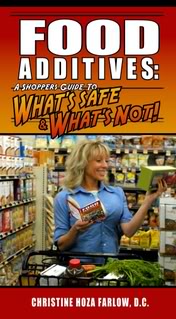 ery shopping companion and you’ll never again wonder about the safety of the ingredients listed on the package. You’ll know.
Dr. Christine H. Farlow, D.C. is a chiropractor, nutritionist and author. She has helped thousands improve their health through nutrition. For more information on food additives and healthy eating, visit http://www.healthyeatingadvisor.com or contact Dr. Farlow.
 Dr. Nicole Sundene, NMD is a licensed Naturopathic Medical Doctor at Fountain Hills Naturopathic Medicine 16719 E Palisades Blvd, Suite 205, Fountain Hills, AZ 85268.
She believes we should utilize natural medicines to treat the root cause of disease rather than just treating symptoms, as symptoms are a message of imbalance sent from the body and will persist until they are properly addressed.
For appointments please visit http://FHnaturopathic.com for more information about Naturopathic Medicine services.
©KitchenTableMedicine.com, LLC ™
Top 9 Cancer-Causing Ingredients To Avoid
January 30, 2009 by Kitchen Table Medicine
Filed under Cancer, Diet Tips, Kitchen Sink

Do you read the ingredients on the label of every item you put in your grocery cart?
Or do you just read what’s jumps out at you on the package? If you’re not reading the ingredients in the tiny print, you’re probably eating additives that are dangerous to your health, chemicals that cause cancer.
You see, the FDA allows manufacturers to add small amounts of cancer-causing substances to the food you eat. So, not only are many of our foods not healthy, they’re unsafe.
Here are some cancer-causing chemicals you’re going to want to watch out for and keep out of the food you eat:
- Acesulfame-K, also known as Acesulfame-potassium or “Sunnette” is an artificial sweetener. It has not been adequately tested for human consumption. The FDA approved this additive even though the tests done to determine it’s safety did not meet the FDA standards and caused cancer in lab animals, which increases the probability that it will also cause cancer in humans.
- Artificial colors, or FD&C colors, are mostly are derived from coal tar, which is a carcinogen. Over the years, many FD&C colors have been banned because of their harmful effects. And it is likely that more will be banned in the future. Some of the worst FD&C colors include: Green #3, Blue #1, Blue #2 and Yellow #6 which cause allergic reactions and cancer in lab animals. Red #3 is a carcinogen, which may interfere with nerve transmission in the brain and causes genetic damage. It is banned in cosmetics, but allowed in food, and it’s especially harmful to children.Yellow #5 causes allergic reactions in those sensitive to aspirin. It may be life threatening. Citrus red #2 is a known carcinogen. Its only allowed use is to color orange skins. So, If you use orange zest in some of your recipes, you may be ingesting carcinogens. Any color with “lake” after it means that aluminum has been added to the color to make it insoluble.
- BHA & BHT are widely used as preservatives, stabilizers and antioxidants. BHA is known to cause cancer in humans. Both BHA and BHT are toxic to the liver and kidneys. BHT may react with other ingested substances to cause the formation of carcinogens. BHT is banned in England.
- Potassium bromate is used to treat flour to give bread and baked goods a sponge-like quality. It is probably not used in California because it might require a cancer warning on the label. Outside of California, “unbromated” breads do not contain potassium bromate. It is also used in toothpaste, mouth washes and gargles. It is a carcinogen, mutagen and highly toxic. It is banned worldwide, except in the U.S. and Japan .
- Carrageenan is a seaweed derivative used in a wide variety of foods and cosmetics. In its native form, it has not been classified as a carcinogen, but in it’s degraded or broken down form it has been classified as a possible human carcinogen by the International Agency for Research on Cancer (IARC). Joanne Tobacman, M.D., University of Iowa assistant professor of clinical internal medicine, and researcher on carrageenan, said “There seems to be enough evidence associating carrageenan with significant gastrointestinal lesions, including malignancies, to avoid ingesting it.” According to Dr. Tobacman, the native carrageenan, after being subjected to stomach acids may be broken down into the degraded form and be a cancer risk. And even if it wasn’t, carrageenan cannot be identified as native or degraded on food labels, so there is no way of knowing if you are ingesting carrageenan, the carcinogen or not.
- Nitrates and nitrites are found primarily in processed meats. They combine with stomach acids and chemicals in foods to form nitrosamines, which are powerful carcinogens.
- Olestra has not been shown to cause cancer. However, it robs the body of carotenoids, which are known to have a protective effect against cancer. Studies have shown a 40-50% drop in blood carotenoids after consuming only 3-8 grams of olestra in a day, equivalent to 6-16 chips. It also may causes severe gastrointestinal cramping and diarrhea, which may last for extended periods of time.
- Propyl gallate is used as an antioxidant in fats, oils, candy and a variety of processed foods. It is a suspected carcinogen and is known to cause kidney, liver and gastrointestinal problems. It can cause allergic reactions in those with asthma and sensitivity to aspirin. It has not been adequately tested.
- Saccharin, or Sweet ‘N Low, is an artificial sweetener that is known to cause cancer. Because of pressure from the food industry, in 2000, saccharin was removed from the list of cancer-causing chemicals, in spite of the fact that studies still show that it causes cancer in lab animals.
So, how do you know which additives are really safe to eat? Dr. Christine Farlow, in her handy pocket-sized book, FOOD ADDITIVES: A Shopper’s Guide To What’s Safe & What’s Not, now in its 2004 revised edition, makes it easy to identify which additives are harmful and which are not. She classifies 800 commonly used food additives according to safety, whether they may cause allergic reactions and if they are Generally Recognized As Safe (GRAS) by the FDA.
In just seconds, the average person can find out if an additive in the food they’re buying is harmful to their health. It’s clear, concise and easy to use. Make this book your constant grocery shopping companion and you’ll never again wonder about the safety of the ingredients listed on the package. You’ll know.
Dr. Christine H. Farlow, D.C. is a chiropractor, nutritionist and author. She has helped thousands improve their health through nutrition. For more information on food additives and healthy eating, visit http://www.healthyeatingadvisor.com or contact Dr. Farlow.
Dr. Nicole Sundene, NMD is a licensed Naturopathic Medical Doctor at Fountain Hills Naturopathic Medicine 16719 E Palisades Blvd, Suite 205, Fountain Hills, AZ 85268.She believes we should utilize natural medicines to treat the root cause of disease rather than just treating symptoms, as symptoms are a message of imbalance sent from the body and will persist until they are properly addressed.
For appointments please visit http://FHnaturopathic.com for more information about Naturopathic Medicine services.
©KitchenTableMedicine.com, LLC ™