One Soda Per Day Can Change Your Waistline
March 31, 2009 by Kitchen Table Medicine
Filed under Bonnie Pfiester, Diabetes, Diet Tips, Guest Posts, Kitchen Sink, Sugar
 By Bonnie Pfiester Fitness Trainer
America’s obsession with soda has nearly doubled since the early seventies. According to the American Beverage Association, the average American drinks an estimated 54 gallons of soda per year – that’s about 19 ounces of soda per day. The average teenager drinks 31 – 42 ounces of soda a day.
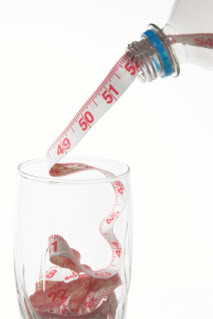
What if I said you could drop 26 pounds if you just drank one less soda a day? It’s true. A regular 20 ounce coke accounts for 250 calories. One coke a day doesn’t sound too bad until you add it up over time and realize it could mean a couple of dress sizes. One soda a day adds up to a whopping 91,000 calories over a year’s time – that’s 26 pounds of fat.
“Liquid candy”, as many dentists call it, often times fall between the cracks when people begin a diet. Sometimes it is more obvious to get rid of unhealthy snacks, like cookies and donuts, and forget about what we drink. The truth is that a small can of coke has more sugar in it than most snacks. Although there are very few of us who would eat 10 teaspoons of sugar, we quickly drink it in just one 12 ounce can of coke.
To help feed America’s infatuation with soda, manufacturers and fast food chains offer more variety and larger sizes than ever before. When coke products first came out, they came in 6 ½ ounce bottles and were considered a treat. Now sodas aren’t special at all but more like a staple in most homes.
Manufactures have kept up with America’s demand for cola. Unfortunately though, more soda means more weight gain. If that wasn’t bad enough, now manufacturers have taken it up a notch introducing a large variety of “energy drinks”. What most people don’t realize is a lot of the “energy” coming from energy drinks comes from high amounts of sugar. Some popular energy drinks contain as much as twenty teaspoons of sugar in one can.
What if you aren’t a coke drinker? You’d be surprised how many calories are in beverages most people would consider healthy. Cranberry juice is just one example of a high-calorie ‘healthy’ pick, having 18 teaspoons of sugar. Other popular juices like orange juice, apple juice and grape juice are actually higher in calories than an equal portion of regular soda.
The bottom line is that you can’t forget how drinks affect your family’s waistline. There is nothing your body wants or needs more than water – especially living in Florida. Water should always be the go-to drink. Not only is it healthier for you, it can actually help improve the way you look.
~Bonnie
Bonnie Pfiester is a Personal Trainer, wife to the famous fitness trainer Steve Pfiester of the reality TV show “Fat March”, and owner of the women’s health club Longevity Fitness.
You can enjoy more of Bonnie’s fitness and beauty articles at www.BonniePfiester.com or here at the kitchen table by visiting the Bonnie Pfiester page.
You are invited to leave your fitness and sports nutrition questions in the comments below for Bonnie to briefly answer or write about in future articles.
 Dr. Nicole Sundene, NMD is a licensed Naturopathic Medical Doctor at Fountain Hills Naturopathic Medicine 16719 E Palisades Blvd, Suite 205, Fountain Hills, AZ 85268.
She believes we should utilize natural medicines to treat the root cause of disease rather than just treating symptoms, as symptoms are a message of imbalance sent from the body and will persist until they are properly addressed.
For appointments please visit http://FHnaturopathic.com for more information about Naturopathic Medicine services.
©KitchenTableMedicine.com, LLC ™
Amen to the Obesity Tax, Let’s Just Call it Something Else
March 2, 2009 by Dr. Nicole Sundene
Filed under American Sickcare System, Diabetes, Diet Tips, Fast Food, Hypoglycemia, Kitchen Sink, Osteoporosis, Sugar, Sugar Substitutes, Weight Loss
 By Dr. Nicole Sundene
Honestly, I’m not sure if the NY officials in charge of the “Obesity Tax” truly intend to call it thus, or if the media has just coined the phrase.
However, there are many more causes than just soda when it comes to obesity. And there are many more ills upon society that soda is at fault for.
Furthermore, beverages with sugar substitutes such as aspartame and splenda (sucralose) also make people fat so those should be equally taxed as the Cephalic Response created by these sweet flavored toxins makes us hungry, which makes us eat more, which makes us fatter.
Also, I would suggest that New York tax juice containing High Fructose Corn Syrup. The only thing that makes me mad about the obesity tax is that it is called the “Obesity Tax.” Why pick on people who are overweight? Poking fun at someone for being obese or “taxing them” is truly unfair and perhaps unconstitutional.
Six Better Names for the “Obesity Tax” 
#1 The Water Tax: How about just straight across the board tax all beverages that are not plain water? Water is what nature intended for humans to drink after they were weaned.
I wish it was mandatory for all vending machines to sell bottled water at a four time reduced rate than the typical vending beverage. When we see water priced the same as a fruity looking or flashy drink we immediately feel deprived if we pick water, and from a psychological standpoint we all want to get the most for our money.
Not all beverages are unhealthy, but they all still have containers that place an environmental burden on our planet and our seventh generation. I say we tax everything but water, and let water, the “pristine health beverages for all humans”, be tax exempt from this environmental fee.
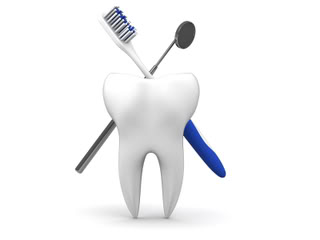 #2 The Dental Carry Tax: Why haven’t dentists spoken up on this issue? I’ll bet we could fund dental coverage (and maybe even some bling diamond grills) for all the kids in America and Africa if we taxed both sodas and refined candies. It’s not just the HFCS in sodas that is the problem; it is the acids that erode enamel, with sports drinks like Red Bull being the worst offenders.
#3 The Diabetes Tax:  Diabetics cost the health care system $13 dollars per every $1 dollar that is spent on the average healthy person. Now I don’t need a bunch of hate mail from Type I diabetics, although you all know that you shouldn’t be drinking HFCS either, but people in America are literally drinking themselves diabetic with soda consumption.
It is not normal to drink calories unless you are getting them off your mother’s teat. For everyone else, water and herbal tea should be staples while red wine, organic coffee, and pure fruit juice can be enjoyed in moderation in exchange for their beneficial antioxidants.
 #4 The Pollution Tax: If you are purchasing a bottle that cannot be recycled or reused then the environment should have the right to tax you!
Plastic bottles in our landfills are a problem that no one within the last century has taken a seriously critical look at. Plastics have really only been on the scene since 1950 and their use has only escalated in the last few decades.
What most people don’t consider with plastics is that we have introduced a new substance into the environment, and in LARGE quantities.
Some constituents such as phthalates, BPA, and other such “xenoestrogens” are already showing carcinogenic qualities as well as issues with endocrine system disruption as their steroidal molecular structure weakly mimics estrogen and thus may be a culprit or contributor to estrogen sensitive cancers.
We are already seeing an increased percentage of females species in smaller species. Larger species are yet to follow. As much as I am for equal rights I don’t think that plastics are the best way for women to take over the world!
Think of all the plastic in our landfills that will inevitably break down in a thousand years. The pollution from that will likely wipe out all human existence. But that is just my biochemical and medical opinion…and what do I know after ten years of studying this stuff.
If I get to place a vote on what New York should call this tax, I vote to call it the pollution tax. We need to be drinking filtered water out of our reusable glass jars or Klean Kanteen containers. 
#5 The Bad Parenting Tax: If you are feeding your kids tons of sodas and hotdogs, and not actual whole food and balanced nutrition then you should be taxed. If you aren’t doing it that often, then you shouldn’t even notice the increased 20 cents on the beverage.
Hopefully this “parenting tax” will go towards better parent education for parents, and television programs that will both educate and inspire parents to provide more wholesome foods for children. It isn’t just about their childhood, you know?
They are going to grow up with the habits that you teach them. The habits they see in you will influence them and they are going to end up a casualty of the American Health Care Crisis, which is actually a problem caused by the food that graces our kitchen tables…or worse yet, our cars and minivans when we drive through.
 #6 The Health Care Burden Tax: Aside from the aforementioned soda consumption is also implicated in osteoporosis and heart disease. Two GIANT burdens on the health care system.
Americans are soon to likely overtake Finland in the challenge to become the MOST unhealthy country in the world. I am not sure how it is possible that Finland is more unhealthy than us-what are they chain smoking and chugging lard for breakfast?
I’m not sure, but Barack Obama will never be able to fix the health care crisis until he fixes the crisis at every American kitchen table. What we need is not health care what we need is AFFORDABLE healthy food. Imagine if the billions of dollars wasted on prescription meds were actually funneled in to healthy eating and nutrition programs for all Americans?
We know diet and lifestyle prevent disease. However, our cheap processed food options limit us from practicing true prevention. The Reason why our healthcare system is in crisis is that Americans eat the cheapest food they can possibly find. Is this just the case in strapped families and broke college students? No. We have CEO’s of companies feeding their kids mac and cheese from a box, hot dogs, and dinonuggets when they can easily afford better.
You are what you eat. Set the example for young children now, as at these rates likely one in three children born today will end up diabetic. Europeans shop from produce stands and local delis three times a week. Americans shop at large Warehouses to stock up on bomb shelter food monthly.
This has to change.
Con’s of the Obesity Tax:
- Obesity is a clinical term and diagnosis and it is unfair to tax individuals and stigmatize them.
- The money from the obesity tax will be utilized for balancing the NY state budget and will not directly go towards improving health care, helping obese people lose weight, or anything of the like.
- Many people don’t believe taxing is the answer. I’m Swedish so I say tax away! You can feel free to send me hate mail on this one if you wish, but I already get enough. Trust me.
Pro’s of the Obesity Tax:
- Makes unhealthy food products less affordable.
- Media coverage of this tax has brought to national attention the crisis we have with soda consumption.
- Increased awareness of High Fructose Corn Syrup.
- Just like the cigarette tax, if it stops just one person from smoking and developing cancer then the tax is a success. If we educate one person about drinking calories and they don’t become obese and diagnosed with Type II diabetes, then I call the “Obesity Tax” a success.
What are your thoughts on the Obesity Tax?
Dr. Nicole Sundene, NMD is a licensed Naturopathic Medical Doctor at Fountain Hills Naturopathic Medicine 16719 E Palisades Blvd, Suite 205, Fountain Hills, AZ 85268.She believes we should utilize natural medicines to treat the root cause of disease rather than just treating symptoms, as symptoms are a message of imbalance sent from the body and will persist until they are properly addressed.
For appointments please visit http://FHnaturopathic.com for more information about Naturopathic Medicine services.
©KitchenTableMedicine.com, LLC ™
Corn Syrup, Is it Really Just Like Sugar?
January 30, 2009 by Kitchen Table Medicine
Filed under Diabetes, Diet Tips, Dr. Scott Olson, Guest Posts, High Blood Pressure, Kitchen Sink, Sugar, Weight Gain
 The Corn Industry is spending massive amounts of advertising dollars trying to convince us that high-fructose-corn syrup is just as “good for you” as sugar. But does it really matter? Let’s talk to Dr. Scott Olsen about the differences between sugar and high-fructose-corn-syrup.
In your medical opinion…what is worse: Sugar or high fructose corn syrup?
Dr. Olsen: This is a little like asking if you would rather be shot or stabbed: both are bad. There is a lot of stir in the media lately about high fructose corn syrup and how it is different than sugar and the research on corn syrup does show it behaves differently in our bodies.
What you need to know about fructose is that the body can’t use it, so whenever you consume fructose, the body has two choices. The first is that it can convert the fructose into glucose and then the body can use the glucose to power all its energy needs. The second choice is that the body can choose to store the fructose as fat.
There is some evidence that the body finds it easier to make that second choice: turning the fructose into fat. (11) Since our consumption of high fructose corn syrup has increased dramatically in the last few years along with the rate of obesity, it makes us wonder if fructose is to blame.
 FRUCTOSE ALSO:
- Creates harmful proteins, called glycated proteins, much easier than glucose.(12)
- Leads to insulin insensitivity (and, therefore: diabetes and obesity as well).(13)
- Contributes to hypertension (high blood pressure).(14)
While avoiding both sugar and high fructose corn syrup is probably your best health choice, keeping high fructose corn syrup out of your diet is the next best step.
Notes:
11. Bray GA, Nielsen SJ, Popkin BM: Consumption of high-fructose corn syrup in beverages may play a role in the epidemic of obesity. Am J Clin Nutr. 2004 Apr;79(4):537-43.
12. Colaco CA. Sugar and coronary heart disease, a molecular explanation. J R Soc Med. 1993 Apr;86(4):243.
13. Miller A, Adeli K. Dietary fructose and the metabolic syndrome. Curr Opin Gastroenterol. 2008 Mar;24(2):204-9.
14. Johnson RJ, Segal MS, Sautin Y, et al: Potential role of sugar (fructose) in the epidemic of hypertension, obesity and the metabolic syndrome, diabetes, kidney disease, and cardiovascular disease. Am J Clin Nutr. 2007 Oct;86(4):899-906.
Dr. Nicole Sundene, NMD is a licensed Naturopathic Medical Doctor at Fountain Hills Naturopathic Medicine 16719 E Palisades Blvd, Suite 205, Fountain Hills, AZ 85268.She believes we should utilize natural medicines to treat the root cause of disease rather than just treating symptoms, as symptoms are a message of imbalance sent from the body and will persist until they are properly addressed.
For appointments please visit http://FHnaturopathic.com for more information about Naturopathic Medicine services.
©KitchenTableMedicine.com, LLC ™